

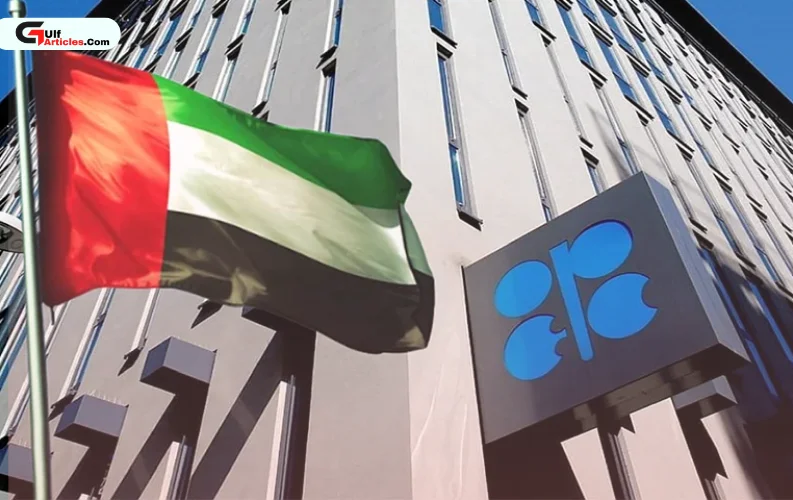
In a move set to reshape global energy dynamics, the United Arab Emirates has announced its decision to withdraw from the Organisation of the Petroleum Exporting Countries (OPEC), marking a historic shift in its oil policy and strategic positioning.
The decision, which will come into effect on May 1, reflects what officials described as a necessary step to align with the country’s national priorities and long-term energy vision. In an official statement, the UAE emphasized its intention to focus on policies that better serve its investors, partners, and evolving global market demands.
The announcement comes at a time of heightened uncertainty in global energy markets, driven in part by geopolitical tensions in the region, including disruptions linked to the Strait of Hormuz. Against this backdrop, the UAE stated that the move would strengthen its ability to respond more effectively to market fluctuations and supply challenges.
Officials indicated that the decision followed a comprehensive review of the country’s production strategy, including current output levels and future capacity plans. The UAE underscored that stepping away from OPEC would allow it to make independent production decisions, free from collective constraints imposed by the alliance.
The departure represents a significant development for OPEC, a group that accounts for roughly one-third of global oil supply. Analysts suggest that the UAE’s exit could alter the balance of influence within the organisation and potentially impact coordinated production strategies among remaining members.
Despite leaving the alliance, the UAE sought to reassure global markets of its continued commitment to stability. Authorities stated that the country would remain a responsible and reliable energy supplier, emphasizing its role in delivering cost-competitive and lower-carbon oil production.
The government also highlighted that the move aligns with its broader economic and energy transformation goals, which include diversifying its energy mix and strengthening its position in a rapidly evolving global landscape.
Tensions within the region have also played a role in shaping the decision. Recent concerns over security and support among regional alliances have added pressure on policymakers to reassess strategic partnerships and priorities.
While the long-term implications of the UAE’s exit remain uncertain, the move underscores a broader shift in how energy-producing nations are navigating a new era defined by geopolitical complexity, market volatility, and the global transition toward cleaner energy sources.















Comments 0
No comments yet. Be the first to share your thoughts.
Leave a comment
Your email is never published. All fields are required.