

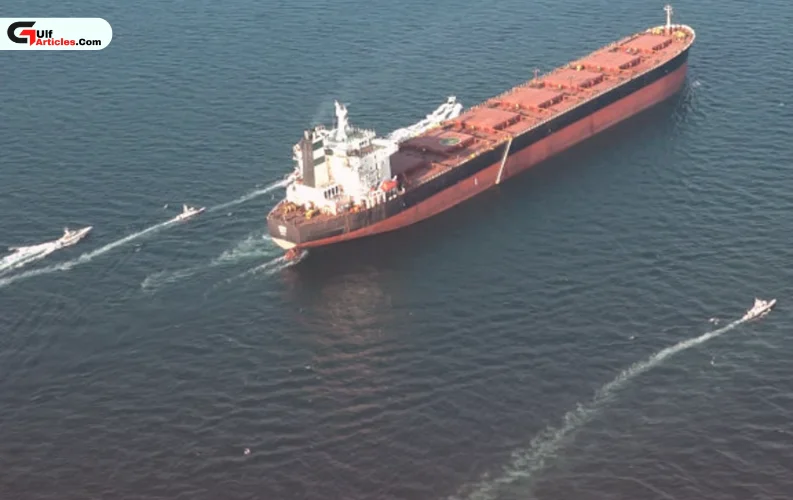
Trade flows across the Middle East are facing renewed pressure as disruptions in the Strait of Hormuz impact shipping routes, raising concerns over supply chain stability and global trade dynamics. A recent analysis highlights that escalating geopolitical tensions and airspace restrictions have intensified risks around the strategic waterway, which serves as a critical route for energy and industrial commodities. The Strait of Hormuz carries nearly one-fifth of global seaborne fuel and gas shipments, along with key materials such as ammonia, sulfur, and aluminium.
The latest disruption differs from previous supply chain shocks in both scale and complexity. While container cargo can be redirected through alternative routes, such adjustments often result in longer transit times and increased costs. In contrast, liquefied natural gas shipments depend on specialised infrastructure, limiting flexibility and raising the risk of supply constraints.
The dual impact of supply disruption and rising costs is already being reflected across global supply chains. Cargo volumes have declined, with an estimated 0.5 million containers reported stranded within Gulf logistics networks. At the same time, inland transport systems and multimodal alternatives are being stretched to absorb the pressure.
Shipping networks have previously adapted to disruptions by rerouting cargo, particularly during Red Sea tensions. However, current challenges extend beyond rerouting, as access to key gateways itself faces constraints, creating deeper operational challenges.
Industry analysis suggests that existing resilience strategies may no longer be sufficient. There is increasing emphasis on the need for structural adjustments, including the development of alternative trade corridors, stronger integration between transport networks, and wider adoption of digital tools to improve supply chain visibility.
The disruption comes at a time when global trade is becoming more fragmented, shaped by geopolitical shifts and evolving economic alliances. While some trade routes may not return to previous patterns, new corridors and partnerships could emerge, reshaping regional trade flows.
Despite near-term volatility, industry executives remain cautiously optimistic, with expectations that domestic growth could strengthen as systems adjust. However, the long-term outlook will depend on how effectively governments and businesses respond to the current disruption.
The situation underscores a broader shift in global trade priorities, where reliability and resilience are becoming as critical as speed and cost.















Comments 0
No comments yet. Be the first to share your thoughts.
Leave a comment
Your email is never published. All fields are required.