

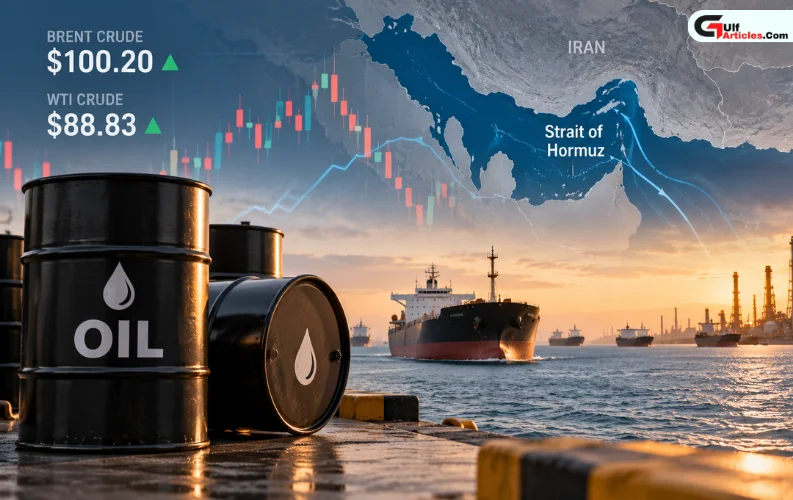
Oil prices remained elevated around the $100 mark as continued disruption in the Strait of Hormuz and geopolitical tensions involving Iran tightened global supply conditions, offsetting signs of weakening demand. Brent crude rose about 1.7% to trade slightly above $100 per barrel, maintaining gains from earlier in the week. Prices have climbed sharply from around $70 before the onset of the conflict, reflecting growing concerns over supply risks in the Arabian Gulf.
The Strait of Hormuz, a key global shipping route that carries roughly 20% of the world’s oil exports, continues to face restricted traffic following recent attacks on vessels and tanker seizures. The disruption has significantly reduced the flow of crude to international markets.
Although diplomatic efforts have led to a temporary ceasefire extension to allow negotiations, restrictions on Iranian exports remain in place, prolonging uncertainty over supply recovery. Market participants remain cautious as the situation shows limited signs of a swift resolution.
Analysts said oil markets are currently being influenced by conflicting factors. While supply constraints are supporting prices, weaker demand—particularly from Asia—and declining inventories in China have prevented a sharper rise beyond current levels.
“Markets remain volatile due to mixed signals and continued uncertainty,” analysts noted, pointing to reduced flows through the Strait of Hormuz as a key factor behind ongoing supply tightness.
Pressure is also building in refined fuel markets, with diesel, aviation fuel, and petrochemical feedstocks already experiencing supply shortages. Rising costs in these segments are expected to impact industries reliant on fuel-intensive operations.
Even if shipping activity resumes, recovery in supply chains is likely to be gradual. Disruptions to tanker positioning, potential infrastructure damage, and delays in restarting production could extend the timeline for normalisation.
Officials have also warned that current price levels may not fully reflect the extent of disruption. Prolonged constraints in the Strait could lead to further increases in oil prices in the coming weeks.
For now, oil markets remain largely driven by supply-side risks. A sustained decline in prices will depend on a stable reopening of key shipping routes and a clear easing of geopolitical tensions. Until then, prices are expected to remain supported near current levels.
You may also like that news:-















Comments 0
No comments yet. Be the first to share your thoughts.
Leave a comment
Your email is never published. All fields are required.