

whatsapp

22 Ships Attacked, 800 Vessels Stranded in Strait of Hormuz; UAE Warns of Global Supply Shock

/media/GA_9Ke7s5C._5.webp © Image Copyrights Title

A sharp escalation in maritime disruptions in the Strait of Hormuz has raised serious concerns over global energy security, with at least 22 ships attacked and nearly 800 vessels stranded, according to fresh figures shared by Sultan Ahmed Al Jaber. The disruptions have led to the deaths of 10 crew members, while around 20,000 seafarers remain unable to safely pass through the corridor. Among the stranded vessels are nearly 400 oil tankers, highlighting the scale of the ongoing crisis in one of the world’s most critical energy routes.

Al Jaber warned that any attempt to restrict access to the Strait of Hormuz represents a direct threat to global economic stability. He stated that such actions go beyond regional tensions and could disrupt energy, food, and healthcare supply chains worldwide.

“The Strait of Hormuz has never been under the control of any single nation,” he said, adding that restricting access to the corridor would amount to interference with a global economic lifeline.

Earlier this week, Al Jaber had indicated that passage through the strait was no longer functioning as an open transit route. He noted that access is being increasingly restricted and controlled, raising concerns over the integrity of international shipping lanes.

The situation has also exposed a growing gap between market expectations and actual supply conditions. While cargoes shipped before the escalation continue to arrive at destinations, new shipments remain delayed, creating visible strain in global energy flows.

Industry estimates suggest that around 230 oil-loaded vessels are currently waiting for safe passage, further tightening supply conditions.

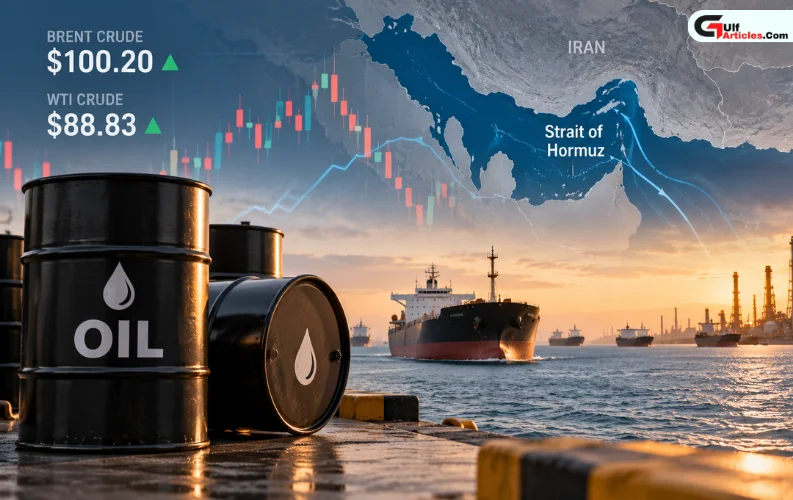
With approximately 20% of the world’s traded energy passing through the Strait of Hormuz, prolonged disruption is expected to exert upward pressure on oil prices and impact global supply chains. Asia, which receives nearly 80% of shipments from the route, is likely to face the most immediate consequences.

Al Jaber emphasized the urgency of restoring normal operations, stating that delays in reopening the corridor would continue to compound supply shortages and market instability.

Energy producers, including Abu Dhabi National Oil Company, are preparing to resume shipments within operational constraints while prioritizing safety.

Commnets 0
Leave A Comment

Related Posts
© Global Oil Demand Set for First Annual Decline Since COVID-19, IEA Warns

Global Oil Demand Set for First Annual Decline Since COVID-19, IEA Warns

Global oil demand is expected to record its first annual decline since the COVID-19 pandemic, according to the latest monthly report from the International Energy Agency (IEA). The agency forecasts th...

© Nasdaq Dubai Records $13.8 Billion in New Fixed-Income Listings in 2026

Nasdaq Dubai Records $13.8 Billion in New Fixed-Income Listings in 2026

Nasdaq Dubai has added 33 new fixed-income listings worth $13.8 billion since the start of 2026, reinforcing Dubai's position as one of the world's leading hubs for sukuk and debt capital markets. Int...

© Ajman Bank Raises $300 Million Through Debut AT1 Sukuk Priced at 6.5%

Ajman Bank Raises $300 Million Through Debut AT1 Sukuk Priced at 6.5%

Ajman Bank has successfully completed its inaugural $300 million Additional Tier 1 (AT1) Perpetual Non-Call 5.5-Year Sukuk, pricing the issuance at a 6.5% profit rate. The milestone transaction streng...

© Oil Prices Jump Over 3% as Iran Tensions Stoke Strait of Hormuz Supply Fears

Oil Prices Jump Over 3% as Iran Tensions Stoke Strait of Hormuz Supply Fears

Global oil prices surged more than 3% during early Asian trading on Wednesday after renewed military tensions involving Iran heightened concerns over the security of the Strait of Hormuz, a vital mari...

© OPEC+ Approves August Oil Output Increase as Crude Prices Ease

OPEC+ Approves August Oil Output Increase as Crude Prices Ease

Seven members of the OPEC+ alliance have agreed to increase their combined crude oil production by 188,000 barrels per day (bpd) in August, extending the group's gradual supply expansion as global oil...

© Oil Prices Hold Near $70 as Middle East Risk Premium Eases, Murban Crude Outperforms

Oil Prices Hold Near $70 as Middle East Risk Premium Eases, Murban Crude Outperforms

Global oil prices traded with little movement during Asian trading on Monday as easing geopolitical tensions in the Middle East offset expectations of firm seasonal fuel demand. While benchmark crude ...

© Singapore Seizes $42.5 Million Mansion in Nvidia Chip Smuggling Probe

Singapore Seizes $42.5 Million Mansion in Nvidia Chip Smuggling Probe

Singapore authorities have seized a luxury mansion worth S$55 million (US$42.5 million) as part of an ongoing investigation into an alleged Nvidia AI chip smuggling and money laundering network, offic...

© Bank of Baroda Pays $600 Million to Settle NMC Health Litigation

Bank of Baroda Pays $600 Million to Settle NMC Health Litigation

Bank of Baroda has agreed to pay $600 million to settle litigation related to the collapse of UAE-based healthcare company NMC Health, bringing an end to years of legal proceedings against the Indian ...

© UAE Fuel Prices Drop Sharply in July; Further Relief Possible if Global Oil Prices Stay Lower

UAE Fuel Prices Drop Sharply in July; Further Relief Possible if Global Oil Prices Stay Lower

UAE motorists are enjoying lower fuel prices in July after the country's monthly fuel price revision reflected a sharp decline in international crude oil prices, offering welcome relief following mont...

© Iran Reports 40 Million Barrels of Oil Exports After U.S. Blockade Ends

Iran Reports 40 Million Barrels of Oil Exports After U.S. Blockade Ends

Iran has announced that it exported more than 40 million barrels of crude oil since the United States lifted its naval blockade of Iranian ports earlier this month, marking a significant recovery in t...