

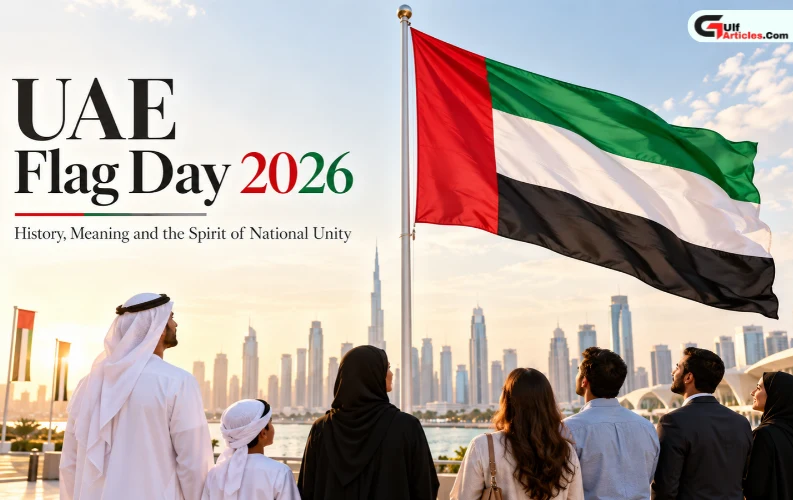
Every year, the United Arab Emirates comes together to celebrate one of its most meaningful national occasions, UAE Flag Day. Observed on November 3, the day honours the national flag as a symbol of unity, pride, sovereignty and the shared aspirations of the Emirati people. Across the seven emirates, government institutions, schools, businesses and communities mark the occasion by raising the flag and reflecting on the nation's journey and achievements.
In 2026, UAE Flag Day will be celebrated on Tuesday, November 3. More than a ceremonial event, it represents a collective expression of loyalty to the nation and its leadership, while reminding citizens and residents of the values that continue to shape the country's identity.
What Is UAE Flag Day?
UAE Flag Day is an annual national occasion dedicated to celebrating the country's flag and the unity it represents. The initiative was announced by Sheikh Mohammed bin Rashid Al Maktoum, Vice President and Prime Minister of the UAE and Ruler of Dubai, in 2012. The first celebrations took place in 2013.
November 3 was selected to coincide with the anniversary of the late Sheikh Khalifa bin Zayed Al Nahyan's accession to the UAE presidency in 2004. Since then, the occasion has become an important part of the country's national calendar, encouraging people across the Emirates to display the flag with pride.
Flag Day brings together people from different backgrounds under one national symbol, reinforcing a sense of belonging, shared responsibility and commitment to the UAE's continued development.
The History Behind the UAE National Flag
The story of the UAE flag is closely connected to the formation of the nation. On December 2, 1971, the late Sheikh Zayed bin Sultan Al Nahyan, the UAE's founding father, raised the national flag as the country established its union.
The flag was designed by Abdullah Mohammed Al Maainah, who entered a national competition organised by Al-Ittihad newspaper in 1971. Its distinctive combination of red, green, white and black reflects traditional Arab symbolism and has become an internationally recognised representation of the Emirates.
Since the country's formation, the flag has represented the unity of the seven emirates and the ambition to build a peaceful, prosperous and forward-looking nation.
What Do the Four Colours of the UAE Flag Represent?
Each colour of the UAE flag carries symbolic meaning associated with the nation's identity, values and aspirations.
Red: Courage and Sacrifice
The red band represents courage, strength and the sacrifices made by earlier generations to protect the homeland and establish the foundations of the union.
Green: Growth and Prosperity
Green symbolises growth, development and prosperity. It reflects the UAE's ambitions for a sustainable future and its progress across economic, social and environmental priorities.
White: Peace and Goodness
White represents peace, honesty and benevolence. It reflects the country's commitment to coexistence, generosity and positive relations with communities around the world.
Black: Strength and Resilience
Black symbolises strength, determination and resilience. It represents the ability to overcome challenges while protecting the country's stability, values and national interests.
Together, these colours express a shared vision of unity, dignity, progress and peace.
How Is UAE Flag Day Celebrated?
UAE Flag Day is marked through ceremonies and activities that bring communities together in a shared expression of national pride.
Flag-Raising Ceremonies
Government departments, public institutions, schools and private organisations raise the UAE flag to honour the nation and reaffirm their connection to its values. These ceremonies are among the most recognisable traditions associated with the occasion.
Schools and Educational Activities
Schools use the day to help students understand the history of the UAE, the meaning of its national symbols and the importance of unity and responsible citizenship. Students may participate in assemblies, flag-raising events and educational programmes.
Community Participation
Residents and businesses display the national flag at homes, offices, buildings and public spaces. The widespread participation reflects the country's diverse population coming together to celebrate a common national identity.
Cultural and Patriotic Initiatives
Organisations may arrange cultural programmes, exhibitions and activities highlighting Emirati heritage, national achievements and the contributions of the country's founding generation.
Although celebrations vary across institutions and communities, their central message remains the same: respect for the national flag and pride in the UAE's journey.
Why Is UAE Flag Day Important?
UAE Flag Day carries significance beyond the act of raising a flag. It provides an opportunity to reflect on the principles that have supported the country's development since its establishment.
Strengthening national unity: The flag represents the union of the seven emirates and the collective effort behind the country's progress.
Honouring the founding generation: The occasion recognises the vision and dedication of the leaders who laid the foundations of the UAE.
Promoting national identity: Flag Day encourages younger generations to understand the country's history, heritage and national values.
Celebrating national achievements: It offers an opportunity to reflect on the UAE's progress in areas such as business, education, technology, infrastructure and international cooperation.
Encouraging social cohesion: Citizens and residents participate in the occasion, highlighting the importance of mutual respect, belonging and shared responsibility.
These values make Flag Day a meaningful occasion for people throughout the Emirates, regardless of their background.
UAE Flag Day and the Country's Vision for the Future
The UAE has developed into a major international centre for business, tourism, innovation and investment. Its progress reflects decades of planning, leadership and collaboration across different sectors.
Flag Day connects these achievements with the principles on which the nation was founded. It reminds people that continued development depends not only on economic growth and technological advancement but also on social responsibility, cooperation and a strong sense of national purpose.
As the UAE invests in emerging technologies, sustainability, education and global partnerships, its flag remains a powerful symbol of the country's identity and ambitions. The occasion encourages individuals and organisations to contribute positively to the nation's future.
How Can Residents Participate in UAE Flag Day 2026?
Residents can observe UAE Flag Day in simple but meaningful ways. Displaying the national flag respectfully, participating in community or workplace ceremonies, and helping children understand its history are all ways to mark the occasion.
Schools and organisations can arrange educational activities that explain the significance of the four colours and the formation of the UAE. Businesses can also use the day to recognise the shared efforts of their employees and the communities in which they operate.
Anyone displaying the flag should ensure that it is clean, undamaged and treated with respect. These small actions help preserve the dignity of an important national symbol.
Conclusion
UAE Flag Day is a celebration of unity, national identity and the enduring spirit of the United Arab Emirates. Observed every year on November 3, it honours the country's history while looking towards a future shaped by ambition, cooperation and progress.
As the red, green, white and black colours rise across the seven emirates in 2026, the occasion will once again bring people together around a shared symbol of national pride. It serves as a reminder that the UAE's achievements are built on the vision of its founders, the dedication of its people and a collective commitment to a prosperous future.
By raising the national flag with respect and understanding its meaning, citizens and residents can take part in preserving the values that continue to unite the Emirates.
Read more:-
















Comments 0
No comments yet. Be the first to share your thoughts.
Leave a comment
Your email is never published. All fields are required.