

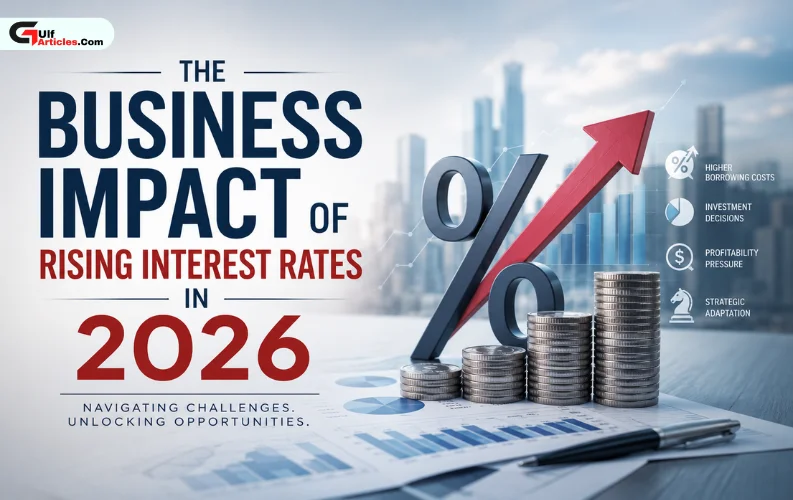
Interest rates have always played a critical role in shaping economic activity, but in 2026, they have become one of the most closely monitored factors influencing business performance worldwide. Following years of inflation concerns, economic adjustments, and monetary policy interventions by central banks, many businesses are operating in an environment where borrowing costs remain significantly higher than they were during the era of ultra-low interest rates.
For business leaders, rising interest rates are not simply an economic headline. They directly affect investment decisions, financing strategies, consumer spending patterns, profitability, expansion plans, and overall business confidence. Whether a company is a multinational corporation, a growing startup, or a small business seeking capital, changes in interest rates influence how resources are allocated and how future growth is planned.
The impact extends far beyond financial institutions. Manufacturers, retailers, technology firms, real estate developers, logistics providers, and service businesses all feel the effects of tighter monetary conditions. Higher borrowing costs can slow expansion, alter customer demand, increase operating expenses, and force organizations to reevaluate their strategic priorities.
As businesses navigate the economic realities of 2026, understanding the implications of rising interest rates has become essential for effective decision-making. Companies that adapt proactively are often better positioned to manage risk, preserve profitability, and identify opportunities that emerge during periods of economic adjustment.
Why Interest Rates Matter to Businesses
Interest rates represent the cost of borrowing money and are one of the most powerful tools used by central banks to influence economic activity. When inflation rises beyond desired levels, policymakers often increase interest rates to slow spending, reduce borrowing, and stabilize prices.
While these measures may help control inflation, they also create challenges for businesses. Higher rates increase the cost of financing, making loans, credit lines, and business investments more expensive. As a result, organizations must carefully evaluate spending decisions and prioritize projects that generate the strongest returns.
Interest rates influence nearly every aspect of business operations, including:
- Access to capital
- Expansion planning
- Equipment financing
- Commercial real estate investments
- Customer purchasing behavior
- Inventory management
- Cash flow strategies
For many organizations, understanding interest rate trends is now just as important as monitoring industry competition or customer demand.
The Rising Cost of Business Financing
One of the most immediate effects of higher interest rates is the increased cost of borrowing. Businesses that rely on loans to fund expansion, purchase equipment, develop new products, or support working capital face higher financing expenses.
During periods of low interest rates, organizations often have greater flexibility to invest aggressively because capital is relatively inexpensive. In a higher-rate environment, every borrowing decision requires closer scrutiny.
Companies carrying variable-rate debt are particularly vulnerable because interest payments increase as rates rise. This can reduce profitability and place pressure on cash flow, especially for businesses operating with narrow margins.
As financing costs increase, organizations are becoming more selective about investment opportunities. Projects that appeared financially attractive under lower borrowing costs may no longer generate sufficient returns.
Business leaders are increasingly asking critical questions before making investments:
- Will the project generate enough revenue to justify higher financing costs?
- Can internal cash reserves be used instead of borrowing?
- Is it better to delay expansion until financing conditions improve?
- Are there alternative funding sources available?
These considerations are shaping strategic decisions across industries.
Slower Business Expansion and Capital Investment
Higher interest rates often lead businesses to adopt a more cautious approach toward expansion. Growth initiatives that require significant capital investments become more expensive and carry greater financial risk.
Organizations considering new facilities, equipment upgrades, acquisitions, or geographic expansion may postpone or scale back plans until economic conditions become more favorable.
This does not mean businesses stop investing entirely. Rather, they become more selective and disciplined in their decision-making. Companies increasingly focus on investments that offer clear and measurable returns within shorter timeframes.
In 2026, many organizations are prioritizing projects that improve efficiency, reduce costs, or strengthen resilience rather than pursuing aggressive expansion strategies.
This shift reflects a broader emphasis on sustainable growth rather than rapid growth at any cost.
Consumer Spending Patterns Are Changing
Interest rates affect not only businesses but also consumers. When borrowing becomes more expensive, households often reduce discretionary spending and become more cautious about major purchases.
Higher mortgage rates, increased credit card costs, and more expensive personal loans can reduce disposable income and affect consumer confidence. As a result, businesses that rely heavily on consumer spending may experience slower demand growth.
Industries particularly sensitive to interest rate changes include:
- Real estate
- Automotive sales
- Consumer electronics
- Home improvement
- Luxury goods
- Travel and hospitality
Businesses operating in these sectors may need to adjust pricing strategies, marketing efforts, and inventory management practices to align with changing customer behavior.
At the same time, companies offering essential products and services often demonstrate greater resilience because demand remains relatively stable regardless of economic conditions.
Cash Flow Management Has Become a Strategic Priority
In a higher-rate environment, strong cash flow management becomes increasingly important. Businesses can no longer rely on inexpensive borrowing to address short-term financial challenges.
Organizations are paying closer attention to working capital, receivables management, inventory levels, and operating expenses. Preserving liquidity provides greater flexibility and reduces dependence on external financing.
Companies with strong cash positions often enjoy significant advantages because they can continue investing during periods when competitors face financial constraints.
Business leaders are focusing on:
- Accelerating accounts receivable collection
- Reducing unnecessary expenses
- Improving inventory efficiency
- Maintaining emergency reserves
- Strengthening financial forecasting
These measures help organizations remain agile and resilient during periods of economic uncertainty.
Small Businesses Face Unique Challenges
While rising interest rates affect organizations of all sizes, small businesses often experience greater pressure because they typically have fewer financial resources and more limited access to capital.
Many small enterprises rely on business loans, credit facilities, and external financing to support growth. Higher borrowing costs can make expansion more difficult and reduce financial flexibility.
Challenges commonly faced by small businesses include:
- Increased loan repayment costs
- Reduced access to financing
- Lower customer spending
- Higher operating expenses
- Greater cash flow pressure
Despite these obstacles, many small businesses demonstrate remarkable adaptability. Entrepreneurs often respond by improving efficiency, strengthening customer relationships, and focusing on profitability rather than rapid expansion.
Those that maintain financial discipline are often better positioned to navigate challenging economic conditions.
The Impact on Real Estate and Infrastructure Investment
Few sectors are as directly affected by interest rates as real estate. Commercial and residential property markets often experience significant changes when borrowing costs rise.
Higher rates increase mortgage costs, reduce property affordability, and influence investment decisions. Commercial real estate developers may postpone projects, while businesses reconsider office expansions and property acquisitions.
Infrastructure projects can also become more expensive as financing costs increase. Organizations involved in construction, development, and property management must carefully evaluate investment opportunities in light of changing economic conditions.
However, businesses with strong balance sheets may find opportunities to acquire assets at more favorable valuations as market activity slows.
Technology Investment Remains a Priority
Interestingly, one area where many organizations continue investing despite higher rates is technology. While businesses may delay certain expansion projects, digital transformation initiatives often remain strategic priorities.
Technology investments frequently help organizations reduce costs, improve efficiency, and increase productivity—benefits that become even more valuable during periods of economic pressure.
Many companies continue allocating resources toward:
- Artificial intelligence solutions
- Automation technologies
- Data analytics platforms
- Cybersecurity systems
- Cloud infrastructure
- Customer experience improvements
These investments often generate measurable returns and support long-term competitiveness.
As a result, technology spending remains relatively resilient even in a higher-rate environment.
Building Financial Resilience During Economic Uncertainty
One of the most important lessons businesses are learning in 2026 is the value of financial resilience. Organizations that maintain strong balance sheets and disciplined financial practices are often better equipped to manage changing economic conditions.
Financial resilience involves more than profitability. It requires the ability to withstand disruptions, adapt to uncertainty, and continue pursuing strategic objectives despite external challenges.
Strategies for Building Financial Resilience:
-
Reduce excessive debt exposure
- Maintain healthy cash reserves
- Diversify revenue streams
- Improve operational efficiency
- Strengthen financial forecasting
- Prioritize high-return investments
- Monitor economic indicators regularly
Businesses that implement these strategies often gain greater confidence and flexibility in uncertain environments.
Opportunities Still Exist Despite Higher Rates
While rising interest rates create challenges, they also create opportunities. Periods of economic adjustment often encourage businesses to become more efficient, innovative, and strategically focused.
Organizations that manage costs effectively, invest wisely, and maintain strong customer relationships can emerge stronger from periods of economic tightening.
Higher rates may also reduce speculative activity and encourage healthier business fundamentals. Companies with sustainable business models and disciplined leadership often gain competitive advantages as weaker competitors struggle to adapt.
Rather than viewing higher rates solely as a threat, forward-thinking leaders see them as a catalyst for operational improvement and strategic refinement.
Conclusion
The business impact of rising interest rates in 2026 extends far beyond borrowing costs. Higher rates are influencing investment decisions, consumer behavior, expansion strategies, real estate markets, and financial planning across industries.
For business leaders, the challenge is not simply managing higher expenses but adapting to a changing economic environment where capital is more expensive and financial discipline matters more than ever. Organizations that strengthen cash flow management, prioritize strategic investments, and build financial resilience are often better positioned to navigate uncertainty successfully.
While rising interest rates may slow certain aspects of economic activity, they also encourage businesses to focus on efficiency, sustainability, and long-term value creation. Companies that respond proactively can continue to grow, innovate, and compete effectively despite changing market conditions.
Ultimately, the businesses that thrive in 2026 will be those that balance caution with opportunity, maintaining financial strength while remaining prepared to capitalize on future growth as economic conditions evolve.
Read more:-














Comments 0
No comments yet. Be the first to share your thoughts.
Leave a comment
Your email is never published. All fields are required.