

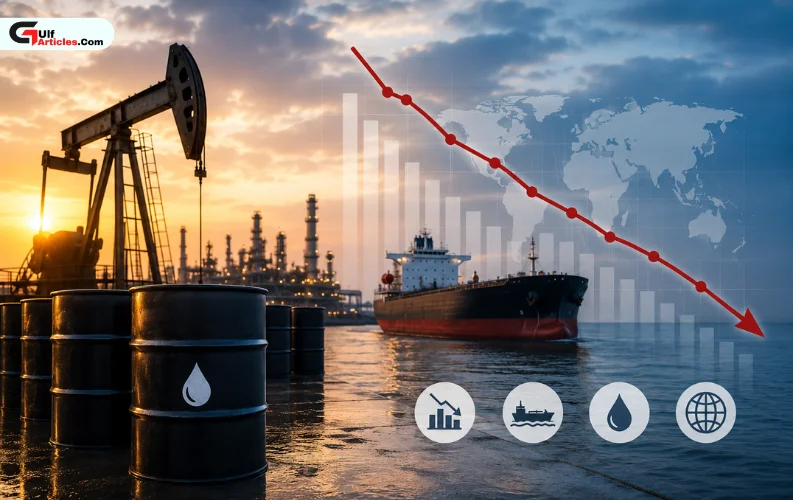
Global oil demand is expected to record its first annual decline since the COVID-19 pandemic, according to the latest monthly report from the International Energy Agency (IEA). The agency forecasts that worldwide oil consumption will fall by one million barrels per day (bpd) in 2026, citing ongoing geopolitical tensions and disruptions to Gulf energy supplies.
The projected decline follows months of instability in global energy markets after the conflict involving the United States and Iran severely affected shipping through the Strait of Hormuz, one of the world's most important oil transit routes.
The IEA noted that while the expected contraction is significantly smaller than the sharp collapse witnessed during the pandemic in 2020, it nevertheless marks the first annual drop in global oil demand in six years.
According to the report, the decline is expected to be concentrated primarily in Asia's import-dependent economies and in petrochemical feedstocks such as naphtha and liquefied petroleum gas (LPG), both of which rely heavily on supply routes through the Strait of Hormuz.
Despite weaker demand, oil production showed signs of recovery in June. Global supply increased by 4.1 million barrels per day, reaching 98.8 million barrels per day, as Gulf producers gradually resumed production following the partial reopening of the strategic waterway. However, output remains well below pre-conflict levels.
Exports from Gulf producers also improved during the month, aided by alternative shipping routes, although regional exports continue to trail volumes recorded before the conflict escalated.
Oil prices remained relatively stable despite ongoing uncertainty. Brent crude traded at approximately $76 per barrel, while West Texas Intermediate (WTI) hovered near $72 per barrel, both remaining below the peaks reached during the height of the conflict earlier this year.
The IEA cautioned that its market outlook assumes the gradual restoration of shipping through the Strait of Hormuz and continued stability in the region. However, renewed military activity has increased concerns over future supply disruptions.
Recent attacks on commercial vessels and subsequent military operations have raised tensions once again, casting uncertainty over the durability of the previous ceasefire. Reduced tanker traffic through the Strait of Hormuz continues to highlight the vulnerability of one of the world's most critical energy corridors.
Looking ahead, the agency said that weaker demand combined with recovering production outside the Gulf could eventually return the global oil market to a supply surplus, allowing countries to rebuild strategic petroleum reserves if geopolitical conditions improve.
You may also like that news:-











Comments 0
No comments yet. Be the first to share your thoughts.
Leave a comment
Your email is never published. All fields are required.