

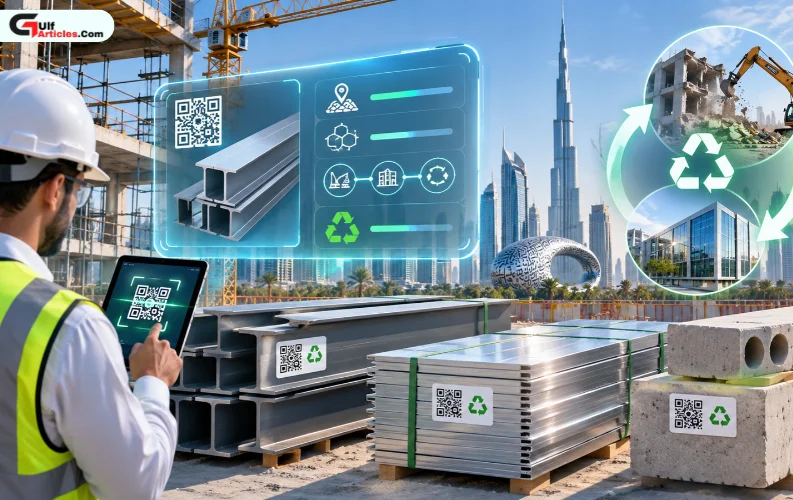
Dubai is preparing to introduce a mandatory digital passport system for construction materials, starting with steel, aluminium and cement, in early 2027. The initiative aims to reduce construction waste, lower building costs and ensure materials can be reused instead of being discarded after buildings are demolished.
Dubai Municipality announced the Building Materials Passport initiative during Dubai Future Week 2026. The system will initially cover three major construction materials, with plans to expand it to other materials in the future.
How the Building Materials Passport Will Work
Under the new system, each batch of steel, aluminium and cement will receive a unique digital identification number containing details about its source, composition, technical specifications and environmental characteristics.
Manufacturers and suppliers will be required to submit material information through a central municipality platform. The records will help authorities and construction companies track materials throughout a building's life, from production and installation to maintenance, demolition and reuse.
The platform will also connect material records with Building Information Modelling (BIM), allowing construction professionals to identify where materials are used and assess their potential for recovery.
Materials Will Get a Second Life After Demolition
One of the initiative's main objectives is to move Dubai's construction industry away from the traditional model of using materials once and sending them to landfill after demolition.
Under the proposed system, recovered materials will be tested in laboratories to determine whether they can be safely reused. For example, steel that retains sufficient strength could be treated and reinforced before being used in another construction project.
The system will also improve accountability by tracking recyclable materials and their reuse after buildings are dismantled.
Reducing Imports, Costs and Carbon Emissions
Dubai wants to increase the use of locally available and recovered construction materials, reducing dependence on imported resources. Reusing materials could help contractors manage expenses while reducing demand for newly manufactured products.
The initiative is also expected to reduce construction and demolition waste, conserve natural resources and lower carbon emissions associated with producing and transporting new materials.
By introducing digital tracking and encouraging material recovery, Dubai aims to strengthen its circular economy and make its construction sector more sustainable.
You may also like that news:-














Comments 0
No comments yet. Be the first to share your thoughts.
Leave a comment
Your email is never published. All fields are required.