

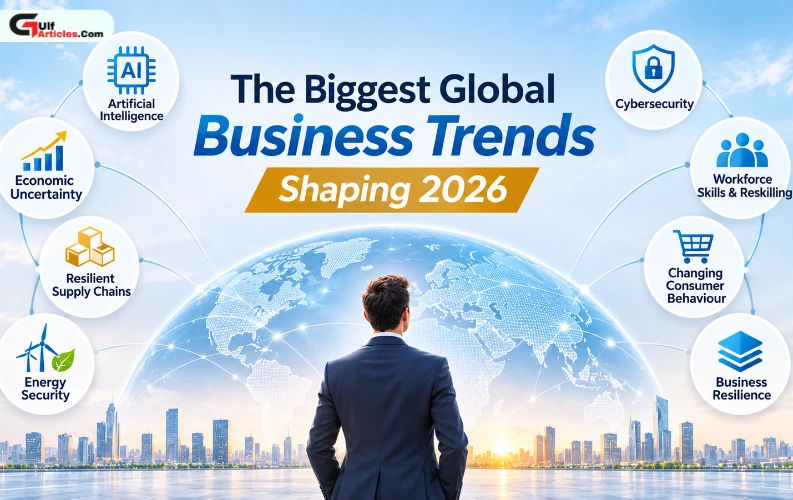
Businesses in 2026 are operating in an environment shaped by artificial intelligence, economic uncertainty, geopolitical tensions, changing consumer behaviour, and rapid technological development. These forces are changing how companies invest, manage employees, serve customers, and compete globally.
According to the International Monetary Fund's July 2026 outlook, global economic growth is projected at around 3.0% in 2026, while inflation is expected to reach 4.7%. Although technology investment is supporting economic activity, businesses continue to face pressure from rising costs, energy concerns, and changing trade conditions.
For business leaders, success in this environment depends on more than innovation. Companies must balance growth with resilience, adopt technology effectively, and respond quickly to changing market conditions.
Here are the key global business trends shaping 2026.
1. Artificial Intelligence Is Transforming Business Operations
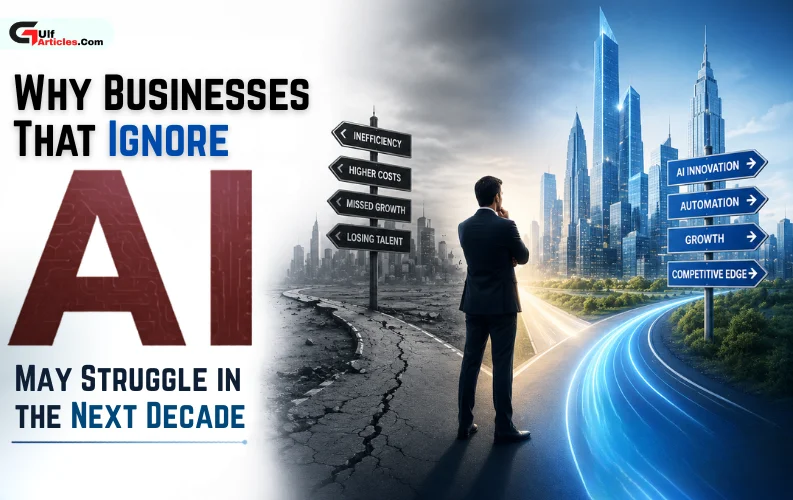
Artificial intelligence remains one of the most influential business trends in 2026. Companies are moving beyond basic AI experiments and integrating the technology into everyday operations.
Businesses are using AI for data analysis, customer support, marketing, forecasting, fraud detection, and product development. These applications can improve productivity, reduce manual work, and support faster decisions.
However, simply adopting AI does not guarantee business success. Companies need to focus on practical results, employee training, data protection, and human oversight.
The real competitive advantage comes from using AI to improve business performance rather than adopting it simply because it is popular.
2. Economic Uncertainty Is Influencing Business Decisions
Global businesses are balancing growth opportunities with economic uncertainty. Inflation, geopolitical tensions, changing financial conditions, and uneven consumer demand are making long-term planning more challenging.
Companies are becoming more careful about hiring, expansion, acquisitions, and major investments. Financial flexibility and cost management are receiving greater attention.
Rather than stopping investment completely, businesses are prioritizing opportunities that offer sustainable returns while keeping enough resources available to handle unexpected changes.
3. Global Supply Chains Are Becoming More Resilient
Supply-chain strategies are changing as companies recognize the risks of depending too heavily on a single supplier, country, or transport route.
Businesses are increasingly diversifying suppliers, developing regional production networks, improving inventory management, and using technology to identify disruptions earlier.
This does not mean global trade is disappearing. Instead, companies are trying to balance cost efficiency with reliability and security.
A resilient supply chain can help businesses continue operating even when geopolitical tensions, trade restrictions, or unexpected disruptions affect international markets.
4. Energy Security Is Becoming a Strategic Priority
Reliable and affordable energy is becoming increasingly important for manufacturers, technology companies, transportation businesses, and other industries.
The International Energy Agency expects global energy investment to reach approximately $3.4 trillion in 2026. Growing electricity demand from data centers, AI infrastructure, and industrial activity is adding to the importance of energy investment.
Businesses are paying greater attention to renewable energy, nuclear power, battery storage, and energy-efficient infrastructure.
Energy availability and cost may increasingly influence where companies establish facilities and plan future investments.
5. Cybersecurity Is Moving to the Boardroom
As businesses become more dependent on digital systems, cybersecurity risks are growing. Ransomware, phishing, data theft, AI-related vulnerabilities, and attacks through third-party suppliers can disrupt operations and damage customer trust.
Cybersecurity is no longer just an IT responsibility. Business leaders must understand digital risks and ensure that organizations have effective protection and recovery plans.
Employee awareness, data protection, supplier security, and incident response planning are becoming essential parts of business strategy.
6. Workforce Skills Are Changing Alongside AI
Automation is changing the responsibilities employees handle and the capabilities businesses need.
Companies increasingly require professionals who understand technology while also demonstrating critical thinking, communication, creativity, adaptability, and leadership.
The World Economic Forum's Future of Jobs research identifies AI and big data, cybersecurity, and technological literacy among the skills expected to grow in importance through 2030.
As a result, employee training and reskilling are becoming important business priorities. Organizations need to prepare their workforce for new responsibilities rather than focus only on reducing manual work.
7. Consumers Are Prioritizing Value and Trust
Economic uncertainty is encouraging consumers to become more careful with their spending. Many are comparing prices, checking reviews, and paying closer attention to product quality and reliability.
For businesses, this means that attracting customers requires more than marketing visibility. Companies need to offer clear value, transparent communication, consistent quality, and dependable customer experiences.
Brands that understand changing customer expectations and build long-term trust may be better positioned to maintain loyalty.
8. Business Resilience Is Becoming a Competitive Advantage
Companies are increasingly preparing for overlapping risks involving technology, trade, energy, finance, and geopolitics.
Resilience now involves maintaining financial flexibility, diversifying suppliers, strengthening cybersecurity, developing employee capabilities, and building adaptable operations.
Although these measures may sometimes increase short-term costs, they can reduce the impact of unexpected disruptions.
The strongest businesses are learning to balance efficiency with the flexibility needed to respond when market conditions change.
9. What These Trends Mean for Business Leaders
The major business trends of 2026 are interconnected. AI adoption affects workforce planning and cybersecurity, geopolitical developments influence supply chains and energy decisions, and economic uncertainty changes both investment priorities and consumer behaviour.
Business leaders should focus on a few important priorities:
- Invest in AI where it delivers measurable results.
- Strengthen supply chains and digital security.
- Develop employees' technical and human skills.
- Maintain financial flexibility during uncertain conditions.
- Build customer trust through quality and transparency.
- Prepare operations to adapt to unexpected changes.
Companies that understand these connections can make better decisions and identify opportunities more effectively.
10. Final Thoughts: Adapting to a Changing Business Environment
The global business landscape in 2026 is being shaped by technology, economic uncertainty, changing consumer expectations, and growing demands for resilience.
Artificial intelligence is transforming operations, energy security is influencing investment, and companies are rethinking how they manage employees, suppliers, and customers.
Businesses that succeed will not simply be those adopting the latest technology. They will be the organizations that combine innovation with strategic planning, financial discipline, workforce development, and customer understanding.
In 2026, the ability to adapt, make informed decisions, and remain prepared for uncertainty will be essential for long-term business growth.
Frequently Asked Questions
1. What are the biggest global business trends in 2026?
The major trends include AI adoption, economic uncertainty, supply-chain diversification, energy security, cybersecurity, workforce reskilling, changing consumer behaviour, and business resilience.
2. Why is AI important for businesses in 2026?
AI helps companies automate tasks, analyze data, improve customer service, and increase productivity. Businesses are focusing on integrating it into everyday operations.
3. Why are companies changing their supply chains?
Businesses are diversifying suppliers and production locations to reduce dependence on individual markets and protect operations from geopolitical and trade disruptions.
4. Which skills will be important in the future workplace?
AI knowledge, data literacy, cybersecurity, critical thinking, communication, creativity, adaptability, and leadership are becoming increasingly valuable.
5. What should businesses prioritize in 2026?
Companies should prioritize practical AI adoption, financial stability, cybersecurity, supply-chain resilience, employee development, and customer trust.










Comments 0
No comments yet. Be the first to share your thoughts.
Leave a comment
Your email is never published. All fields are required.