

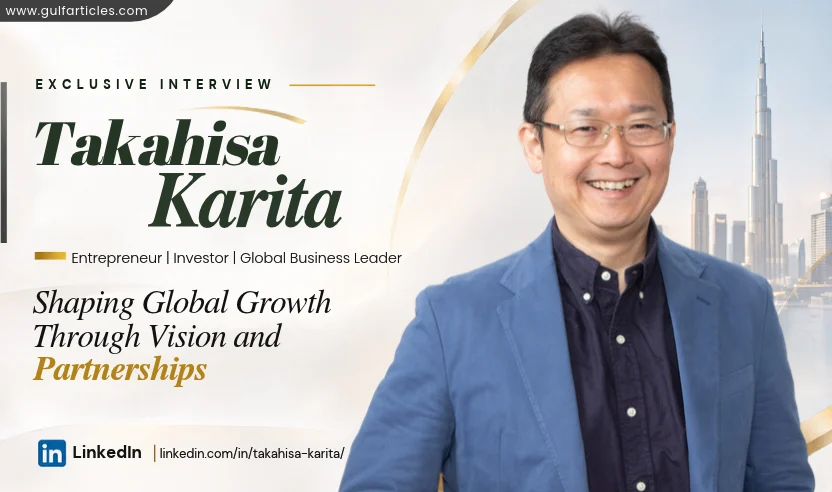
A scientific breakthrough can begin in a laboratory, a promising business idea can emerge from a small entrepreneurial team, and an investment opportunity can develop thousands of miles away from the people capable of bringing it to life. Yet the distance between an idea and its real-world impact is rarely measured by geography alone. It is often defined by the connections, resources, and partnerships needed to turn potential into progress.
For Hr. Dr. Takahisa Karita, bridging these gaps has become a defining purpose of his entrepreneurial journey. Over more than three decades, his professional experience has spanned biotechnology, pharmaceuticals, information technology, education, finance, artificial intelligence, and Web3. From commercializing pharmaceutical research to contributing to the development of digital education platforms, his career reflects an enduring interest in connecting scientific knowledge with business expertise and international opportunities.
Having worked across Japan, China, and Europe, Takahisa Karita understands that entering new markets involves far more than identifying commercial opportunities. It requires cultural understanding, mutual trust, and the ability to build partnerships that create lasting value. This perspective also shapes his vision for stronger collaboration between Asia and the Gulf, where complementary strengths in technology, research, investment, and infrastructure could open new possibilities for entrepreneurs and institutions.
As a co-founder of UNIPLAT, an online platform connecting researchers, entrepreneurs, and business professionals across borders, Takahisa Karita continues to pursue an ambition that extends beyond individual ventures. His work reflects a commitment to helping promising discoveries and innovative ideas reach the markets and communities where they can make a meaningful difference, regardless of their geographical origins.
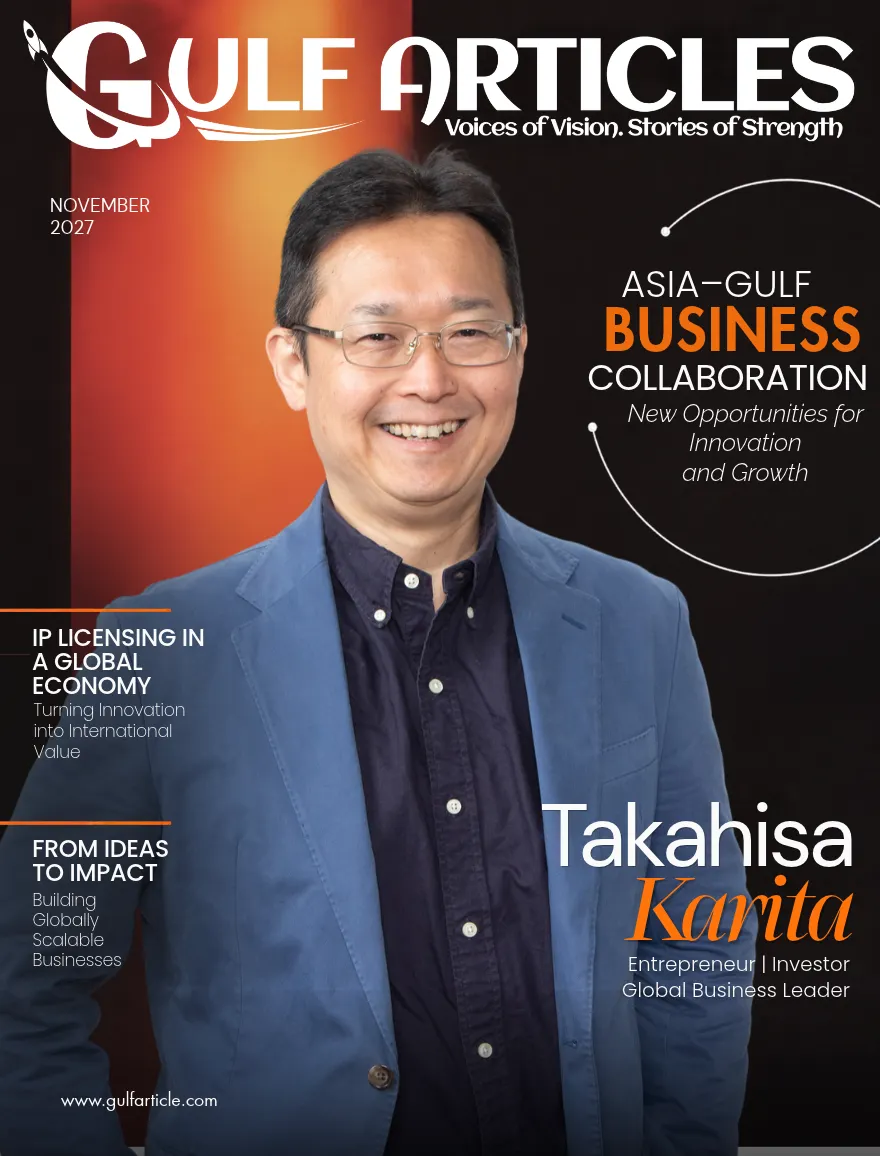
In this exclusive GulfArticles cover feature, Hr. Dr. Takahisa Karita shares his perspectives on building sustainable international partnerships, transforming innovation into scalable businesses, leveraging intellectual property, and navigating the evolving influence of AI and Web3. He also reflects on the lessons of his entrepreneurial journey and his vision for connecting Asia, the Gulf, and the wider world through collaboration that creates opportunities for future generations.
Bridging Asia and the Gulf
Takahisa Karita believes Asia and the Gulf have a remarkable opportunity to become complementary engines of global innovation.
Asia offers exceptional technological capabilities, advanced manufacturing, scientific research, and entrepreneurial talent. The Gulf, meanwhile, is rapidly emerging as a global hub for investment, infrastructure development, technological transformation, and international business.
Drawing on more than three decades of experience across industries and international markets, Takahisa Karita has learned that some of the greatest opportunities emerge when capabilities separated by geography, culture, or industry are brought together.
He sees particularly strong potential in healthcare, biotechnology, artificial intelligence, education, renewable energy, and advanced digital infrastructure.
However, successful collaboration requires more than simply matching capital with promising technologies. It requires a shared vision, mutual trust, and a genuine understanding of the value each partner brings.
His ambition is to help create an environment where entrepreneurs, researchers, investors, and institutions from Asia and the Gulf can work together to transform innovative ideas into sustainable global businesses.
Ultimately, he believes the future belongs not to individual markets competing in isolation, but to interconnected ecosystems that grow together.
“Ultimately, I believe the future belongs not to individual markets competing in isolation, but to interconnected ecosystems that grow together.”
Building Partnerships That Last
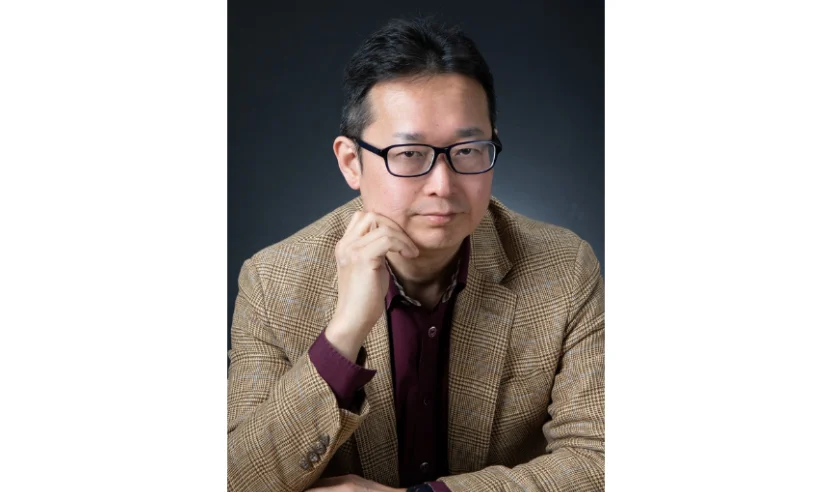
For Takahisa Karita, the foundation of every successful international partnership is trust.
Throughout his entrepreneurial journey, he has worked with people from different countries, cultures, industries, and professional backgrounds. One lesson has remained constant: financial resources and sophisticated technologies alone cannot sustain a partnership without mutual respect and a shared commitment to long-term value creation.
He believes three principles are particularly important.
First, partners must share a clear vision while respecting their different perspectives and strengths.
Second, transparency and fairness must be reflected in governance, responsibilities, intellectual property rights, and the distribution of economic benefits.
Third, both parties must remain flexible. International business environments are constantly evolving, and sustainable partnerships require the ability to adapt without compromising fundamental principles.
His personal philosophy has always been to remain adaptable like water while maintaining a strong sense of purpose.
He does not view partnerships merely as contractual relationships. He sees them as opportunities to combine knowledge, experience, and human potential to achieve something that neither party could accomplish independently.
The strongest partnerships, in his view, are those in which everyone can grow together.
“My personal philosophy has always been to remain adaptable like water while maintaining a strong sense of purpose.”
Turning Innovation into Global Business
An innovative idea is only the beginning of an entrepreneurial journey. The real challenge is transforming that idea into a sustainable business model capable of creating value across different markets.
Takahisa Karita's entrepreneurial journey began in biotechnology, where he became involved in commercializing pharmaceutical research. That experience taught him that even exceptional scientific discoveries cannot benefit society unless they are supported by effective business strategies, appropriate financing, intellectual property protection, and strong execution.
Later, his involvement in the Chinese education technology sector demonstrated how digital platforms could create scalable value. He helped develop an enterprise resource planning ecosystem serving thousands of kindergartens.
These experiences reinforced his belief that successful entrepreneurship requires the integration of multiple disciplines.
Founders should begin by identifying a genuine problem, validating market demand, and building a business model that can be adapted to different economic and cultural environments.
Equally important is assembling the right team and establishing strategic partnerships.
Through UNIPLAT, an online platform that he co-founded, Takahisa Karita has continued pursuing the vision of connecting researchers, entrepreneurs, and business professionals across international borders.
He believes global scalability is not simply about expanding into more countries. It is about creating a system through which innovation can generate sustainable value wherever it is needed.
“I believe global scalability is not simply about expanding into more countries. It is about creating a system through which innovation can generate sustainable value wherever it is needed.”
Unlocking the Value of Intellectual Property
Intellectual property is one of the most important foundations of a knowledge-driven global economy.
Takahisa Karita's early experience in biotechnology taught him that scientific discoveries and technological inventions can possess enormous potential, yet their commercial value often remains unrealized without an appropriate intellectual property strategy.
IP licensing provides a mechanism for connecting innovators with organizations that possess the capital, infrastructure, regulatory expertise, or market access required to commercialize their technologies.
For researchers and smaller companies, licensing can create opportunities to enter international markets without independently building every component of a global business.
For established companies and investors, it provides access to specialized technologies and new growth opportunities.
However, he believes successful IP partnerships must be built upon transparent ownership structures, fair economic arrangements, and clearly defined responsibilities.
Today, emerging technologies such as blockchain and Web3 also offer interesting possibilities for improving the traceability and management of intellectual property rights.
His broader vision is to help create ecosystems in which researchers can concentrate on discovery while experienced entrepreneurs, investors, and commercial partners help transform those discoveries into products and services that benefit society.
Ultimately, intellectual property should not remain confined to laboratories or legal documents. It should become a bridge between human creativity and real-world impact.
“Intellectual property should not remain confined to laboratories or legal documents. It should become a bridge between human creativity and real-world impact.”
Technology with a Human Purpose
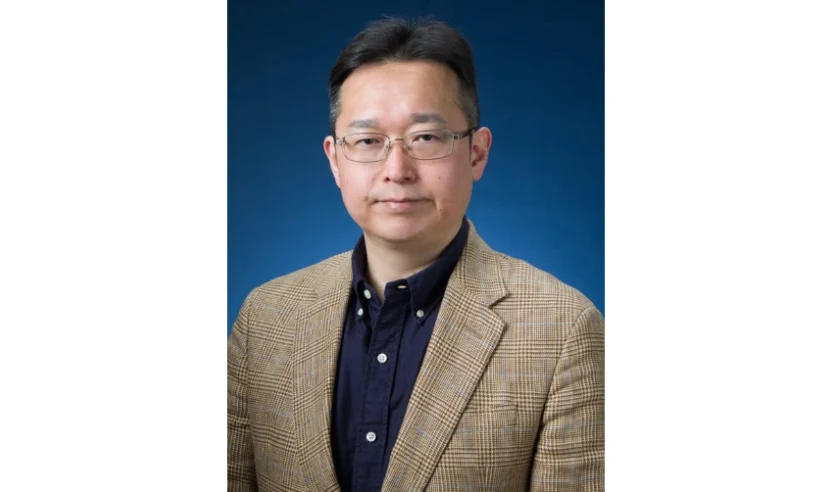
Artificial intelligence, Web3, and other emerging technologies are fundamentally changing how entrepreneurs develop businesses, access resources, and collaborate internationally.
AI is dramatically expanding the ability of smaller organizations to analyze information, improve operational efficiency, develop products, and compete in markets that previously required substantial financial and human resources.
Web3 and blockchain technologies, meanwhile, offer new approaches to digital ownership, transparent transactions, intellectual property management, and decentralized participation.
Through his involvement in UNIPLAT and other technology ventures, Takahisa Karita has become increasingly interested in how these technologies can reduce traditional barriers between researchers, entrepreneurs, investors, and global markets.
However, he does not believe technology should be adopted simply because it is fashionable.
Technology creates meaningful value only when it solves genuine problems, improves accessibility, or enables opportunities that would otherwise be unavailable.
He is particularly interested in the convergence of AI, biotechnology, digital infrastructure, and new models of intellectual property commercialization.
He envisions a world where technology does not replace human relationships but strengthens people's ability to connect, collaborate, and create.
Human creativity, trust, and ethical responsibility must remain at the center of technological progress.
“Human creativity, trust, and ethical responsibility must remain at the center of technological progress.”
Navigating Global Markets
International expansion is one of the most exciting opportunities for entrepreneurs, but it also requires humility, preparation, and a willingness to learn.
Having worked across Japan, China, and Europe, Takahisa Karita has experienced how dramatically business practices, regulatory environments, cultural expectations, and decision-making processes can differ.
One of the most common mistakes entrepreneurs make is assuming that a successful business model in their home market will automatically succeed elsewhere.
Before entering a new market, founders should carefully evaluate local demand, regulatory requirements, competitive conditions, financing needs, and the availability of reliable partners.
In his experience, selecting the right local partner is often more important than entering a market quickly.
A strong local partner contributes far more than introductions or distribution channels. They provide cultural understanding, practical knowledge, and the credibility required to establish long-term relationships.
He also encourages entrepreneurs to consider how their intellectual property, governance structures, and financial strategies will function across jurisdictions.
Above all, international expansion should be guided by a long-term vision rather than short-term excitement.
His philosophy is simple: respect the local environment, build relationships before transactions, and remain flexible while protecting the fundamental values of the business.
Global entrepreneurship is ultimately about understanding people as much as understanding markets.
“Global entrepreneurship is ultimately about understanding people as much as understanding markets.”
Connecting Research, Capital, and Innovation
Takahisa Karita believes some of humanity's greatest challenges can only be addressed when scientific research, entrepreneurial execution, and financial resources work together.
Throughout his career, he has observed that remarkable innovations frequently remain within universities, research institutions, or early-stage companies because the necessary commercialization infrastructure is missing.
Researchers may possess extraordinary knowledge but lack access to capital, business development expertise, regulatory support, or international networks.
Investors, on the other hand, are constantly searching for meaningful innovations capable of generating both financial returns and positive social impact.
Entrepreneurs can serve as the bridge between these worlds.
His involvement in biotechnology, healthcare innovation, and international research collaborations has strengthened his conviction that the integration of science and business is essential to sustainable progress.
Through initiatives such as UNIPLAT, he has sought to support environments where researchers, entrepreneurs, and potential partners can discover one another and explore opportunities for collaboration.
He is particularly passionate about innovations addressing healthcare, aging societies, education, and environmental sustainability.
For him, investment is not simply about providing financial resources. It is about enabling talented individuals to pursue ideas that could improve millions of lives.
When capital, technology, and research are aligned around a shared purpose, they can become powerful instruments for global progress.
“When capital, technology, and research are aligned around a shared purpose, they can become powerful instruments for global progress.”
Creating a Legacy Beyond Business
After more than three decades as an entrepreneur, investor, and business leader, Takahisa Karita increasingly believes that success should be measured not merely by the companies established or financial achievements accumulated, but by the lasting value created for others.
His journey has taken him through biotechnology, pharmaceuticals, information technology, education, finance, artificial intelligence, and Web3. Each industry has taught him something different, but one principle has connected them all: meaningful progress occurs when people with different capabilities come together around a shared vision.
Looking ahead, he wants to continue building bridges between scientific research, emerging technologies, investment capital, and entrepreneurial talent.
He is especially committed to supporting researchers and entrepreneurs whose ideas have the potential to address important global challenges but who may lack the networks or resources required to bring those ideas to the world.
He also hopes to contribute to stronger connections between Asia, Europe, the Gulf, and other emerging innovation ecosystems.
At this stage of his journey, he is increasingly focused on creating opportunities for the next generation of entrepreneurs and innovators.
He wants to help build systems that continue generating value long after any individual business project has ended.
His greatest ambition is not simply to build successful businesses, but to help create a world in which extraordinary ideas can become extraordinary opportunities, regardless of where they originate.
If his entrepreneurial journey can inspire others to challenge boundaries, embrace collaboration, and pursue meaningful innovation, he would consider that a legacy worth building.
“My greatest ambition is not simply to build successful businesses, but to help create a world in which extraordinary ideas can become extraordinary opportunities, regardless of where they originate.”
Conclusion: A Vision Beyond Business Success
For Hr. Dr. Takahisa Karita, entrepreneurship has never been confined to the pursuit of commercial success. His experiences across industries and international markets have shaped an understanding of leadership in which progress depends not only on individual ambition but also on the willingness to recognize potential in others and bring different strengths together.
What distinguishes his perspective is the importance he places on relationships that endure beyond immediate business objectives. Whether navigating unfamiliar markets or exploring emerging technologies, his approach reflects the belief that meaningful progress requires trust, adaptability, and a commitment to shared purpose.
As his entrepreneurial journey continues, Takahisa Karita remains guided by the values that have shaped his career while looking toward possibilities that extend beyond established industries and geographical boundaries. His story reflects a broader understanding of business leadership, one in which achievement is measured not only by what an entrepreneur accomplishes, but also by the opportunities those accomplishments create for others.
You may also like:-















Comments 0
No comments yet. Be the first to share your thoughts.
Leave a comment
Your email is never published. All fields are required.