
whatsapp

UAE’s Exit from OPEC Marks Strategic Turning Point Amid Rising Gulf Policy Divergence

  • 0
  • 683
/media/GA_jBstmfA._2.webp © Image Copyrights Title

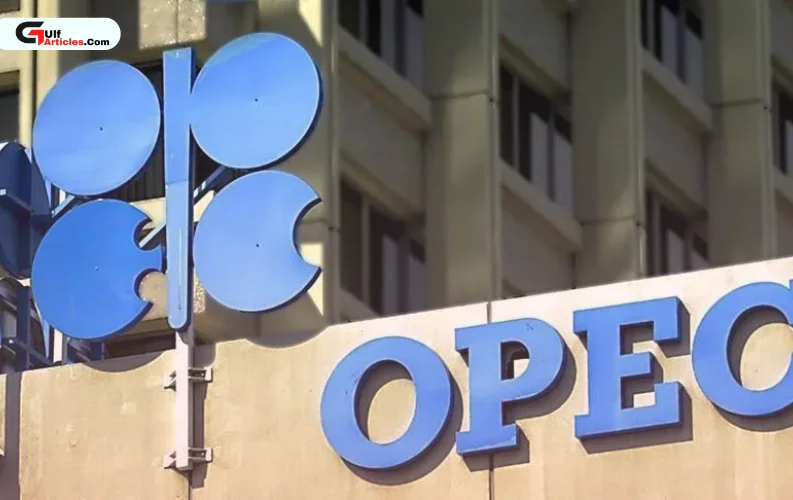
The decision by the United Arab Emirates to formally withdraw from the Organization of the Petroleum Exporting Countries marks a significant turning point in global energy dynamics, raising fresh questions about the future of coordinated oil production policies in the Gulf region. Set to take effect from May 1, the move follows years of growing frustration within Abu Dhabi over output restrictions that limited its ability to capitalize on substantial investments in expanding oil production capacity. The departure reflects a broader recalibration of national priorities, with the UAE increasingly focused on maximizing its market share rather than adhering to collective production frameworks.

Energy analysts suggest the decision has been building over time. According to industry experts, the UAE’s long-term strategy has centered on scaling its oil and gas capabilities, making quota-based limitations increasingly difficult to justify from a commercial standpoint.

“The UAE has invested heavily to boost its production capacity, and continuing to operate under restrictive quotas no longer aligns with its strategic objectives,” noted Bill Farren-Price of the Oxford Institute for Energy Studies.

The move also highlights deeper structural tensions within both OPEC and the broader OPEC+ alliance, where balancing collective discipline with individual national ambitions has become increasingly challenging. Countries with expanded production capacity are now more inclined to prioritize output growth over coordinated supply management.

Frédéric Schneider, a senior fellow at the Middle East Council on Global Affairs, emphasized that the UAE’s decision is driven largely by its intent to increase exports and close the gap between its production potential and OPEC-imposed limits.

Beyond production economics, the exit signals a shift in geopolitical positioning. Analysts interpret the move as a clear indication that the UAE is prepared to pursue a more independent energy policy, reducing its reliance on regional groupings such as OPEC and even the Gulf Cooperation Council.

The implications for OPEC are notable, though not immediately destabilizing. While the organization is expected to continue functioning, the departure adds pressure to an already strained system. Questions are emerging about the long-term viability of traditional quota mechanisms, particularly as global demand remains robust and producers seek greater flexibility.

Andrei Covatariu of the Atlantic Council’s Global Energy Center pointed out that the UAE’s decision was widely anticipated, given its repeated signals advocating for more flexible production arrangements.

“The economic rationale for adhering to strict production limits becomes less compelling when countries have the capacity and incentive to produce more,” he observed.

In the short term, market reactions are expected to remain relatively stable. However, analysts caution that the longer-term effects could reshape alliances within the global oil market, especially if other producers reconsider their commitments.

The development also draws attention to evolving dynamics within the Gulf. The UAE’s departure follows Qatar’s exit from OPEC in 2019, reinforcing a broader trend of regional players prioritizing national strategies over collective frameworks.

Despite these shifts, major producers such as Saudi Arabia and Russia are expected to maintain dominant roles within the OPEC+ structure, helping preserve a degree of stability in global supply management.

Within the Gulf, the move is unlikely to trigger immediate disruption but may deepen existing differences in policy direction. Analysts suggest regional players will adopt a cautious approach, focusing on maintaining economic stability while navigating evolving strategic interests.

Ultimately, the UAE’s exit underscores a broader transformation in the global energy landscape one where national priorities, market competitiveness, and geopolitical considerations increasingly outweigh traditional models of collective coordination.


Related Posts
© Iran Conflict Triggers Global Fertiliser Crisis, Raising Alarm Over Food Security

Iran Conflict Triggers Global Fertiliser Crisis, Raising Alarm Over Food Security

The ongoing conflict involving Iran is beginning to ripple far beyond energy markets, with a growing fertiliser crisis now raising serious concerns about global food security. At the center of the ...

  • 541
© UAE and South Korea Activate CEPA to Strengthen Trade and Investment Ties

UAE and South Korea Activate CEPA to Strengthen Trade and Investment Ties

The United Arab Emirates and South Korea have officially activated their Comprehensive Economic Partnership Agreement (CEPA), ushering in a new chapter of economic collaboration aimed at boosting trad...

  • 10973
© Dubai Taxi Confirms No Job Cuts Amid Demand Fluctuations, Strengthens Future Mobility Strategy

Dubai Taxi Confirms No Job Cuts Amid Demand Fluctuations, Strengthens Future Mobility Strategy

Dubai Taxi Company (DTC) has reaffirmed its commitment to workforce stability, confirming that no job cuts have been implemented despite recent fluctuations in demand influenced by geopolitical tensio...

  • 9655
© Brent Crude Surges Past $125 to Wartime High Amid US-Iran Tensions

Brent Crude Surges Past $125 to Wartime High Amid US-Iran Tensions

Global oil prices surged sharply, with Brent crude climbing above $125 per barrel to reach a wartime high, as escalating tensions between the United States and Iran intensified concerns over supply di...

  • 4580
© Trump Warns Iran Over Strait of Hormuz Blockade, Signals Possible Military Action

Trump Warns Iran Over Strait of Hormuz Blockade, Signals Possible Military Action

Former US President Donald Trump has issued a strong warning to Iran amid escalating tensions over the blockade of the Strait of Hormuz, indicating that military action remains a possibility if negoti...

  • 8553
© UAE Announces Exit from OPEC, Citing National Interest in Evolving Energy Landscape

UAE Announces Exit from OPEC, Citing National Interest in Evolving Energy Landscape

In a move set to reshape global energy dynamics, the United Arab Emirates has announced its decision to withdraw from the Organisation of the Petroleum Exporting Countries (OPEC), marking a historic s...

  • 11678
© Dubai Islamic Bank Reports Dh3.5 Billion Revenue in Strong Q1 Performance

Dubai Islamic Bank Reports Dh3.5 Billion Revenue in Strong Q1 Performance

Dubai Islamic Bank (DIB), the UAE’s largest Islamic bank by assets, has reported a solid financial performance for the first quarter of 2026, underscoring its resilience and sustained growth across co...

  • 9685
© UAE fuel prices for May seen steady despite oil rising above $100

UAE fuel prices for May seen steady despite oil rising above $100

UAE fuel prices are expected to remain broadly stable in May, even as global oil prices have climbed back above $100 per barrel in recent days. Brent crude for June delivery is trading around $107....

  • 16451
© Emirates Islamic launches Sharia-compliant digital gold and silver investment service

Emirates Islamic launches Sharia-compliant digital gold and silver investment service

Emirates Islamic has launched a digital investment service enabling customers to buy, sell and store gold and silver through its mobile banking app, in a move aimed at expanding access to Sharia-compl...

  • 11678
© Oil Prices Jump as US–Iran Talks Stall and Hormuz Disruptions Deepen

Oil Prices Jump as US–Iran Talks Stall and Hormuz Disruptions Deepen

Global oil prices climbed on Monday as renewed tensions between the United States and Iran stalled diplomatic progress and continued disruptions in the Strait of Hormuz tightened supply concerns acros...

  • 18656
© UAE Launches Public Debt Report Outlining Strategy and Market Growth Through 2025

UAE Launches Public Debt Report Outlining Strategy and Market Growth Through 2025

The UAE Ministry of Finance has released a comprehensive report detailing the federal government’s public debt strategy and market development between 2022 and 2025, highlighting increased issuance ac...

  • 10257
© Malabar Gold & Diamonds Records $282 Million in Akshaya Tritiya Sales

Malabar Gold & Diamonds Records $282 Million in Akshaya Tritiya Sales

Malabar Gold & Diamonds reported its strongest-ever Akshaya Tritiya performance, with global sales reaching $282 million, supported by robust consumer demand and operational strengths. The company ...

  • 27653
© Gulf Trade Faces New Shock as Hormuz Disruptions Strain Supply Chains

Gulf Trade Faces New Shock as Hormuz Disruptions Strain Supply Chains

Trade flows across the Middle East are facing renewed pressure as disruptions in the Strait of Hormuz impact shipping routes, raising concerns over supply chain stability and global trade dynamics. ...

  • 19656
© Oil Prices Rise, Global Stocks Slip as US-Iran Peace Talks Stall

Oil Prices Rise, Global Stocks Slip as US-Iran Peace Talks Stall

Oil prices climbed on Friday while global stock markets mostly declined, as stalled peace talks between the United States and Iran and continued tensions around the Strait of Hormuz unsettled investor...

  • 16994
© UAE Travellers Rethink Air Miles Use as Iran War Disrupts Flights

UAE Travellers Rethink Air Miles Use as Iran War Disrupts Flights

Travellers in the United Arab Emirates are changing how they use air miles as ongoing disruptions linked to the Iran conflict continue to reshape global flight routes and pricing dynamics. Airspace...

  • 12092
© Oil Prices Hold Near $100 as Hormuz Disruptions Tighten Global Supply

Oil Prices Hold Near $100 as Hormuz Disruptions Tighten Global Supply

Oil prices remained elevated around the $100 mark as continued disruption in the Strait of Hormuz and geopolitical tensions involving Iran tightened global supply conditions, offsetting signs of weake...

  • 30283
© dnata to Invest A$32 Million in Western Sydney Airport Cargo Terminal

dnata to Invest A$32 Million in Western Sydney Airport Cargo Terminal

Global air services provider dnata has announced an investment of approximately A$32 million (Dh77 million) to develop a new cargo terminal at Western Sydney International Airport, marking a significa...

  • 636
© Abu Dhabi Seizes Over Dh1.8m in Counterfeit Goods in 2025

Abu Dhabi Seizes Over Dh1.8m in Counterfeit Goods in 2025

Authorities in Abu Dhabi seized more than Dh1.8 million worth of counterfeit and non-compliant goods in 2025, as part of intensified efforts to strengthen consumer protection and enforce business regu...

  • 49024
© WTI, Brent Crude Slide in Asian Trade as Iran–US Talks Raise Supply Hopes

WTI, Brent Crude Slide in Asian Trade as Iran–US Talks Raise Supply Hopes

Oil prices declined during early Asian trading on Tuesday as markets reacted to expectations of renewed Iran–US talks in Islamabad, easing concerns over potential supply disruptions in the Middle East...

  • 40712
© UAE Growth Accelerates in Early 2026 on Banking, Trade Strength

UAE Growth Accelerates in Early 2026 on Banking, Trade Strength

The United Arab Emirates recorded stronger economic growth in the early months of 2026, supported by expanding banking activity, rising trade flows, and sustained investment momentum, according to off...

  • 890
Commnets 0
Leave A Comment