
whatsapp

Global Shipping Lines Divert Cargo to India and Sri Lanka as Iran Conflict Disrupts Gulf Routes

  • 0
  • 273
/media/GA_uwZ8rVy._5.webp © Image Copyrights Title

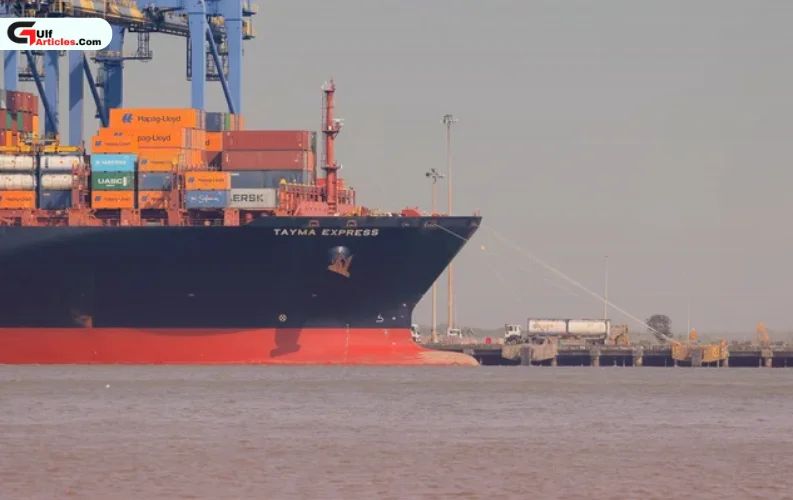
Global container shipping companies are increasingly rerouting cargo away from Gulf ports to alternative hubs in India and Sri Lanka as security risks escalate following intensified attacks on commercial vessels linked to the Iran conflict.

The disruptions, triggered by vessel attacks beyond the Strait of Hormuz, have forced carriers to adjust shipping networks and seek safer entry points for cargo destined for Gulf markets. Maritime analysts say the ongoing conflict is already affecting a significant portion of global container capacity.

According to shipping analytics firm Alphaliner, more than 10 percent of the world’s container shipping fleet has been directly impacted by the conflict. The situation has created major logistical challenges as shipping lines attempt to maintain supply chains while avoiding increasingly dangerous maritime corridors.

Ports along India’s western coastline have become key alternatives for cargo diversion. Facilities such as Mundra in Gujarat and Nhava Sheva near Mumbai are seeing increased activity as shipping companies redirect vessels away from the Gulf.

Shipping analyst Mael Pape-Léostic of Alphaliner said Indian ports are now playing an increasingly important role in diversion strategies for cargo that would normally be routed through Gulf hubs.

The shift accelerated after Oman’s Port of Salalah, which had been emerging as a major transshipment hub for Gulf cargo, was forced to suspend operations following drone strikes on March 11. The attack raised concerns that regional port infrastructure could become targets as the conflict expands.

Before the closure, Salalah and the UAE’s Khor Fakkan port had become major alternatives for cargo entering the region, particularly for time-sensitive shipments such as food products and other perishable goods.

With Salalah temporarily out of operation, shipping companies have been closely monitoring developments while redirecting vessels to other ports capable of handling large container volumes.

Industry data shows the diversion trend is already visible in vessel tracking systems. Ships communicate their intended destinations through Automatic Identification System (AIS) transponders, which provide insight into shifting maritime traffic patterns.

Between January 28 and March 10, the number of vessels declaring Dubai’s Jebel Ali port as their destination dropped sharply from 67 ships to just 23. During the same period, vessels declaring Nhava Sheva near Mumbai increased from 21 to 36.

Sri Lanka’s Port of Colombo has also seen a modest rise in vessel traffic. The number of ships declaring Colombo as their destination rose from seven to a peak of 14 on March 4, according to Alphaliner data.

Meanwhile, the number of vessels heading toward Khor Fakkan on the UAE’s east coast increased significantly, rising from just two vessels to 27 during the same timeframe. The port remains operational and is considered one of the safer alternatives within the region.

Security concerns intensified after Iran’s newly appointed supreme leader Mojtaba Khamenei vowed in a public statement to continue blocking access to the contested Strait of Hormuz, a crucial global shipping corridor through which a large portion of the world’s oil and cargo shipments pass.

Several commercial vessels have already been struck or damaged during attacks in and around the strait since tensions escalated. Images of burning ships circulating globally have heightened fears about the safety of maritime operations in the region.

Maritime analysts warn that the conflict could expand beyond shipping lanes if infrastructure in nearby countries continues to be targeted. Drone attacks on facilities in Oman have already raised concerns that the operational impact could spread across the broader Middle East maritime network.

According to Alphaliner, the war is now affecting approximately 10.7 percent of the global container fleet when measured by TEU capacity. TEU, or twenty-foot equivalent unit, is the standard measurement used in the shipping industry to calculate the capacity of container vessels.

Shipping companies are now redesigning service routes to avoid potential chokepoints while maintaining cargo flows to Gulf markets.

One of the most significant changes has come from the Gemini Cooperation alliance, formed by shipping giants Maersk and Hapag-Lloyd. The partnership has temporarily suspended several services linked to Gulf ports, including calls at Salalah.

Instead, the alliance has introduced alternative routes designed to bypass conflict zones while ensuring cargo delivery to the region.

A new service linking Far East ports to the Red Sea port of Jeddah has already been established. Under this routing, vessels travel via the Cape of Good Hope, the Mediterranean Sea, and the Suez Canal, effectively avoiding risky shipping lanes in the Gulf of Aden.

Industry experts expect other major shipping lines to consider similar routes if tensions continue to escalate.

In the longer term, analysts believe Gulf cargo may increasingly move through Saudi Arabia’s Red Sea ports, particularly Jeddah and King Abdullah Port. From there, goods could be transported inland to Gulf countries via rail or trucking networks.

This alternative logistics model would allow shipping companies to continue serving regional markets while minimizing exposure to maritime conflict zones.

For India and Sri Lanka, the shift in shipping routes presents an opportunity to strengthen their position as regional logistics hubs. Increased cargo traffic through ports such as Mundra, Nhava Sheva, and Colombo could boost port activity and expand their role in global supply chains.

However, industry observers caution that the long-term impact will depend on how quickly tensions in the Middle East stabilize. If attacks on commercial shipping continue, global trade routes may undergo more significant restructuring in the months ahead.

For now, shipping lines are focusing on maintaining cargo movement while navigating one of the most challenging maritime security environments in recent years.

Related Posts
© UAE fuel prices for May seen steady despite oil rising above $100

UAE fuel prices for May seen steady despite oil rising above $100

UAE fuel prices are expected to remain broadly stable in May, even as global oil prices have climbed back above $100 per barrel in recent days. Brent crude for June delivery is trading around $107....

  • 561
© Emirates Islamic launches Sharia-compliant digital gold and silver investment service

Emirates Islamic launches Sharia-compliant digital gold and silver investment service

Emirates Islamic has launched a digital investment service enabling customers to buy, sell and store gold and silver through its mobile banking app, in a move aimed at expanding access to Sharia-compl...

  • 757
© Oil Prices Jump as US–Iran Talks Stall and Hormuz Disruptions Deepen

Oil Prices Jump as US–Iran Talks Stall and Hormuz Disruptions Deepen

Global oil prices climbed on Monday as renewed tensions between the United States and Iran stalled diplomatic progress and continued disruptions in the Strait of Hormuz tightened supply concerns acros...

  • 568
© UAE Launches Public Debt Report Outlining Strategy and Market Growth Through 2025

UAE Launches Public Debt Report Outlining Strategy and Market Growth Through 2025

The UAE Ministry of Finance has released a comprehensive report detailing the federal government’s public debt strategy and market development between 2022 and 2025, highlighting increased issuance ac...

  • 693
© Malabar Gold & Diamonds Records $282 Million in Akshaya Tritiya Sales

Malabar Gold & Diamonds Records $282 Million in Akshaya Tritiya Sales

Malabar Gold & Diamonds reported its strongest-ever Akshaya Tritiya performance, with global sales reaching $282 million, supported by robust consumer demand and operational strengths. The company ...

  • 477
© Gulf Trade Faces New Shock as Hormuz Disruptions Strain Supply Chains

Gulf Trade Faces New Shock as Hormuz Disruptions Strain Supply Chains

Trade flows across the Middle East are facing renewed pressure as disruptions in the Strait of Hormuz impact shipping routes, raising concerns over supply chain stability and global trade dynamics. ...

  • 467
© Oil Prices Rise, Global Stocks Slip as US-Iran Peace Talks Stall

Oil Prices Rise, Global Stocks Slip as US-Iran Peace Talks Stall

Oil prices climbed on Friday while global stock markets mostly declined, as stalled peace talks between the United States and Iran and continued tensions around the Strait of Hormuz unsettled investor...

  • 413
© UAE Travellers Rethink Air Miles Use as Iran War Disrupts Flights

UAE Travellers Rethink Air Miles Use as Iran War Disrupts Flights

Travellers in the United Arab Emirates are changing how they use air miles as ongoing disruptions linked to the Iran conflict continue to reshape global flight routes and pricing dynamics. Airspace...

  • 587
© Oil Prices Hold Near $100 as Hormuz Disruptions Tighten Global Supply

Oil Prices Hold Near $100 as Hormuz Disruptions Tighten Global Supply

Oil prices remained elevated around the $100 mark as continued disruption in the Strait of Hormuz and geopolitical tensions involving Iran tightened global supply conditions, offsetting signs of weake...

  • 46
© dnata to Invest A$32 Million in Western Sydney Airport Cargo Terminal

dnata to Invest A$32 Million in Western Sydney Airport Cargo Terminal

Global air services provider dnata has announced an investment of approximately A$32 million (Dh77 million) to develop a new cargo terminal at Western Sydney International Airport, marking a significa...

  • 603
© Abu Dhabi Seizes Over Dh1.8m in Counterfeit Goods in 2025

Abu Dhabi Seizes Over Dh1.8m in Counterfeit Goods in 2025

Authorities in Abu Dhabi seized more than Dh1.8 million worth of counterfeit and non-compliant goods in 2025, as part of intensified efforts to strengthen consumer protection and enforce business regu...

  • 655
© WTI, Brent Crude Slide in Asian Trade as Iran–US Talks Raise Supply Hopes

WTI, Brent Crude Slide in Asian Trade as Iran–US Talks Raise Supply Hopes

Oil prices declined during early Asian trading on Tuesday as markets reacted to expectations of renewed Iran–US talks in Islamabad, easing concerns over potential supply disruptions in the Middle East...

  • 738
© UAE Growth Accelerates in Early 2026 on Banking, Trade Strength

UAE Growth Accelerates in Early 2026 on Banking, Trade Strength

The United Arab Emirates recorded stronger economic growth in the early months of 2026, supported by expanding banking activity, rising trade flows, and sustained investment momentum, according to off...

  • 874
© Suspicious $1 Billion Oil Trades Before Iran Developments Raise Insider Concerns

Suspicious $1 Billion Oil Trades Before Iran Developments Raise Insider Concerns

A series of unusually timed oil market trades worth more than $1 billion is drawing scrutiny from U.S. regulators and lawmakers, after investors appeared to take positions shortly before major announc...

  • 766
© U.S. Oil Prices Fall Below $84 as Iran Opens Strait of Hormuz

U.S. Oil Prices Fall Below $84 as Iran Opens Strait of Hormuz

U.S. oil prices dropped sharply, falling below $84 per barrel after Iran announced the reopening of the Strait of Hormuz during a temporary ceasefire between Israel and Lebanon. The move eased immedia...

  • 744
© Iran Declares Strait of Hormuz Open but U.S. Blockade Keeps Uncertainty High

Iran Declares Strait of Hormuz Open but U.S. Blockade Keeps Uncertainty High

Iran has announced that the Strait of Hormuz is open to commercial shipping during the ongoing ceasefire between Israel and Lebanon, but conflicting statements from the United States have created unce...

  • 667
© Asia markets fall as fragile Middle East ceasefire weighs on sentiment

Asia markets fall as fragile Middle East ceasefire weighs on sentiment

Asian stock markets mostly declined on Friday as investor sentiment remained cautious despite signs of progress in ceasefire talks related to the Middle East conflict. The weakness in regional mark...

  • 969
© Trump says Iran war ‘should end soon’ as ceasefire talks continue

Trump says Iran war ‘should end soon’ as ceasefire talks continue

US President Donald Trump said the ongoing conflict with Iran could come to an end soon, expressing confidence that the situation is moving in a positive direction. Speaking at an event in Las Vega...

  • 758
© UAE hotel revenue hits Dh49.2 billion in 2025, guest numbers reach 32.3 million

UAE hotel revenue hits Dh49.2 billion in 2025, guest numbers reach 32.3 million

Hotel revenues in the UAE rose 9.7% to approximately Dh49.21 billion in 2025, as the country’s tourism sector continued to expand across key performance indicators, the Ministry of Economy said. Th...

  • 660
© Oil prices ease; Hormuz disruption keeps market on edge

Oil prices ease; Hormuz disruption keeps market on edge

Oil prices slipped in Asian trading on Thursday, but traders said the decline reflects short-term positioning rather than a change in underlying supply risks tied to tensions in the Strait of Hormuz. ...

  • 829
Commnets 0
Leave A Comment