

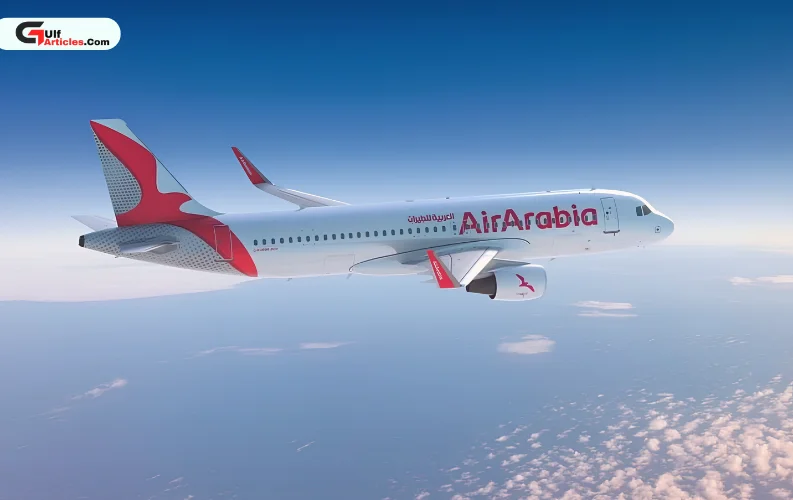
Air Arabia PJSC, the Middle East and North Africa’s leading budget airline, has reported a net profit of Dh278 million for the first quarter ending March 31, 2026, a 22% decline from Dh355 million in the same period last year.
The decrease was largely attributed to ongoing regional conflicts, which led to airspace closures and temporary operational restrictions, limiting flight capacity. Despite these challenges, the airline recorded a turnover of Dh1.8 billion, marking a 1% year-on-year increase.
Air Arabia carried 4.7 million passengers across its hubs in the UAE, Morocco, Egypt, and Pakistan, a 5% decline from last year, while the average seat load factor rose to 86%, up 2 percentage points. This demonstrates strong passenger demand and effective capacity management even under operational constraints.
Sheikh Abdullah Bin Mohammad Al Thani, Chairman of Air Arabia, said: “Despite a challenging first quarter, Air Arabia showed resilience and agility in responding to rapidly evolving conditions. Our multi-hub business model, disciplined cost management, and focus on operational efficiency allowed us to navigate disruptions effectively while delivering solid performance.”
During Q1 2026, the airline operated a fleet of 90 Airbus A320 and A321 aircraft, with additional deliveries scheduled throughout the year as part of its Airbus order book.
The airline was also recognized in February among Forbes Middle East’s Top 100 Most Valuable Companies 2026, reflecting its continued financial strength and operational excellence.
Air Arabia continues to emphasize sustainability and governance, obtaining a Limited Assurance Statement on its 2025 ESG Report in accordance with ISAE 3000 standards.
Looking ahead, the airline remains cautious of ongoing regional uncertainties, fuel price volatility, and inflationary pressures but remains confident in the strength of the local and regional economies it serves.











Comments 0
No comments yet. Be the first to share your thoughts.
Leave a comment
Your email is never published. All fields are required.