

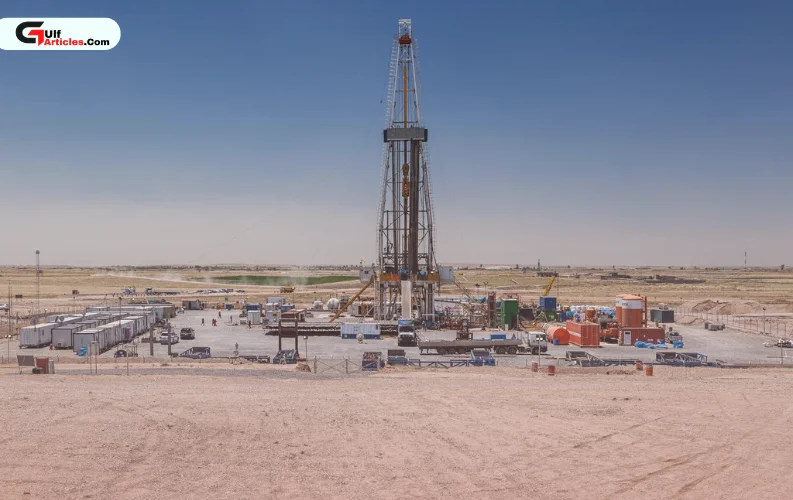
Iraq has announced the discovery of a major oil field in the southern province of Najaf near the Saudi Arabian border, marking one of the country’s most significant energy discoveries in recent years as tensions in the Middle East continue to disrupt oil exports through the Strait of Hormuz.
The Iraqi Ministry of Oil confirmed that initial estimates from the newly explored Qurnain block indicate reserves exceeding 8.8 billion barrels of crude oil. The discovery is expected to play a key role in strengthening Iraq’s long-term energy production capacity and economic stability.
Located in southwestern Iraq, approximately 180 kilometres from Baghdad, the Qurnain exploration block spans nearly 8,773 square kilometres along the Iraqi-Saudi border. The project has been described by Iraqi officials as one of the country’s most promising oil exploration zones.
According to the Ministry of Oil, drilling operations at the Shams-11 exploratory well revealed the presence of light crude oil with an initial production capacity estimated at 3,248 barrels per day. Officials stated that further exploration and development activities are expected to significantly increase production potential in the coming years.
The announcement was made during an official meeting between Iraqi Oil Minister Hayan Abdul Ghani and representatives of Chinese energy company ZhenHua Oil. Discussions focused on the progress of drilling operations at the Qurnain site and the use of advanced exploration technologies to improve production efficiency and accelerate commercial development.
ZhenHua Oil, through its subsidiary Qurnain Petroleum Limited, is leading exploration and seismic survey operations in partnership with Iraqi authorities. The company has reportedly submitted an accelerated investment strategy aimed at moving the field into commercial production as quickly as possible.
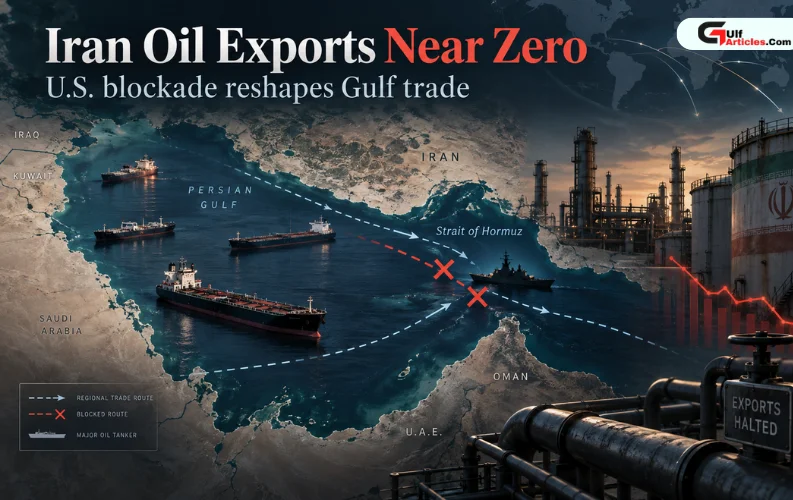
The oil discovery comes at a critical time for Iraq’s energy sector as the country faces mounting pressure on exports due to regional instability and disruptions in the Strait of Hormuz, one of the world’s most important maritime oil routes.
Before the recent escalation in Middle Eastern tensions, Iraq produced approximately 4.5 million barrels of oil per day, making it the third-largest producer within the Organization of the Petroleum Exporting Countries (OPEC). The country exported nearly 3.5 million barrels daily, with almost 90 percent of shipments passing through the Strait of Hormuz.
However, recent disruptions linked to the regional conflict have severely affected Iraq’s export performance. Official figures from the Ministry of Oil revealed that Iraq’s oil exports fell sharply to 18.6 million barrels in March, generating revenues of approximately $1.96 billion. This represented a significant decline compared to February, when exports exceeded 99 million barrels and generated revenues of $6.81 billion.
In response to growing export challenges, Baghdad is also accelerating plans for a strategic pipeline project connecting Basra province in southern Iraq to Haditha in Anbar province near the Syrian border. The proposed pipeline is expected to have an export capacity of 2.5 million barrels per day and could provide Iraq with alternative export routes outside the Strait of Hormuz.
Iraq currently holds the world’s fifth-largest proven oil reserves, estimated at nearly 145 billion barrels, according to data from the US Energy Information Administration. The reserves account for approximately 17 percent of the Middle East’s total oil reserves and around 9 percent of global reserves.
Energy analysts believe the latest discovery could strengthen Iraq’s position in global energy markets while helping the country navigate ongoing geopolitical and export-related challenges in the region.













Comments 0
No comments yet. Be the first to share your thoughts.
Leave a comment
Your email is never published. All fields are required.