

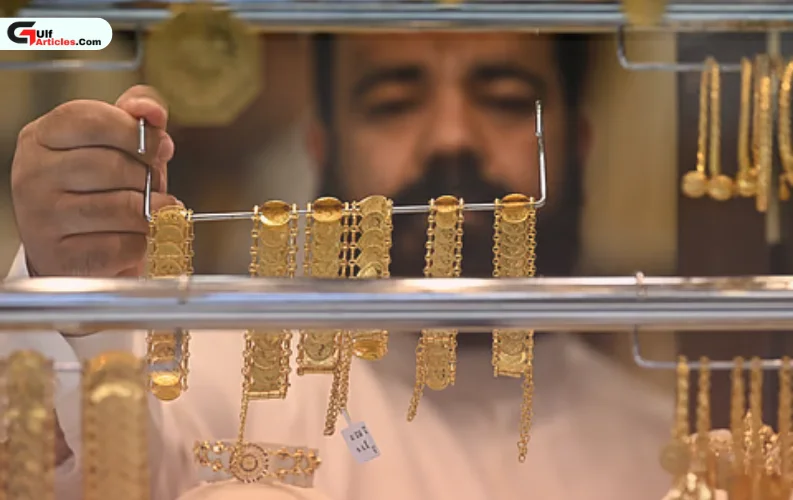
Gold prices in the UAE surged sharply on Monday morning, rising by more than Dh10 per gram as investors and buyers shifted toward safe-haven assets amid escalating conflict in the Middle East.
At 8:43 am on March 2, 24-karat gold was priced at Dh646.45 per gram, up from Dh636 a day earlier. The 22-karat variant climbed to Dh592.58 compared with Dh589 previously. The move marked one of the strongest single-day increases in recent weeks and pushed local bullion to multi-week highs.
The rally reflects heightened risk aversion across global markets as geopolitical tensions intensified over the weekend. Investors moved funds away from equities and risk-sensitive assets, favouring gold, which traditionally benefits during periods of uncertainty and instability.
February Momentum Builds
Gold’s climb did not begin overnight. Prices have been trending upward throughout February, supported by a combination of global economic uncertainty, steady central bank buying and strong investment demand.
At the start of February, 24-karat gold traded near Dh564 per gram. Prices gradually strengthened during the month, crossing Dh600 by mid-February before accelerating sharply in the final week. By February 27, the rate had reached Dh629.50 before breaking above Dh646 in early March.
Market analysts said the latest spike acted as a catalyst, amplifying an already established upward trajectory rather than creating it.
Conflict Sparks Global Surge
The immediate trigger for Monday’s gains was a sharp deterioration in regional stability following military strikes and retaliatory actions involving multiple countries. Fears of a broader escalation prompted a rapid flight to safety in global financial markets.
International bullion prices rose more than 2 per cent in early trading before moderating slightly. Simultaneously, oil prices surged at the open, reflecting concerns over potential supply disruptions in the Strait of Hormuz, a key global energy transit corridor.
The simultaneous rise in oil and gold underscored elevated systemic risk perceptions among investors.
Structural Drivers Remain Strong
Beyond short-term geopolitical shocks, gold has gained approximately 25 per cent so far in 2026. Analysts attribute the sustained rally to continued central bank accumulation, portfolio diversification away from sovereign bonds and persistent inflation-hedging demand.
Global political tensions, volatile trade dynamics and recurring financial market instability have also reinforced gold’s appeal.
Central bank purchases, in particular, have provided a steady underlying demand base, helping to limit downside pressure during temporary corrections.
Market Outlook
Short-term price direction will largely depend on geopolitical developments. Continued escalation in the region could keep bullion supported at elevated levels, while signs of de-escalation may prompt profit-taking.
However, longer-term fundamentals remain supportive. Persistent geopolitical uncertainty, institutional demand and broader macroeconomic risks suggest that gold’s upward trend could remain intact, even if volatility increases in the near term.















Comments 0
No comments yet. Be the first to share your thoughts.
Leave a comment
Your email is never published. All fields are required.