

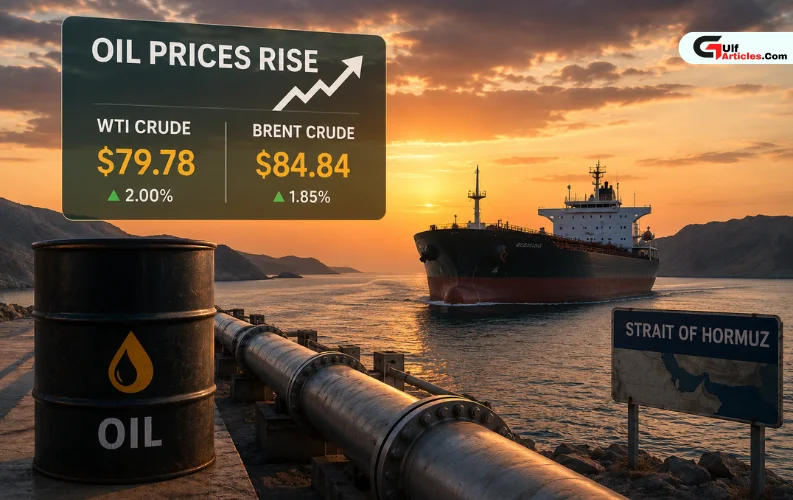
Global Markets: Crude oil prices extended their upward momentum on Tuesday after renewed geopolitical tensions in the Middle East raised fresh concerns about the stability of global energy supplies. Investors reacted to new U.S. measures targeting maritime traffic through the Strait of Hormuz, one of the world's most strategically important oil shipping routes.
U.S. benchmark West Texas Intermediate (WTI) crude for August delivery rose 2% to $79.78 per barrel, while Brent crude, the international benchmark, gained 1.85% to $84.84 per barrel. The latest increase followed a sharp rally in the previous trading session, reflecting heightened market sensitivity to developments in the region.
The gains came after U.S. President Donald Trump announced plans to introduce shipping fees for vessels passing through the Strait of Hormuz, proposing a charge equivalent to 20% of the cargo value. The administration also confirmed plans to reinstate a blockade targeting Iranian ports near the strategic waterway, a move that has intensified concerns over potential disruptions to global crude exports.
The U.S. Central Command stated that the new maritime measures would take effect on Tuesday, adding another layer of uncertainty to energy markets already influenced by ongoing geopolitical tensions.
Financial institutions also highlighted the growing risks. Analysts at Citi noted that the proposed shipping fees could increase the likelihood of further military escalation in the region, potentially keeping oil prices elevated for an extended period.
The Strait of Hormuz remains one of the world's most critical energy corridors, historically carrying nearly 20% of global oil supplies. Although shipping activity had shown signs of recovery following recent diplomatic developments between Washington and Tehran, renewed political and military tensions have once again raised concerns over the security of international energy trade.
Market participants are now closely monitoring developments in the Middle East, with traders assessing the potential impact on crude supply, shipping costs, and global inflation. Any prolonged disruption to oil exports through the Strait of Hormuz could further tighten energy markets and increase price volatility in the weeks ahead.
Industry analysts believe geopolitical developments will continue to play a significant role in determining oil market direction, alongside global demand trends and production decisions from major oil-producing nations.
You may also like that news:-











Comments 0
No comments yet. Be the first to share your thoughts.
Leave a comment
Your email is never published. All fields are required.