

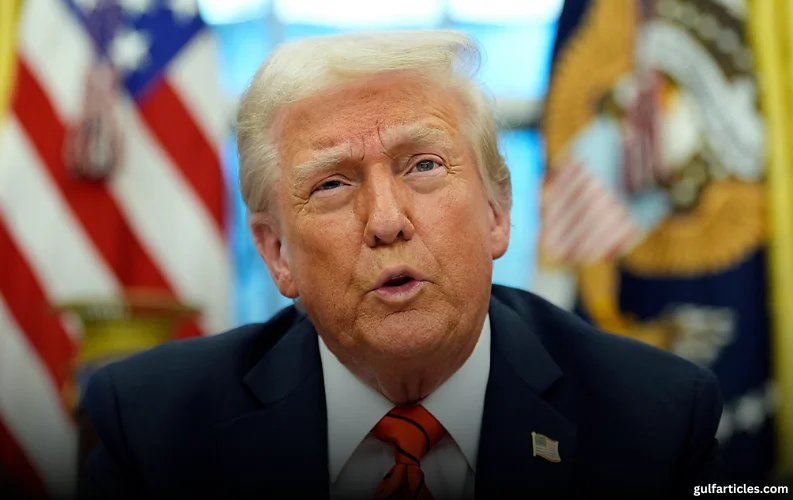
Washington, D.C.: Former President Donald Trump’s latest move to impose tariffs on pharmaceuticals imported into the United States has triggered concern among health experts, industry analysts, and patient advocates who warn the policy could sharply increase drug costs and worsen ongoing medication shortages nationwide.
The proposed levies, aimed at reducing dependency on foreign manufacturing and boosting domestic production, have already rattled markets and drawn criticism from pharmaceutical leaders and public health researchers alike. While Trump insists the tariffs will push more companies to relocate drug production to the U.S., experts question whether the benefits outweigh the potential harm to the country’s fragile healthcare supply chain.
“We are already in a state where prescription drugs are unaffordable to many,” said Dr. Mariana Socal, health policy professor at Johns Hopkins Bloomberg School of Public Health. “Any change—particularly those that impact cost structures—risks making the affordability crisis worse.”
Impact on Patients and the Supply Chain
The U.S. pharmaceutical industry is highly globalized, with different stages of production—ranging from active ingredients to final formulations—often spread across several countries. Tariffs could disrupt this intricate network, experts say, driving up prices and creating new bottlenecks in a supply chain already plagued by quality issues, high demand, and limited domestic capacity.
According to the American Society of Health-System Pharmacists, the U.S. is currently facing 270 active drug shortages, a number that has remained unchanged for the last three quarters. Tariffs could intensify these shortages, particularly in vulnerable categories such as generic sterile injectables—critical hospital medications like IV fluids, chemotherapy drugs, and anesthetics.
“Producers of injectable generics already operate on thin margins,” said Dr. Marta Wosińska, senior fellow at the Brookings Institution. “If they can’t pass on added tariff costs, they may exit the market or cut quality corners, both of which are dangerous outcomes.”
Sterile injectable drug manufacturers typically operate under strict contracts with group purchasing organizations (GPOs), which lock in prices but not volumes. This limits their flexibility in adjusting to cost increases, further compounding supply risks.
Generics Hit Hardest
Generic drugs—used in nearly 90% of U.S. prescriptions—are especially vulnerable. Unlike branded medications, which have greater profit margins and brand loyalty, generics compete primarily on price. A small increase in input costs can make certain generics financially unviable, pushing some manufacturers to exit the U.S. market altogether.
“For a $3 generic tablet, even a 25% price hike from tariffs may not affect insured patients with fixed co-pays,” Wosińska noted. “But it does strain the system and can lead to fewer manufacturers, which creates vulnerability.”
Generic oral medications, such as statins, blood pressure pills, and metformin, are expected to weather the storm slightly better than injectables due to simpler production and more flexible supplier markets.
Branded Drugs and Patient Out-of-Pocket Costs
Branded drugs, which dominate spending despite lower prescription volumes, could see sharper price hikes. Many are manufactured in Europe, which may be impacted by Trump’s proposed industry-specific tariffs. With patent protections in place, manufacturers have limited competition and may pass costs directly to insurers and consumers.
“If you have a high-deductible health plan or significant coinsurance, a price increase on a branded drug will directly hit your wallet,” said Wosińska.
Still, analysts say branded drugmakers are better equipped to absorb tariff-related costs. Companies like Eli Lilly, AbbVie, and Bristol Myers Squibb have substantial domestic manufacturing capacity, giving them more cushion compared to multinationals like Novartis and Roche, which are more dependent on overseas production.
Pharma Industry Pushback and R&D Threat
Industry executives have voiced concern that tariffs could reduce investment in research and development (R&D), especially if manufacturers are forced to absorb costs rather than raise prices due to political pressure.
“If we can't pass on tariff costs, we make trade-offs—and R&D will be the first to suffer,” said Dave Ricks, CEO of Eli Lilly. “That’s a disappointing outcome for innovation and for patients.”
While Trump has argued the tariffs are necessary to bring manufacturing back home, Wall Street analysts are skeptical about the feasibility of reshoring. According to BMO Capital Markets, the pharmaceutical supply chain is among the most complex in the global economy, and shifting production could take years and cost billions.
“It’s not like assembling smartphones,” said BMO’s Evan Seigerman. “The infrastructure, regulatory barriers, and cost make it unlikely that companies will make permanent moves until Trump’s term ends.”
A Political and Economic Gamble
Although Trump exempted pharmaceuticals from his broader tariffs unveiled last week, he has since indicated that sector-specific tariffs on drugs are imminent. The policy may help score political points with voters focused on job creation and economic nationalism but could also risk backlash if drug prices soar ahead of the 2026 midterms.
A 2024 RAND report found Americans pay 2–3 times more for prescription drugs than patients in other developed nations. Analysts warn that imposing new costs on the industry could worsen this disparity.
“Tariffs could backfire badly,” warned Umer Raffat, senior analyst at Evercore ISI. “There’s a real chance this reignites public outcry and revives price controls like those Trump proposed in his first term.”
As the pharmaceutical industry braces for impact, patients and policymakers alike are watching closely—hoping that the cure doesn’t end up being costlier than the disease.












Comments 0
No comments yet. Be the first to share your thoughts.
Leave a comment
Your email is never published. All fields are required.