

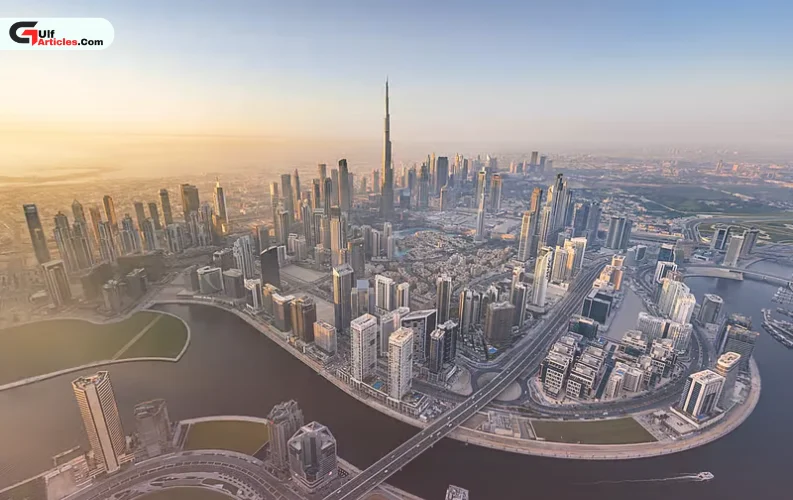
Dubai’s real estate sector continued its upward trajectory in 2025, with the latest Commercial and Residential Real Estate Price Index reporting significant annual growth across residential, commercial, and hospitality segments. The figures reflect the emirate’s resilient property market, strengthened by sustained investor demand, economic expansion, and a rapidly evolving digital ecosystem.
According to the latest data released by Dubai Data and Statistics Establishment, part of Digital Dubai, the overall residential real estate index recorded annual growth of 9.81% compared to 2024. The performance highlights the market’s ability to maintain steady momentum while supporting balanced and sustainable development across the sector.
Villas emerged as the strongest-performing residential asset class during the year, registering a notable annual increase of 14.83%. The surge was largely attributed to rising demand for spacious living environments, family-oriented communities, and integrated lifestyle developments. Apartments also demonstrated stable growth, recording an annual rise of 7.38%, further reinforcing confidence in Dubai’s residential market.
The commercial real estate sector also posted robust results, achieving annual growth of 9.54% during 2025. Office spaces led the segment with an impressive increase of 15.86%, reflecting continued business expansion and rising demand for premium workspace solutions across the emirate. Retail properties followed closely, with shop prices increasing by 11.52% over the same period.
Dubai’s hospitality sector maintained positive momentum as well, recording annual growth of 4.80%. Hotel apartments performed particularly well, with growth reaching 6.25%, while hotel rooms saw a moderate increase of 0.85%. The sector’s performance was supported by Dubai’s thriving tourism industry and its growing reputation as a global destination for business and leisure travel.
Industry leaders emphasized that the latest index results demonstrate more than just market growth. Officials noted that Dubai’s advanced data infrastructure continues to play a strategic role in supporting economic planning, market transparency, and informed decision-making.
Younus Al Nasser, Chief Executive of Dubai Data and Statistics Establishment at Digital Dubai, stated that the real estate price index reflects the maturity and strength of Dubai’s integrated data ecosystem. He highlighted the role of data-driven initiatives in supporting the Dubai Economic Agenda D33 and advancing a more transparent, balanced, and sustainable property market.
Mohammed Ali Al Badwawi, CEO of the Real Estate Registration Sector at Dubai Land Department, said the latest indicators confirm the market’s continued evolution and its ability to maintain healthy growth across multiple sectors. He added that Dubai Land Department remains committed to leveraging digital technologies and real estate data to enhance services and support the objectives of the Dubai Real Estate Sector Strategy 2033.
The latest findings further reinforce Dubai’s position as one of the world’s most competitive and attractive real estate destinations, supported by strong economic fundamentals, technological innovation, and long-term investor confidence.















Comments 0
No comments yet. Be the first to share your thoughts.
Leave a comment
Your email is never published. All fields are required.