

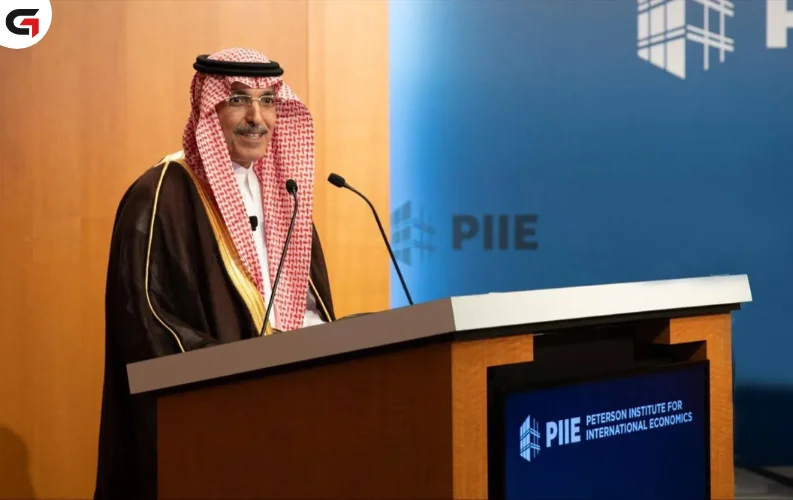
Saudi Arabia is heading into 2025 with renewed economic optimism, as rising oil output and sustained momentum in non-oil sectors fuel a more robust growth outlook for the Kingdom. In its latest economic forecast, Riyad Capital projects the Saudi economy to expand by 3.5% in 2025, with growth accelerating to 4.2% in 2026.
These estimates come amid a broader regional effort to balance oil reliance with economic diversification. In Saudi Arabia’s case, both engines — the oil and non-oil sectors — appear to be gaining traction simultaneously.
Oil Recovery in Motion
The expected rebound in oil activity is closely tied to OPEC’s decision to begin unwinding voluntary production cuts in the second half of 2025. According to Riyad Capital, this policy shift is likely to push Saudi oil sector growth to 3.5% in 2025, followed by a more significant 5.4% increase in 2026.
While oil prices remain soft, the economic uplift is projected to come more from increased production volumes than price gains. This production-led strategy positions Saudi Arabia to benefit from higher export activity even if prices stay modest in the near term.
Non-Oil Growth Holds Steady
Parallel to the oil story is a resilient non-oil economy — still central to Vision 2030 and the Kingdom’s ongoing transformation agenda. Riyad Capital forecasts non-oil GDP growth of 4.1% in 2025 and 4.3% in 2026, supported by public investment, consumer demand, and corporate credit expansion.
Much of this growth is being driven by capital spending through the Public Investment Fund (PIF) and an increasingly active private sector. Demand for corporate loans and investment in infrastructure and tourism are among the key contributors bolstering non-oil momentum.
Budget Deficit Widens, But Debt Remains Manageable
The Kingdom's pro-growth fiscal strategy is not without short-term costs. Government expenditure rose 5.4% year-on-year in the first quarter of 2025, while revenues declined by 10.2%, resulting in a SAR 59 billion fiscal deficit.
Riyad Capital expects the full-year 2025 deficit to reach 4.5% of GDP, narrowing slightly to 3.6% by 2026. These gaps are being bridged through controlled borrowing, keeping Saudi Arabia’s debt-to-GDP ratio at a modest 32.5% — well below many global benchmarks.
“The fiscal approach remains expansionary but sustainable,” Riyad Capital noted. “The focus is on building future capacity rather than immediate fiscal consolidation.”
Current Account Deficit, Inflation, and Rates
Despite rising imports and lower oil export values, Saudi Arabia’s current account deficit is expected to stay within reasonable bounds — -3.6% of GDP in 2025, improving to -2.9% by 2026, thanks to expected gains in tourism receipts and a pickup in oil exports.
On the inflation front, Riyad Capital anticipates a moderate rise to 2.5% in 2025, followed by a slight easing to 2.3% in 2026 — still within a manageable range for policymakers. With the U.S. Federal Reserve likely to begin rate cuts later in 2025, Saudi Arabia’s SAIBOR (three-month interbank rate) is forecast to decline from the current 5.35% to around 4.75% by year-end.
IMF Offers a Cautious Yet Positive Take
The International Monetary Fund (IMF) remains aligned with the overall growth narrative but takes a slightly more conservative stance. It predicts Saudi Arabia’s GDP to grow by 3.0% in 2025 and 3.7% in 2026 — lower than Riyad Capital’s projections but still above the global average growth estimate of 2.8%.
The IMF highlights structural reforms, controlled inflation, and strong public institutions as key strengths in Saudi Arabia’s economy, even as it warns of external risks and global uncertainty.
GCC Comparison: UAE Leads, Saudi in Strong Second
Across the Gulf region, the UAE is expected to lead GDP growth with a forecast of 4.0% in 2025, followed closely by Saudi Arabia. Other regional economies — Bahrain, Qatar, Oman, and Kuwait — are expected to trail, with more modest performance tied to smaller fiscal buffers and lower investment momentum.
Transformation with Oil Tailwinds
Saudi Arabia’s strategy heading into 2025-26 appears to reflect a balanced gamble — accelerating current growth while laying the groundwork for longer-term diversification. Oil remains a key driver, but it’s being used as a financial enabler for deeper structural change.
“With non-oil growth holding steady and oil output set to rise, Saudi Arabia is choosing a calculated push forward — one that aligns near-term revenue needs with long-term transformation goals,” said a Riyad Capital analyst.
From PIF-led mega projects to the expansion of sectors like tourism, logistics, and manufacturing, the coming years may define how well the Kingdom transitions from oil dependence to a more diversified economic model.









Comments 0
No comments yet. Be the first to share your thoughts.
Leave a comment
Your email is never published. All fields are required.