


Global oil prices remained close to multi-month highs on Tuesday as continued disruptions linked to the ongoing Iran-related conflict weighed heavily on energy markets, raising concerns over supply shortages and prolonged inflationary pressure.
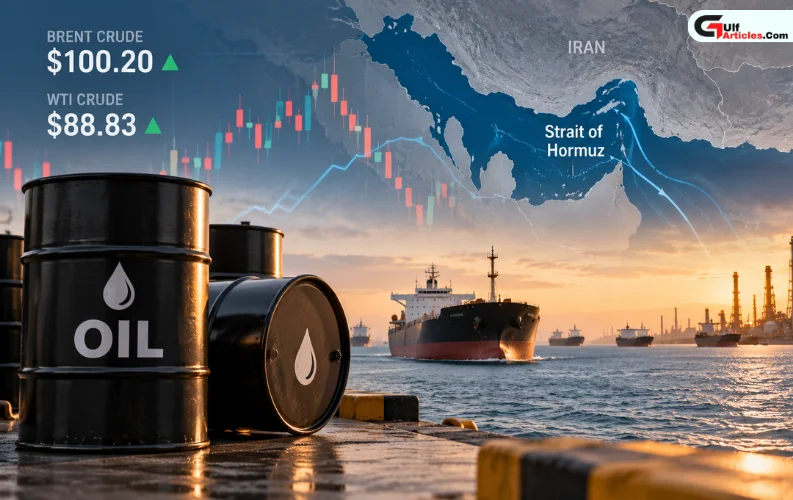
International benchmark Brent crude traded near $95 per barrel, while US benchmark West Texas Intermediate (WTI) hovered around $92, reflecting persistent concerns over the availability of oil supplies from the Middle East.
The market remains under pressure more than three months after escalating hostilities involving Iran, Israel and the United States disrupted critical energy infrastructure and significantly affected shipping routes through the Strait of Hormuz, one of the world's most important oil transit corridors.
Strait of Hormuz Remains a Key Concern
The Strait of Hormuz plays a vital role in global energy trade, handling nearly one-fifth of all seaborne oil shipments worldwide. Any disruption in the narrow waterway has an immediate impact on oil prices and energy security across international markets.
The conflict led to temporary closures of shipping routes, attacks on energy assets and production interruptions across several Gulf countries. These developments sharply altered market expectations that had previously pointed toward a potential oversupply of crude in 2026.
Analysts note that supply concerns, rather than demand growth, are currently driving oil prices higher.
Market Expectations Shift Dramatically
At the beginning of the year, several financial institutions projected weaker oil prices due to increasing non-OPEC production and moderating global demand. Some forecasts suggested Brent crude could average close to $60 per barrel later in 2026.
However, geopolitical developments in March changed the outlook dramatically. Escalating military tensions triggered fears of prolonged supply disruptions, causing energy markets to reassess global availability of crude oil.
Production curtailments were reported across major Gulf producers, including Saudi Arabia, Iraq, Kuwait and the United Arab Emirates. At the peak of the disruption, analysts estimated that more than 10 million barrels per day of output were temporarily affected.
Inventory Drawdowns Support Higher Prices
Global energy agencies have reported substantial declines in oil inventories as countries and companies drew on existing stockpiles to compensate for reduced supply.
The supply squeeze pushed Brent crude above $117 per barrel in April, with prices briefly climbing beyond $125 during the height of market uncertainty. Although prices have since eased following diplomatic efforts and ceasefire discussions, current levels remain significantly above pre-conflict expectations.
Higher crude prices are continuing to translate into increased costs for gasoline, diesel, heating fuels and transportation services, adding pressure to consumers and businesses worldwide.
Venezuela and US Output Provide Limited Relief
Additional supplies from the United States and Venezuela have helped prevent even sharper price increases.
Venezuela's oil industry has experienced a notable recovery following the easing of US sanctions, with production and exports reaching their highest levels in several years. Meanwhile, US producers continue to maintain strong output levels.
Despite these gains, analysts caution that oil remains part of a globally interconnected market, meaning increased production from one region cannot fully offset major disruptions elsewhere.
Strategic petroleum reserve releases have also provided temporary support, though experts say such measures are unlikely to deliver a long-term solution if supply constraints persist.
Focus Turns to Diplomatic Negotiations
Energy traders are closely monitoring ongoing diplomatic discussions between Washington and Tehran, along with broader developments in the region.
A sustained reopening of the Strait of Hormuz and the restoration of Gulf oil production could gradually reduce market tensions and push prices lower during the second half of 2026. Some forecasts suggest Brent crude could return to the $70-$80 range if energy flows normalize.
However, continued delays, infrastructure repairs or renewed military escalation could keep prices elevated and prolong volatility in global energy markets.
Outlook Remains Uncertain
For now, market participants remain cautious. The global oil market has shifted from expectations of surplus supply to concerns about prolonged tightness, leaving consumers exposed to higher fuel costs and broader inflationary pressures.
Until significant progress is made in restoring normal energy flows through the Middle East, analysts expect oil prices to remain sensitive to geopolitical developments, with drivers, businesses and importing nations continuing to bear the financial impact of elevated energy costs.














Comments 0
No comments yet. Be the first to share your thoughts.
Leave a comment
Your email is never published. All fields are required.