
whatsapp

Iran War Disrupts Global Energy Supply, Renewing Debate Over Renewable Energy Shift

  • 0
  • 149
/media/Iran_War_Disrupts_Global_Energy_Supply_Renewing_Debate_Over_Renewable_Energy_Shift.webp © Image Copyrights Title

The ongoing conflict involving Iran is raising fresh concerns about global energy security, with experts and policymakers increasingly debating whether the crisis could accelerate the world’s transition toward renewable energy sources.

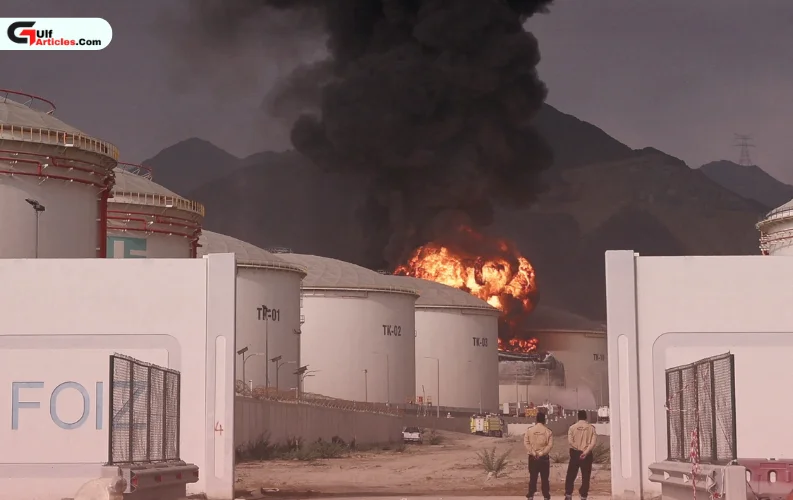
The war has already disrupted key energy supply routes, damaged infrastructure, and contributed to rising oil and gas prices. Recent incidents, including damage near an oil facility in Fujairah in the United Arab Emirates after debris from an intercepted Iranian drone struck the area, highlight how quickly geopolitical tensions can affect the global energy system.

Energy analysts say such disruptions expose the vulnerabilities of a system heavily dependent on fossil fuels sourced from a limited number of regions. Conflicts in major energy-producing areas often trigger supply shortages, price volatility, and economic uncertainty for countries that rely heavily on imported oil and gas.

Some experts believe the current crisis could push governments to invest more aggressively in domestic renewable energy production. By expanding solar, wind, and other clean energy infrastructure, countries could reduce reliance on international fuel markets that are often influenced by geopolitical instability.

United Nations Secretary-General António Guterres recently emphasized that global energy systems tied to fossil fuels remain highly exposed to political and military conflicts. He noted that renewable energy technologies are becoming more accessible and cost-effective, giving countries an opportunity to strengthen energy independence.

Renewable sources such as solar and wind are widely distributed and cannot easily be disrupted by international conflicts. Supporters argue that expanding these technologies could help nations avoid the economic shocks that accompany sudden disruptions in oil and gas supply chains.

However, not all analysts are convinced that the current crisis will significantly accelerate the energy transition. Some researchers point to recent history as a cautionary example.

Following Russia’s invasion of Ukraine, Europe faced severe shortages of natural gas. While the situation initially sparked discussions about accelerating renewable energy investment, several countries temporarily increased coal usage to stabilize their energy systems. Coal produces higher carbon emissions than natural gas, illustrating how governments sometimes prioritize short-term energy security over long-term climate goals during crises.

Climate scientist Rob Jackson of Stanford University has warned that assuming conflicts will automatically accelerate the shift to cleaner energy may be overly optimistic. In many cases, policymakers focus on ensuring immediate energy supply rather than implementing structural changes to the energy system.

Despite this skepticism, some analysts believe the current geopolitical environment could still create momentum for renewable energy investments. Countries heavily dependent on imported fossil fuels may reconsider their energy strategies as shipping routes become less predictable and global fuel prices fluctuate.

Caroline Baxter, director of the Converging Risks Lab at the Council on Strategic Risks, noted that the conflict has already slowed the movement of fossil fuels to several international ports. For nations such as Japan and South Korea that depend heavily on tanker shipments for energy supplies, these disruptions highlight the importance of more stable domestic energy sources.

Renewable energy technologies, she said, offer a level of stability that fossil fuels often cannot provide in times of geopolitical tension. Solar panels, wind farms, and other renewable systems can generate power locally without relying on international supply chains vulnerable to conflict.

Energy analysts also expect that rising fuel costs could encourage households and businesses to adopt alternatives such as solar power systems, heat pumps, and electric infrastructure in the coming months. These technologies can reduce dependence on volatile fossil fuel markets while lowering long-term energy costs.

At the same time, critics caution that geopolitical conflicts can sometimes push countries in the opposite direction. Governments may increase domestic coal production or expand oil and gas exploration to ensure energy security, particularly in large economies such as China and India that continue to rely heavily on fossil fuels.

Researchers studying the relationship between war and environmental policy warn that military activity itself contributes significantly to global emissions. Fighter jets, military vehicles, and large-scale operations consume vast quantities of fuel and release significant amounts of carbon dioxide into the atmosphere.

Studies suggest that global militaries collectively account for more than five percent of the world’s heat-trapping emissions each year, making them a major contributor to climate change.

Experts say that even if renewable energy investment increases because of the conflict, the environmental impact of military operations could offset some of the potential emissions reductions.

As the conflict continues to influence global energy markets, governments face complex decisions balancing national security, economic stability, and climate commitments. Whether the crisis ultimately accelerates the transition to renewable energy remains uncertain, but it has clearly highlighted the fragility of the current fossil-fuel-dependent system.

For many policymakers, the events unfolding in the Middle East serve as a reminder that energy security and climate strategy are increasingly interconnected challenges in a rapidly changing global landscape.


Related Posts
© Oil Prices Rise, Global Stocks Slip as US-Iran Peace Talks Stall

Oil Prices Rise, Global Stocks Slip as US-Iran Peace Talks Stall

Oil prices climbed on Friday while global stock markets mostly declined, as stalled peace talks between the United States and Iran and continued tensions around the Strait of Hormuz unsettled investor...

  • 383
© UAE Travellers Rethink Air Miles Use as Iran War Disrupts Flights

UAE Travellers Rethink Air Miles Use as Iran War Disrupts Flights

Travellers in the United Arab Emirates are changing how they use air miles as ongoing disruptions linked to the Iran conflict continue to reshape global flight routes and pricing dynamics. Airspace...

  • 555
© Oil Prices Hold Near $100 as Hormuz Disruptions Tighten Global Supply

Oil Prices Hold Near $100 as Hormuz Disruptions Tighten Global Supply

Oil prices remained elevated around the $100 mark as continued disruption in the Strait of Hormuz and geopolitical tensions involving Iran tightened global supply conditions, offsetting signs of weake...

  • 26
© dnata to Invest A$32 Million in Western Sydney Airport Cargo Terminal

dnata to Invest A$32 Million in Western Sydney Airport Cargo Terminal

Global air services provider dnata has announced an investment of approximately A$32 million (Dh77 million) to develop a new cargo terminal at Western Sydney International Airport, marking a significa...

  • 574
© Abu Dhabi Seizes Over Dh1.8m in Counterfeit Goods in 2025

Abu Dhabi Seizes Over Dh1.8m in Counterfeit Goods in 2025

Authorities in Abu Dhabi seized more than Dh1.8 million worth of counterfeit and non-compliant goods in 2025, as part of intensified efforts to strengthen consumer protection and enforce business regu...

  • 633
© WTI, Brent Crude Slide in Asian Trade as Iran–US Talks Raise Supply Hopes

WTI, Brent Crude Slide in Asian Trade as Iran–US Talks Raise Supply Hopes

Oil prices declined during early Asian trading on Tuesday as markets reacted to expectations of renewed Iran–US talks in Islamabad, easing concerns over potential supply disruptions in the Middle East...

  • 718
© UAE Growth Accelerates in Early 2026 on Banking, Trade Strength

UAE Growth Accelerates in Early 2026 on Banking, Trade Strength

The United Arab Emirates recorded stronger economic growth in the early months of 2026, supported by expanding banking activity, rising trade flows, and sustained investment momentum, according to off...

  • 848
© Suspicious $1 Billion Oil Trades Before Iran Developments Raise Insider Concerns

Suspicious $1 Billion Oil Trades Before Iran Developments Raise Insider Concerns

A series of unusually timed oil market trades worth more than $1 billion is drawing scrutiny from U.S. regulators and lawmakers, after investors appeared to take positions shortly before major announc...

  • 737
© U.S. Oil Prices Fall Below $84 as Iran Opens Strait of Hormuz

U.S. Oil Prices Fall Below $84 as Iran Opens Strait of Hormuz

U.S. oil prices dropped sharply, falling below $84 per barrel after Iran announced the reopening of the Strait of Hormuz during a temporary ceasefire between Israel and Lebanon. The move eased immedia...

  • 732
© Iran Declares Strait of Hormuz Open but U.S. Blockade Keeps Uncertainty High

Iran Declares Strait of Hormuz Open but U.S. Blockade Keeps Uncertainty High

Iran has announced that the Strait of Hormuz is open to commercial shipping during the ongoing ceasefire between Israel and Lebanon, but conflicting statements from the United States have created unce...

  • 654
© Asia markets fall as fragile Middle East ceasefire weighs on sentiment

Asia markets fall as fragile Middle East ceasefire weighs on sentiment

Asian stock markets mostly declined on Friday as investor sentiment remained cautious despite signs of progress in ceasefire talks related to the Middle East conflict. The weakness in regional mark...

  • 962
© Trump says Iran war ‘should end soon’ as ceasefire talks continue

Trump says Iran war ‘should end soon’ as ceasefire talks continue

US President Donald Trump said the ongoing conflict with Iran could come to an end soon, expressing confidence that the situation is moving in a positive direction. Speaking at an event in Las Vega...

  • 751
© UAE hotel revenue hits Dh49.2 billion in 2025, guest numbers reach 32.3 million

UAE hotel revenue hits Dh49.2 billion in 2025, guest numbers reach 32.3 million

Hotel revenues in the UAE rose 9.7% to approximately Dh49.21 billion in 2025, as the country’s tourism sector continued to expand across key performance indicators, the Ministry of Economy said. Th...

  • 648
© Oil prices ease; Hormuz disruption keeps market on edge

Oil prices ease; Hormuz disruption keeps market on edge

Oil prices slipped in Asian trading on Thursday, but traders said the decline reflects short-term positioning rather than a change in underlying supply risks tied to tensions in the Strait of Hormuz. ...

  • 815
© Oil Extends Declines on Hopes of Renewed US-Iran Talks

Oil Extends Declines on Hopes of Renewed US-Iran Talks

Oil prices extended losses on Tuesday amid growing expectations of renewed talks between the United States and Iran that could ease tensions in the Middle East. US crude futures fell 0.88% to $90.4...

  • 849
© US Blockade of Hormuz Raises Pressure on China, India Amid Iran Conflict

US Blockade of Hormuz Raises Pressure on China, India Amid Iran Conflict

The United States blockade of the Strait of Hormuz is increasing pressure not only on Iran but also on key Asian economies including China and India. The move is part of Washington’s broader effort...

  • 847
© Ford CEO Warns Chinese EVs Could Disrupt US Auto Industry

Ford CEO Warns Chinese EVs Could Disrupt US Auto Industry

The chief executive of Ford Motor Company has issued a strong warning over the growing threat posed by low-cost Chinese electric vehicles (EVs), cautioning that they could significantly impact the US ...

  • 972
© Venezuela, Chevron Sign Deals to Expand Oil Operations in Key Region

Venezuela, Chevron Sign Deals to Expand Oil Operations in Key Region

Venezuela and US energy giant Chevron have signed two major agreements aimed at expanding oil production in the country’s resource-rich Orinoco region, marking a significant step toward reviving the n...

  • 762
© Air Arabia Resumes Flights to 49 Destinations from UAE After Disruptions

Air Arabia Resumes Flights to 49 Destinations from UAE After Disruptions

Air Arabia has announced a partial resumption of flight operations to and from the UAE, marking a gradual return to normal services following recent disruptions. The airline confirmed that flights ...

  • 869
© 22 Ships Attacked, 800 Vessels Stranded in Strait of Hormuz; UAE Warns of Global Supply Shock

22 Ships Attacked, 800 Vessels Stranded in Strait of Hormuz; UAE Warns of Global Supply Shock

A sharp escalation in maritime disruptions in the Strait of Hormuz has raised serious concerns over global energy security, with at least 22 ships attacked and nearly 800 vessels stranded, according t...

  • 549
Commnets 0
Leave A Comment