Skip to content

Discover a different perspective

Business News & Market Trends in the Gulf

Don't miss daily updates

Beyond Recognition: The Long-Term Value of Professional Features

Beyond Recognition: The Long-Term Value of Professional Features

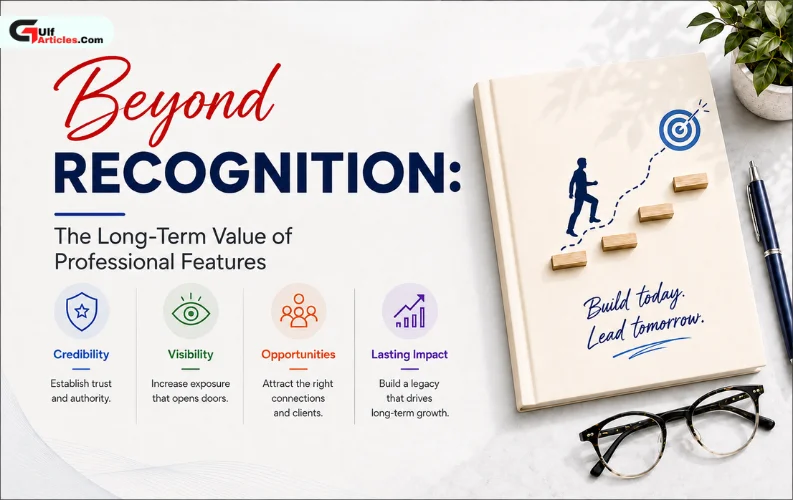
In today's fast-moving and highly competitive business environment, professional recognition is often viewed as a milestone of success. Whether through industry awards, executive profiles, leadership rankings, media interviews, or feature stories in respected publications, recognition serves as an acknowledgment of achievement and expertise. However, while many professionals focus on the immediate visibility that comes with being featured, the true value of professional features extends far beyond a moment of recognition.

The Business Impact of Rising Interest Rates in 2026: Navigating a New Economic Reality

The Business Impact of Rising Interest Rates in 2026: Navigating a New Economic Reality

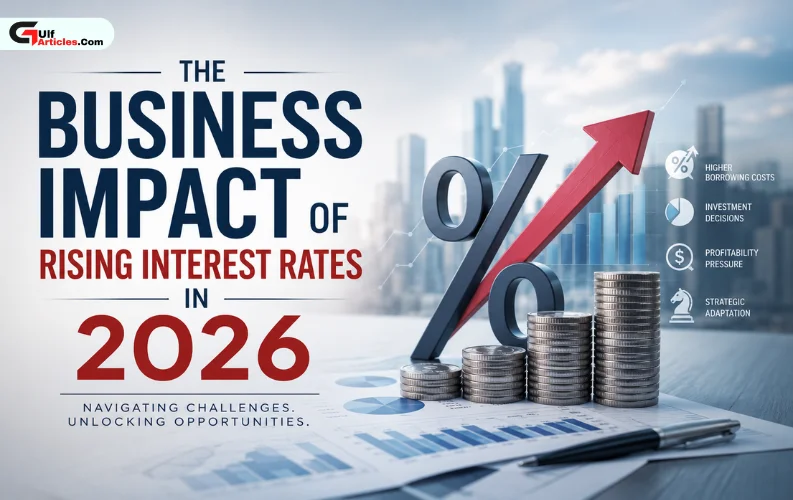
Interest rates have always played a critical role in shaping economic activity, but in 2026, they have become one of the most closely monitored factors influencing business performance worldwide. Following years of inflation concerns, economic adjustments, and monetary policy interventions by central banks, many businesses are operating in an environment where borrowing costs remain significantly higher than they were during the era of ultra-low interest rates.

Key Business Insights from G20 Economic Discussions

Key Business Insights from G20 Economic Discussions

The Group of Twenty (G20) remains one of the most influential forums for international economic cooperation, bringing together the world's largest developed and emerging economies. Collectively, G20 members account for approximately 85% of global GDP, more than 75% of international trade, and around two-thirds of the world's population, making the group's discussions highly relevant to businesses operating in today's interconnected global economy.

The Hidden Costs That Are Slowing Business Growth

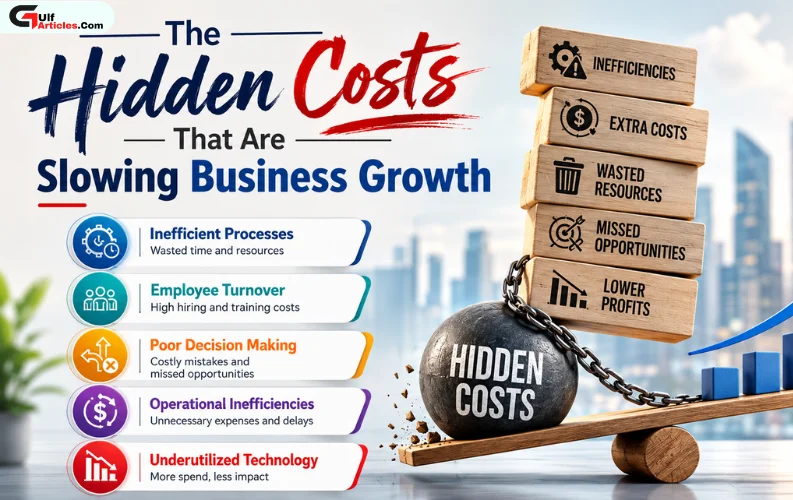
The Hidden Costs That Are Slowing Business Growth

When business leaders discuss growth, the conversation often revolves around increasing revenue, expanding into new markets, attracting customers, launching products, or investing in innovation. These are visible and measurable drivers of growth, making them natural areas of focus for executives and entrepreneurs alike. However, many organizations overlook a less obvious factor that can have an equally significant impact on long-term success: the hidden costs embedded within everyday business operations.

Why Businesses That Ignore AI May Struggle in the Next Decade

Why Businesses That Ignore AI May Struggle in the Next Decade

Artificial intelligence is no longer a futuristic concept reserved for technology giants or research laboratories. It is rapidly becoming one of the most influential forces shaping how businesses operate, compete, communicate, and grow across nearly every industry.

Building a Business While Managing Multiple Roles: A Practical Perspective

Building a Business While Managing Multiple Roles: A Practical Perspective

For many entrepreneurs especially women building a business is rarely a single-focus journey. It often exists alongside multiple responsibilities: managing a household, raising a family, maintaining personal commitments, and navigating professional expectations. Unlike traditional business narratives that emphasize singular focus and uninterrupted scaling, the reality for many founders is far more layered.

Why Many Startups Struggle to Sustain Growth After Initial Success

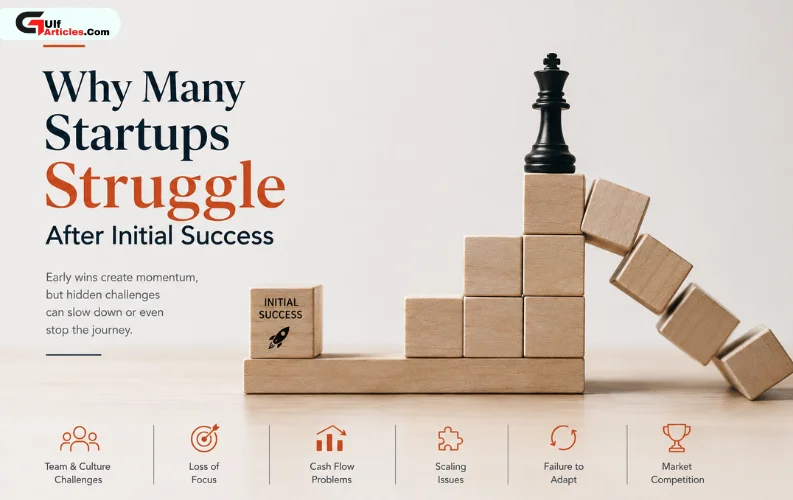
Why Many Startups Struggle to Sustain Growth After Initial Success

Early success can be one of the most defining moments in a startup’s journey. A product gains traction, customers respond positively, revenue begins to grow, and the business starts to build visibility. At this stage, confidence increases, not just within the organization, but also among investors, partners, and the market.

The Reality of Leadership: Balancing Vision with Execution

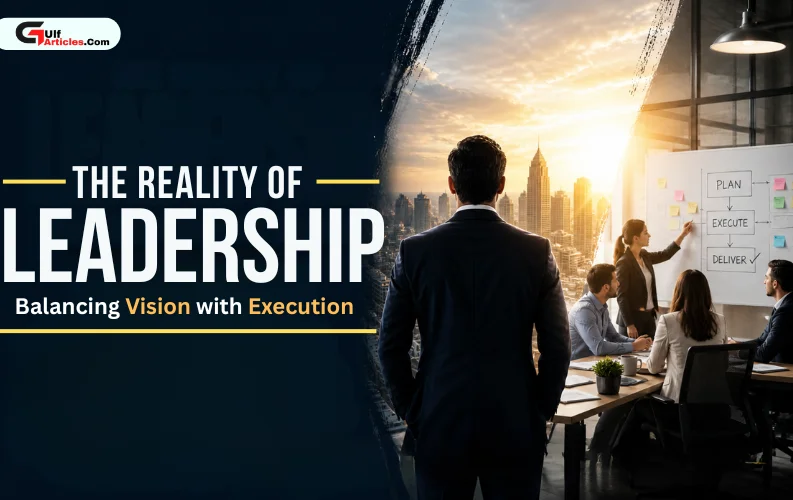
The Reality of Leadership: Balancing Vision with Execution

Leadership is often framed around vision, the ability to anticipate change, define direction, and inspire others toward a future that does not yet exist. While this remains an essential attribute, it represents only one dimension of effective leadership. In practice, organizations do not succeed because of vision alone. They succeed because that vision is translated into consistent, measurable execution. This is where leadership becomes difficult. The gap between what leaders intend to achieve and what organizations actually deliver is often where performance breaks down. In today’s environment, defined by rapid change, operational complexity, and heightened expectations, the ability to balance vision with execution is no longer optional. It is a core leadership requirement.

What Kills Profitable Businesses After the First Three Years

What Kills Profitable Businesses After the First Three Years

For many founders, the third year of business is quietly reassuring. The company has survived its most fragile phase. Revenue is consistent. Clients return. Cash is moving, even if imperfectly. From the outside, the business appears stable, perhaps even successful. Internally, however, this period is often when the foundations begin to weaken. Contrary to popular belief, businesses rarely fail because they never achieved profitability. They fail after profitability, when early urgency fades and complexity increases faster than capability. The first three years are about survival. What comes after is about endurance—and the demands of endurance are far less forgiving. The businesses that collapse at this stage are not reckless or poorly conceived. They are often well-intentioned, hard-working, and outwardly functional. What kills them is not a single mistake, but a slow misalignment between how the business operates and what its new scale requires.

When Growth Becomes the Risk: A Reality Check for Businesses

When Growth Becomes the Risk: A Reality Check for Businesses

For most businesses, growth is framed as a solution. More customers, higher revenue, wider reach—these are the signals founders are taught to chase. Growth promises security, validation, and relevance. Yet, across industries and geographies, a striking pattern repeats itself: many businesses encounter their greatest instability not during struggle, but during expansion.


Entrepreneurship in the GCC: Where the Real Opportunities Lie

Entrepreneurship in the GCC: Where the Real Opportunities Lie

Entrepreneurship in the Gulf Cooperation Council (GCC) is no longer defined by isolated success stories or short-term market booms. Over the past decade, the region has undergone a structural shift in how businesses are formed, supported, and scaled. Governments, private institutions, and investors across the GCC have moved entrepreneurship from the margins of economic planning to its very centre.

Small Business Opportunities in the UAE and Saudi Arabia

Small Business Opportunities in the UAE and Saudi Arabia

The United Arab Emirates and Saudi Arabia occupy a unique position in the global business landscape. Both countries combine strong purchasing power with ambitious national development agendas, creating an environment where small businesses are not only encouraged but actively integrated into economic growth plans.

Why Small Businesses Struggle to Scale (And Where They Break Down)

Why Small Businesses Struggle to Scale (And Where They Break Down)

For many small businesses, the most difficult phase does not arrive at the beginning. It arrives after early success. Customers increase, revenue begins to stabilise, and visibility improves. From the outside, the business appears to be working. Internally, however, pressure builds quietly. Decisions take longer, margins tighten, teams feel stretched, and founders begin to sense that effort is increasing faster than results.

Business Opportunities Across the Gulf Region: A Practical Perspective

Business Opportunities Across the Gulf Region: A Practical Perspective

The Gulf region has emerged as one of the world’s most strategically positioned business environments. Over the last two decades, Gulf economies have moved beyond traditional dependence on hydrocarbons and invested heavily in diversification, infrastructure, and private-sector growth. Today, the region presents structured, policy-backed business opportunities that appeal to entrepreneurs, established companies, and investors alike.

What Are Some Great Business Ideas That Are Easy-ish Entries?

What Are Some Great Business Ideas That Are Easy-ish Entries?

Many aspiring entrepreneurs are eager to start a business but are often discouraged by high startup costs, complex legal processes, or technical skill requirements. The good news is that not all businesses demand significant investment or niche expertise to get started. There is a category of ventures that falls into the realm of "easy-ish entry", business ideas that are approachable, scalable, and practical for first-time business owners without being overly simplistic.

Corporate Culture in the Middle East: Where Tradition Meets Modern Business Realities

Corporate Culture in the Middle East: Where Tradition Meets Modern Business Realities

Corporate culture in the Middle East is shaped by a unique blend of deep-rooted traditions, emerging economic ambitions, and the region’s growing integration with the global business ecosystem. This intersection of heritage and modernity has created a corporate environment unlike anywhere else in the world, one where longstanding values guide workplace relationships, leadership styles, and decision-making processes, yet innovation, digital transformation, and global competitiveness continue to drive business forward.

Why Diversity and Inclusion Are Good for Business Growth

Why Diversity and Inclusion Are Good for Business Growth

For years, “diversity” and “inclusion” were seen by some companies as checkboxes, nice-sounding words added to annual reports or HR policies. But by 2026, the conversation has evolved. Forward-looking businesses now recognize diversity and inclusion (D&I) as strategic drivers of growth. They are not about compliance; they are about unlocking innovation, connecting with wider markets, and building organizations that can thrive in uncertain, globalized economies.

The Future of Shari’ah-Compliant Finance in Global Markets

The Future of Shari’ah-Compliant Finance in Global Markets

Shari’ah-compliant finance, grounded in the principles of risk-sharing, asset-backing, avoidance of riba (interest), and excessive uncertainty (gharar), has moved far beyond its early niche. What began as an alternative for Muslim-majority markets now appeals to a wider global audience seeking ethical, transparent, and resilient financial solutions.

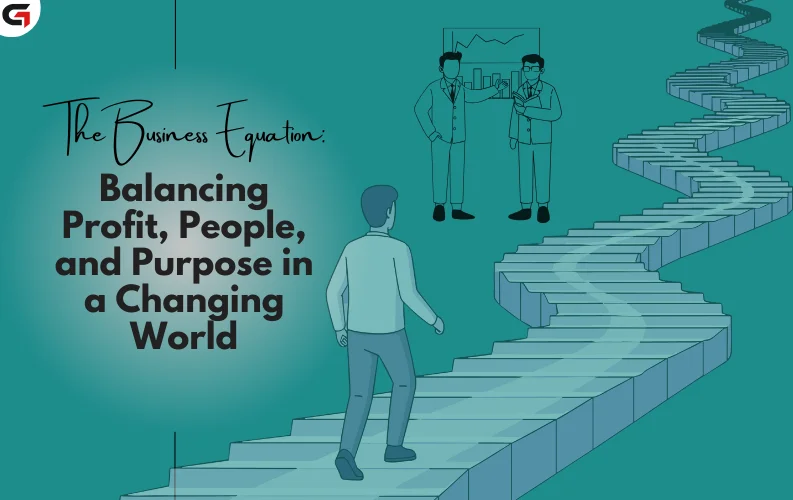
The Business Equation: Balancing Profit, People, and Purpose in a Changing World

The Business Equation: Balancing Profit, People, and Purpose in a Changing World

In every generation, business leaders face a moment when the rules of success quietly change. For decades, profit was the ultimate scoreboard. If the numbers were strong, the business was considered healthy. But in the past few years, something has shifted. Employees are asking for meaning, consumers are demanding ethics, and investors want proof that a company stands for something more than quarterly gains.

Why Personal Branding Is Now a Business Strategy

Why Personal Branding Is Now a Business Strategy

Corporate branding was how companies operated for decades. A strong logo, a catchy slogan, and expensive advertising campaigns were enough to drive loyalty. Coca-Cola, Nike, Apple, and Microsoft all prospered because their brands turned into global icons.