

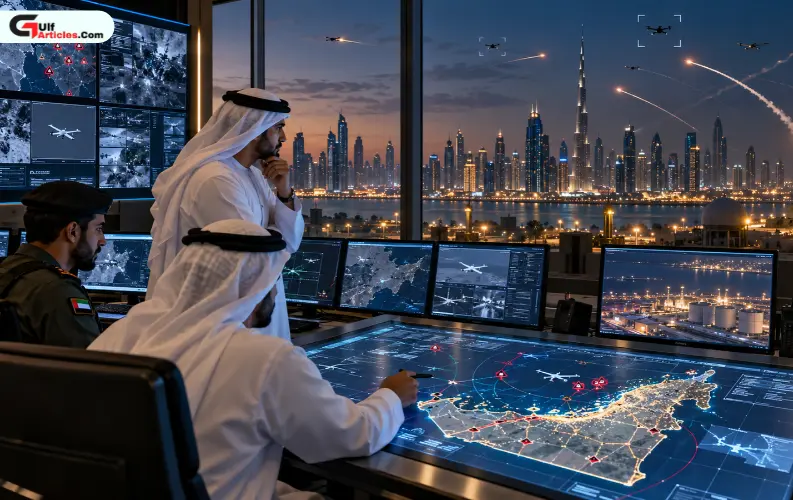
The United Arab Emirates faced security threats from alleged sleeper cells during Iranian missile and drone attacks earlier in 2026, according to senior Emirati official Ali Rashid Al Nuaimi. He said hundreds of suspected members were arrested over allegations that they helped guide attacks against the country, highlighting the security challenges the UAE faced alongside aerial threats.
UAE Official Says Hundreds of Suspects Were Arrested
Al Nuaimi, chairman of the Federal National Council’s Defence, Interior and Foreign Affairs Committee, said hundreds of alleged sleeper-cell members, including several Emiratis, had been arrested. According to his account, the suspects were accused of helping guide Iranian missile and drone attacks towards targets inside the UAE.
The allegations point to concerns about potential intelligence gathering and assistance from individuals operating within the country during the conflict. Authorities have also announced investigations into suspected networks accused of activities that threatened national security.
The claims form part of the UAE’s broader security response to the regional conflict. The allegations against those arrested remain distinct from independently established findings in individual cases.
Missile and Drone Attacks Tested UAE Defences
According to Al Nuaimi, the UAE faced more than 550 ballistic missiles and 2,265 drones during the conflict that began on February 28, 2026. The scale of the attacks placed pressure on the country’s air-defence systems and emergency response arrangements.
Authorities issued mobile-phone alerts instructing residents in potentially affected areas to seek shelter, remain indoors and stay away from windows. Follow-up notifications were sent when immediate threats had passed.
Despite the attacks, the UAE sought to maintain essential services and limit disruption to daily life. Shopping centres, restaurants and tourist attractions continued operating when security conditions allowed, while emergency measures were activated when necessary.
UAE Says It Is Better Prepared for Further Conflict
Al Nuaimi said the UAE was now better prepared than it had been when the conflict began. He indicated that preparations covered multiple aspects of national security as uncertainty continued over the possibility of renewed hostilities.
The country’s response has involved air-defence operations, emergency communications and investigations into suspected internal security threats. Maintaining public confidence while protecting critical infrastructure has also remained a priority.
The comments come amid continued tensions between Iran and countries across the Gulf, with governments monitoring the possibility of further missile and drone attacks.
Security Concerns Continue Across the Gulf
The UAE’s experience highlights how regional conflicts can create threats beyond conventional military operations. Governments must also assess risks involving intelligence gathering, suspected sabotage networks and the protection of sensitive infrastructure.
For the UAE, the challenge is to strengthen security without unnecessarily disrupting daily life, trade and travel. Officials have stressed the importance of protecting national sovereignty while maintaining stability for residents and businesses.
The possibility of renewed confrontation means regional security preparedness remains a priority. Diplomatic engagement and efforts to rebuild trust will also be important in reducing the risk of further escalation.
You may also like that news:-













Comments 0
No comments yet. Be the first to share your thoughts.
Leave a comment
Your email is never published. All fields are required.