

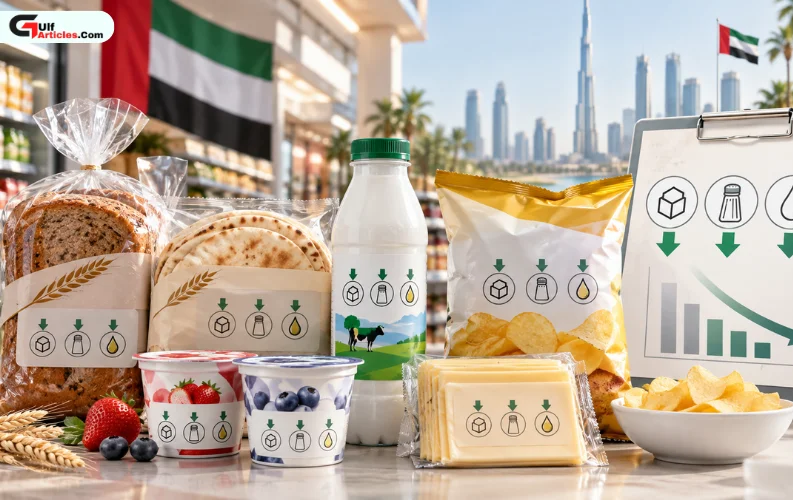
The United Arab Emirates has started implementing new rules that set limits on sodium, sugar and fat in selected packaged foods, including bread, laban, flavoured yoghurt, chips and processed cheese. The regulations aim to improve the nutritional quality of everyday products and support healthier food choices, while giving manufacturers time to adjust recipes and production processes.
Announced by the UAE Ministry of Health and Prevention (MoHAP) on October 6, 2026, the measures will be introduced in phases, with final nutritional limits required by December 31, 2030. Food manufacturers have welcomed the initiative, although some have highlighted the additional investment needed to reformulate products and meet the new standards.
UAE Food Manufacturers Respond to New Regulations
Food producers across the UAE are assessing how the new requirements will affect their products, manufacturing processes and operating costs. While some companies expect only minor adjustments, others may need to change ingredients and recipes to meet the prescribed limits.
iD Fresh Food, which produces products such as chapatis, parathas and dosa batter, expects little or no reformulation for many of its core products. The company has also highlighted that the phased implementation gives manufacturers more time to prepare for compliance and manage the associated costs.
Al Ain Farms Group has already reduced added sugar by 10% to 20% in selected products under its Healthy Living initiative. The company said the changes were made while maintaining the taste and quality familiar to consumers. Its experience demonstrates how manufacturers can begin adjusting recipes before the final regulatory deadlines.
What the New Limits Mean for Bread, Laban and Chips
The new framework establishes maximum levels for specific nutrients per 100 grams of food. The first phase sets initial limits, followed by stricter requirements in the final phase.
Some of the key changes include:
-
Leavened bread: The sodium limit will decrease from 444 milligrams per 100 grams in the first phase to 370 milligrams in the final phase. The final limits for total sugars and total fat will be 5 grams and 7 grams, respectively.
-
Flatbread: The final sodium limit will be 320 milligrams per 100 grams, with maximum levels of 5 grams of total sugars and 7 grams of total fat.
-
Laban and flavoured yoghurt: The total sugar limit will decrease from 12 grams to 10 grams per 100 grams.
-
Chips and similar snacks: The sodium limit will fall from 564 milligrams to 470 milligrams per 100 grams.
-
Processed cheese: The final sodium limit will be 720 milligrams per 100 grams for spreadable cheese and 1,000 milligrams for other processed cheese.
These requirements are intended to reduce excessive sodium, sugar and fat in commonly consumed packaged foods without requiring consumers to abandon familiar products.
Manufacturers Face Higher Production Costs
Although food manufacturers have expressed support for improving nutritional standards, changing established recipes can require considerable investment. Companies may need to test alternative ingredients, conduct laboratory assessments, update nutritional labels and adjust production processes.
Some manufacturers have warned that these changes could increase costs in the short term. However, the phased implementation allows businesses to spread investment over time and make gradual adjustments rather than reformulating every affected product immediately.
Maintaining the taste, texture and shelf life of products will also be important. Manufacturers must ensure that reducing sodium, sugar or fat does not compromise product quality or consumer acceptance.
Compliance Deadlines and Penalties
The regulations apply to specified packaged foods manufactured locally or imported into the UAE. They also cover businesses involved in the production, processing, packaging, transportation, distribution, storage and sale of these products, including companies operating in free zones.
Businesses handling the first group of products, including bread, sweetened milk drinks, flavoured yoghurt, laban and salty snacks, have up to nine months from the resolution's effective date to meet the initial limits. The final limits must be achieved by December 31, 2030.
Manufacturers and businesses handling processed cheese have up to two years and three months to meet the first-phase requirements, followed by further reductions until the final deadline.
Authorities may impose penalties for non-compliance, including warnings, fines ranging from AED 5,000 to AED 500,000, temporary closure for up to six months or cancellation of a licence or approval, depending on the violation.
What Consumers Can Expect
For UAE residents, the changes could gradually bring packaged foods with lower levels of sodium, sugar and fat to supermarket shelves. Manufacturers will need to balance nutritional improvements with the flavours, quality and prices customers expect.
Consumers should continue checking nutritional labels and comparing products, as meeting a regulatory limit does not automatically make a food healthy. Portion sizes and overall dietary habits remain important factors in maintaining a balanced diet.
A Gradual Shift Towards Healthier Packaged Foods
The UAE's new food regulations represent a broader public-health effort to improve the nutritional quality of everyday products and reduce risks associated with excessive consumption of sodium, sugar and fat.
For manufacturers, the priority will be to meet the new standards while controlling costs and maintaining consumer confidence. With final limits scheduled for the end of 2030, the phased approach gives businesses time to adapt and allows the impact of the changes to develop gradually across the country's food industry.















Comments 0
No comments yet. Be the first to share your thoughts.
Leave a comment
Your email is never published. All fields are required.