

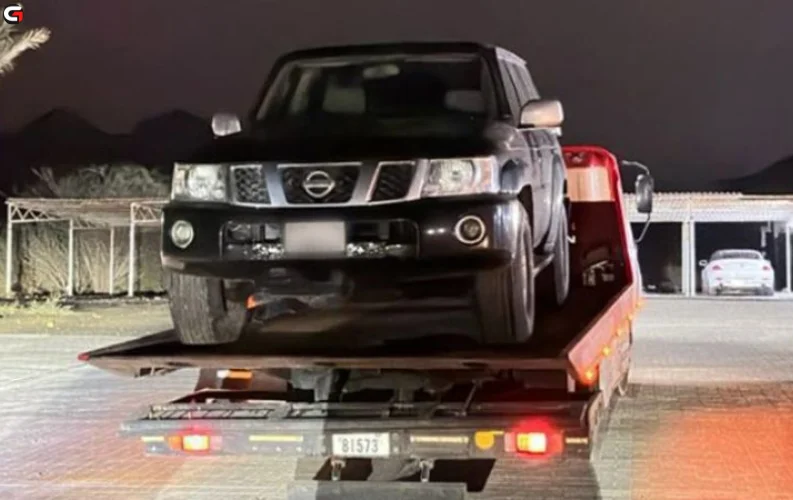
In a continued effort to improve road safety and deter reckless driving, three UAE emirates have introduced hefty fines for traffic violators, including a penalty of up to Dh50,000 for impounded vehicles. The penalties come as part of a broader initiative to maintain public safety on the roads.
Stringent Penalties for Reckless Driving
Dubai resident Sanjay Rizvi, 22, recently experienced the consequences of reckless driving firsthand. Running late for work, he jumped a red light, resulting in his brand-new Tesla being impounded for one month and a Dh50,000 fine for its release. Rizvi admitted he learned his lesson and now drives more cautiously.
The UAE has adopted zero-tolerance measures for reckless driving, with significant fines and penalties for offenders. Vehicle confiscation, legal summons, and potential prosecution are among the consequences violators face.
Fines Across Emirates
-
Sharjah: The latest emirate to impose strict fines for traffic violations, Sharjah has set a Dh20,000 release fee for vehicles impounded for reckless driving or offenses like riding motorcycles in restricted areas. A Dh30,000 release fee is imposed for driving without a license.
-
Abu Dhabi and Dubai: Both emirates already have a steep Dh50,000 fine in place for reckless driving. In Dubai, fines have been successful in reducing reckless driving behavior.
-
Ras Al Khaimah: The emirate enforces a penalty of up to Dh20,000, with a three-month vehicle impoundment policy. If fines are not paid or vehicles are not claimed within three months, the cars are auctioned off.
These measures are designed to enhance road safety and curb dangerous driving behaviors across the country.
Timely Move With Lower Driving Age
The implementation of these hefty fines comes as the UAE is set to reduce the legal driving age to 17 starting on March 29, 2025. Dr. Mustafa Aldah, founder of MA-Traffic Consulting, highlighted that the country is taking proactive measures to improve public safety. "With the lowering of the driving age, more drivers will be on the roads, and stricter penalties are a timely step to ensure safety," he said.
The UAE will become the first country in the GCC to lower the legal driving age, a change that aligns with the country's evolving transportation landscape.
Expert Opinions on Enforcement
Dr. Aldah emphasized the importance of consistent enforcement in ensuring the success of these penalties. “The presence of police in key areas increases the sense of security, and the hefty fines will encourage drivers to be more cautious,” he added.
Phil Clarke, director of road safety and enforcement at 4E Road Safety & Transport Consultants, agreed that deterrents like fines are necessary but pointed out that severe penalties alone may not be enough. "Vehicle impounding may not deter all drivers, especially those who have access to multiple vehicles," Clarke said. He advocates for additional measures like driving license suspension and raising insurance premiums for serious violations.
Public Responsibility in Road Safety
Authorities have also reiterated that road safety is a shared responsibility, and all road users must adhere to traffic laws. The public is encouraged to report any violations to help keep roads safer for everyone.
Conclusion
As the UAE continues to prioritize road safety, the increased fines and penalties for reckless driving signal a shift toward stricter enforcement and public awareness. The measures are expected to curb dangerous driving habits and ensure that the nation’s roads remain safer for all users.















Comments 0
No comments yet. Be the first to share your thoughts.
Leave a comment
Your email is never published. All fields are required.