
whatsapp

Trump’s Trade War Shift Away from China Reaches Tipping Point as Supply Chains Reshape

/media/GA_cOt3Lau._1.webp © Image Copyrights Title

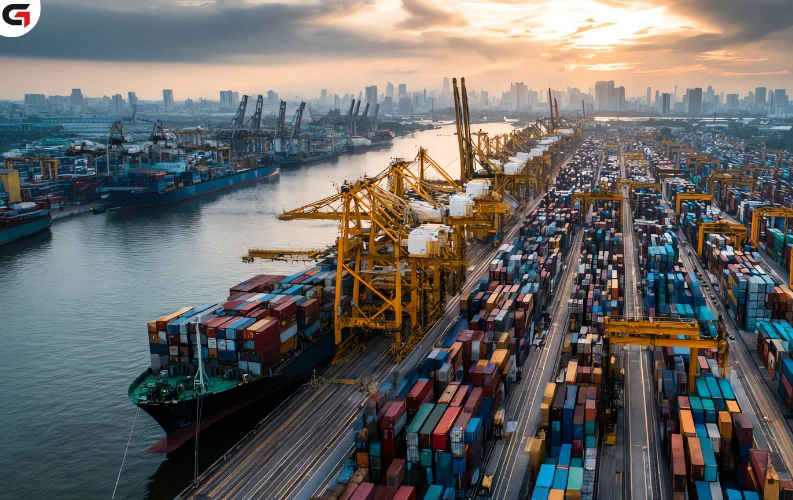
A years-long shift in global manufacturing away from China has accelerated to a decisive turning point, according to new data showing a dramatic reduction in U.S. sourcing from China and its neighbors. The change, which began during Donald Trump’s first term and intensified under subsequent tariff rounds, is now reshaping supply chains across Asia and pressuring U.S. companies’ balance sheets.

Wells Fargo Supply Chain Finance found that the share of supplier volume from China, Hong Kong and Korea has fallen from 90% to 50% over the past decade. The trend reflects sustained diversification as companies redirect production toward South and Southeast Asia.

“From 2018 to 2020, supplier diversification away from China nearly doubled after the first tariff actions,” said Jeremy Jansen, head of global originations at Wells Fargo Supply Chain Finance. He noted a steady migration of midsize suppliers into Taiwan, Vietnam, Indonesia, Thailand, India and Malaysia.

South Asia Pacific emerges as the new manufacturing hub

Trade data reinforces the shift. Imports from China to the United States have dropped 26% year over year, according to SONAR. At the same time, exports from China to other Asian manufacturing hubs have surged.

Project44 data shows Chinese trade flows jumping:

  • 29.2% to Indonesia

  • 23% to Vietnam

  • 19.4% to India

  • 4.3% to Thailand

In turn, U.S. container volumes from these countries have risen sharply, with Vietnam up 23%, Thailand 9.3%, and Indonesia 5.4% year over year.

HSBC described these shifts as the rise of “new trade corridors” driven by booming intra-Asia trade, as companies seek alternatives to China amid tariff uncertainty and geopolitical friction.

Tariffs squeeze U.S. importers

The broader economic impact of Trump’s tariff strategy is now increasingly visible on corporate balance sheets. With a Supreme Court ruling pending on the legality of the tariffs, and several companies suing for refunds, businesses are already facing rising costs and tightening cash positions.

“We have seen an increase in working capital needs post-Liberation Day due to higher tariffs,” said Ajit Menon, head of HSBC’s U.S. trade finance business. “The average tariff increased from 1.5% to double digits.”

Menon noted that industries with thin margins, including pharmaceuticals and apparel, are particularly vulnerable. Many importers are renegotiating payment terms or seeking financing to offset tariff-driven cash strain.

HSBC, which finances more than $850 billion in global trade annually, launched its Trade Pay platform earlier this year to help companies monetize receivables, payables and inventory. Since Trump’s sweeping tariff expansion in April, Menon said the bank has seen a 20% increase in financing flows across all client segments.

A key factor: inventories that were frontloaded into the U.S. in early 2025 to beat tariff deadlines are now nearly depleted. “That means companies will need more working capital moving forward as terms get renegotiated,” Menon said.

Working capital crunch intensifies

In an HSBC survey of 1,000 U.S. companies, more than 70% reported rising working capital requirements this year. Menon said the pressure is prompting companies to re-evaluate supply-chain strategies and re-examine financing terms as tariff-driven cost inflation continues.

“They are looking into what rates they are paying, and also the financing duration,” he said. “Cash is becoming king.”

Commnets 0
Leave A Comment

Related Posts
© Nasdaq Dubai Records $13.8 Billion in New Fixed-Income Listings in 2026

Nasdaq Dubai Records $13.8 Billion in New Fixed-Income Listings in 2026

Nasdaq Dubai has added 33 new fixed-income listings worth $13.8 billion since the start of 2026, reinforcing Dubai's position as one of the world's leading hubs for sukuk and debt capital markets. Int...

© Ajman Bank Raises $300 Million Through Debut AT1 Sukuk Priced at 6.5%

Ajman Bank Raises $300 Million Through Debut AT1 Sukuk Priced at 6.5%

Ajman Bank has successfully completed its inaugural $300 million Additional Tier 1 (AT1) Perpetual Non-Call 5.5-Year Sukuk, pricing the issuance at a 6.5% profit rate. The milestone transaction streng...

© Oil Prices Jump Over 3% as Iran Tensions Stoke Strait of Hormuz Supply Fears

Oil Prices Jump Over 3% as Iran Tensions Stoke Strait of Hormuz Supply Fears

Global oil prices surged more than 3% during early Asian trading on Wednesday after renewed military tensions involving Iran heightened concerns over the security of the Strait of Hormuz, a vital mari...

© OPEC+ Approves August Oil Output Increase as Crude Prices Ease

OPEC+ Approves August Oil Output Increase as Crude Prices Ease

Seven members of the OPEC+ alliance have agreed to increase their combined crude oil production by 188,000 barrels per day (bpd) in August, extending the group's gradual supply expansion as global oil...

© Oil Prices Hold Near $70 as Middle East Risk Premium Eases, Murban Crude Outperforms

Oil Prices Hold Near $70 as Middle East Risk Premium Eases, Murban Crude Outperforms

Global oil prices traded with little movement during Asian trading on Monday as easing geopolitical tensions in the Middle East offset expectations of firm seasonal fuel demand. While benchmark crude ...

© Singapore Seizes $42.5 Million Mansion in Nvidia Chip Smuggling Probe

Singapore Seizes $42.5 Million Mansion in Nvidia Chip Smuggling Probe

Singapore authorities have seized a luxury mansion worth S$55 million (US$42.5 million) as part of an ongoing investigation into an alleged Nvidia AI chip smuggling and money laundering network, offic...

© Bank of Baroda Pays $600 Million to Settle NMC Health Litigation

Bank of Baroda Pays $600 Million to Settle NMC Health Litigation

Bank of Baroda has agreed to pay $600 million to settle litigation related to the collapse of UAE-based healthcare company NMC Health, bringing an end to years of legal proceedings against the Indian ...

© UAE Fuel Prices Drop Sharply in July; Further Relief Possible if Global Oil Prices Stay Lower

UAE Fuel Prices Drop Sharply in July; Further Relief Possible if Global Oil Prices Stay Lower

UAE motorists are enjoying lower fuel prices in July after the country's monthly fuel price revision reflected a sharp decline in international crude oil prices, offering welcome relief following mont...

© Iran Reports 40 Million Barrels of Oil Exports After U.S. Blockade Ends

Iran Reports 40 Million Barrels of Oil Exports After U.S. Blockade Ends

Iran has announced that it exported more than 40 million barrels of crude oil since the United States lifted its naval blockade of Iranian ports earlier this month, marking a significant recovery in t...

© Norway's Crude Oil Production Exceeds Forecasts in May Despite Monthly Decline

Norway's Crude Oil Production Exceeds Forecasts in May Despite Monthly Decline

Norway's offshore oil industry delivered stronger-than-expected production in May, with crude output surpassing official government forecasts even as production eased from April's exceptionally high l...