

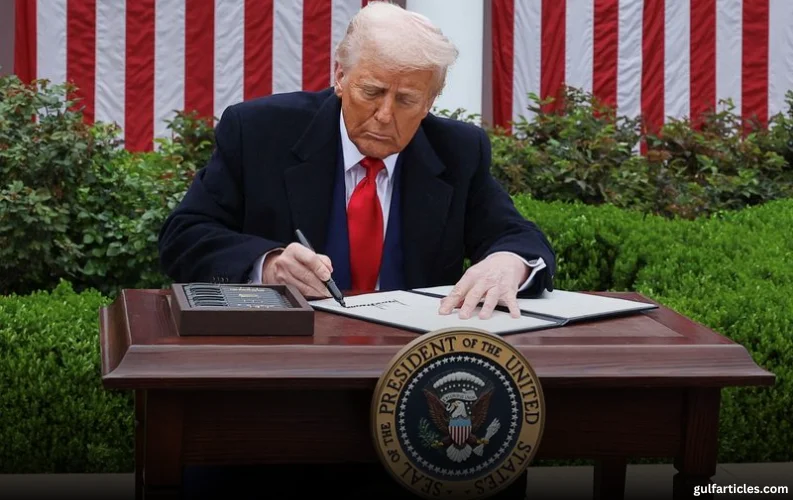
WASHINGTON, D.C.: President Donald Trump’s sweeping tariff plan — the most aggressive U.S. trade measure in more than a century — has sent shockwaves through the global economy, triggered a collapse in stock markets, and sparked fears that consumer prices in the United States could surge, with high-end iPhones potentially rising to $2,300.
The tariffs, announced on Wednesday, include a 10% baseline tariff on all imports and targeted penalties on goods from key U.S. trading partners such as China, Japan, South Korea, and the European Union. The White House’s move marks a dramatic shift from decades of liberal trade policy and has been met with fierce international backlash.
iPhone Prices Could Soar
One of the starkest projections came from Rosenblatt Securities, which warned that the cost of a top-tier iPhone 16 Pro Max, currently priced at $1,199, could nearly double to $2,300 (Dhs8,448) if Apple passes the full impact of the tariffs to consumers.
Major American corporations, especially those reliant on overseas production, are scrambling to assess the fallout. Apple, Nike, and automakers like Stellantis and General Motors were among the first to react. Stellantis announced temporary layoffs and plant closures in Canada and Mexico, while GM said it would shift focus to domestic manufacturing.
Global Markets in Freefall
The financial repercussions were immediate and severe:
-
The Dow Jones Industrial Average fell nearly 4%, its steepest single-day drop since June 2020.
-
The S&P 500 dropped nearly 5%, while the Nasdaq plunged 6%, marking its worst performance since the early days of the COVID-19 pandemic.
-
International markets mirrored the panic. Japan’s Nikkei extended its two-day losses to over 4.5%, and Chinese markets remained closed amid a national holiday.
Global Leaders Condemn Move
Leaders around the world denounced the U.S. action. Canadian Prime Minister Mark Carney accused Washington of abandoning its leadership in global economic cooperation. French President Emmanuel Macron urged EU nations to suspend investment in the United States, while China vowed retaliation against the 54% tariffs imposed on its exports.
“The global economy is fundamentally different today than it was yesterday,” Carney said, as he introduced Canada’s initial countermeasures.
Japan’s Prime Minister Shigeru Ishiba described the situation as a “national crisis,” and the International Monetary Fund (IMF) warned of lasting global consequences.
“It is important to avoid steps that could further harm the world economy,” said IMF Managing Director Kristalina Georgieva, urging all parties to “resolve trade tensions constructively.”
Mixed Signals from the White House
While Commerce Secretary Howard Lutnick and senior adviser Peter Navarro said the tariffs were non-negotiable, Trump appeared to contradict them, claiming they provided “great power to negotiate.”
“I used it very well in the first administration,” Trump said aboard Air Force One. “Now we’re taking it to a whole new level.”
Vice President JD Vance defended the move, saying the administration’s focus was on “national security of manufacturing”, citing industries such as steel and pharmaceuticals.
Inflation, Recession, and Strategic Fallout
Economists have warned that the tariffs could reignite inflation, hurt corporate profits, and raise costs for U.S. families by thousands of dollars annually. With price tags soaring on imported electronics, clothing, and everyday goods, consumer confidence could take a significant hit.
Additionally, Trump’s decision to slap heavy tariffs on Japan (24%), South Korea (25%), and Taiwan (32%) — all major U.S. allies in Asia — risks undermining key strategic partnerships, particularly as China increases pressure in the Indo-Pacific region.
What’s Next?
Though the reciprocal tariffs are set to take effect on April 9, analysts caution that markets may remain volatile until clarity emerges.
“The tariff plan does not appear to be well thought-out,” said James Lucier, founding partner at Capital Alpha. “Trade negotiations are a highly technical discipline, and in our view these proposals do not offer a serious basis for negotiations with any country.”
For now, the world watches and waits, as the stakes rise in what could become a defining global economic conflict of the decade.













Comments 0
No comments yet. Be the first to share your thoughts.
Leave a comment
Your email is never published. All fields are required.