

Skip to content

Discover a different perspective

News

Oman’s Golden Visa Program Attracts Global Investors, Boosts Property Market

Oman’s Golden Visa Program Attracts Global Investors, Boosts Property Market
Share this article
Text size 14px
Comment

Oman’s Golden Visa program is quickly gaining momentum among international investors, with growing interest in long-term residency options tied to property and business investment. The Gulf nation, known for its understated policy rollouts, is now emerging as a serious player in the global investment residency landscape.

The United States-style “Golden Visa” initiative offers two key residency pathways: a five-year renewable visa and a ten-year long-term visa, both available through specific investment thresholds. For a five-year residency, the required minimum investment is 250,000 Omani riyals, while a ten-year visa demands an investment of at least 500,000 Omani riyals. Investors can channel funds into real estate, limited liability companies, public joint-stock firms, or government bonds. Alternatively, creating a business that employs at least 50 Omani nationals also qualifies for the 10-year visa, even without a minimum capital requirement.

Retirees are also eligible for the five-year visa if they demonstrate a minimum monthly income of 4,000 Omani riyals. Applicants must be at least 21 years old and have no history of deportation from Oman. All applications are processed through Oman’s Ministry of Commerce, Industry, and Investment Promotion, with final approval resting with the Royal Oman Police.

Industry experts say the Golden Visa program has given a timely boost to Oman’s property market. Recent redevelopment plans for Salalah, a popular southern coastal city, are a cornerstone of this momentum. These plans are designed not only to attract tourists but to position Salalah as a long-term lifestyle destination for foreign residents.

“The Salalah re-development is nothing short of a generational makeover for Oman,” said an investment advisor specializing in high-net-worth clientele. “It offers global investors a new kind of destination—less crowded, more serene, and deeply rooted in culture.”

Oman’s real estate laws allow foreigners to own property within Integrated Tourism Complexes (ITCs), with ownership granting automatic residency for buyers and their immediate families. While Oman remains a niche market compared to real estate hubs like Dubai and Abu Dhabi, investors are drawn by rental yields of 5–8% and long-term lifestyle value.

“Oman is more suited for long-term investments,” said Aakarshan Kathuria, CEO of RiseUp. “It offers a peaceful lifestyle, scenic developments, and decent rental income—but resale liquidity in the secondary market can be slower.”

Among the standout real estate opportunities are:

  • Al Mouj Muscat, a high-end waterfront community offering luxury villas and marina access, with properties priced between 500,000 and 2 million Omani riyals.

  • Jebel Sifah, a resort development 45 minutes from Muscat, where a three-bedroom villa is listed at approximately 212,000 Omani riyals.

  • AIDA, a premium development nestled between the mountains and the sea, with entry-level prices starting at 128,000 Omani riyals.

As Oman seeks to diversify its economy and reduce dependence on hydrocarbons, programs like the Golden Visa are expected to play a key role in attracting sustainable foreign investment. The nation’s evolving policies, along with its natural appeal and stable governance, are making it an increasingly attractive destination for global investors looking for long-term value.


Comments 0

No comments yet. Be the first to share your thoughts.

Leave a comment

Your email is never published. All fields are required.

Related Stories

Continue reading from Gulf Articles

UAE Faced Sleeper-Cell Threats During Iranian Missile and Drone Attacks, Says Official

UAE Faced Sleeper-Cell Threats During Iranian Missile and Drone Attacks, Says Official

The United Arab Emirates faced security threats from alleged sleeper cells during Iranian missile and drone attacks earlier in 2026, according to senior Emirati official Ali Rashid Al Nuaimi. He said hundreds of suspected members were arrested over allegations that they helped guide attacks against the country, highlighting the security challenges the UAE faced alongside aerial threats.

Tristar Group Signs Agreement for Aegis Logistics to Become Majority Shareholder

Tristar Group Signs Agreement for Aegis Logistics to Become Majority Shareholder

Tristar Group has signed an agreement that will allow Aegis Logistics to become its majority shareholder, marking a significant development in the companies' business relationship. The proposed transaction is expected to strengthen their position in the logistics and energy supply chain sectors, with potential implications for regional operations and future expansion.

Fitbit Edge Launched with Replaceable Battery, 7-Day Life and ECG for $180

Fitbit Edge Launched with Replaceable Battery, 7-Day Life and ECG for $180

Fitbit has introduced the Fitbit Edge, a wearable device featuring a replaceable battery, up to seven days of battery life, and electrocardiogram (ECG) functionality at a price of $180. The device focuses on practical health tracking and longer-term usability, offering an alternative for consumers who want smartwatch features without frequent charging or the need to replace the entire device when its battery wears out.

UAE Recalls 1,983 Toyota Highlander Vehicles Over Seat Safety Defect

UAE Recalls 1,983 Toyota Highlander Vehicles Over Seat Safety Defect

The United Arab Emirates has announced a recall of 1,983 Toyota Highlander vehicles after identifying a potential defect in the second-row seat mechanisms. The issue could prevent seatbacks from locking securely, increasing the risk of passenger injuries in the event of a collision. The recall was announced by Al-Futtaim Motors in coordination with the UAE's consumer protection authorities.

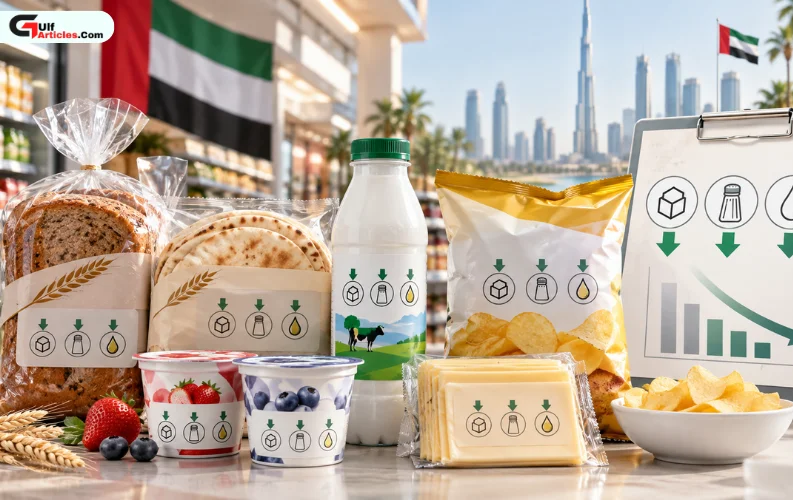
UAE Sets New Sugar, Salt and Fat Limits for Bread, Laban and Chips

UAE Sets New Sugar, Salt and Fat Limits for Bread, Laban and Chips

The United Arab Emirates has started implementing new rules that set limits on sodium, sugar and fat in selected packaged foods, including bread, laban, flavoured yoghurt, chips and processed cheese. The regulations aim to improve the nutritional quality of everyday products and support healthier food choices, while giving manufacturers time to adjust recipes and production processes.

Abu Dhabi Partners With Elon Musk’s Boring Company to Explore Underground Infrastructure

Abu Dhabi Partners With Elon Musk’s Boring Company to Explore Underground Infrastructure

Abu Dhabi has partnered with The Boring Company, the tunnelling and infrastructure technology firm founded by Elon Musk, to explore underground transportation, utility tunnels and other infrastructure solutions across the emirate. The agreement, announced on October 8, 2026, aims to assess how advanced tunnelling technologies could improve connectivity, support urban growth and make more efficient use of available space.