

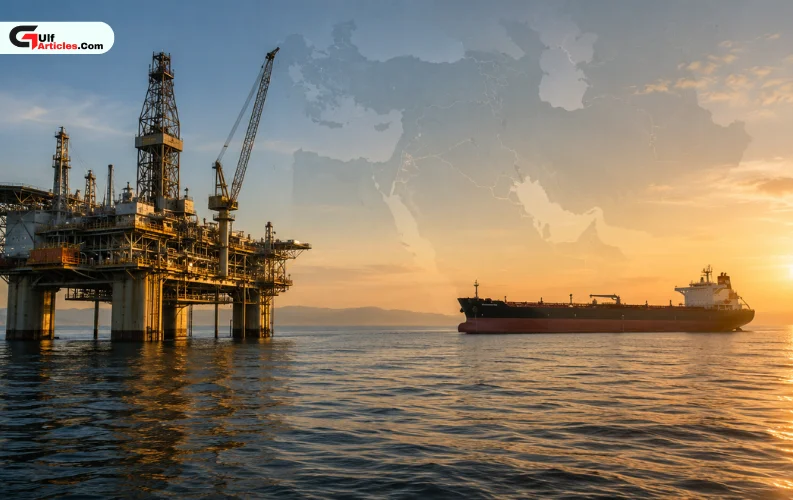
Global oil prices extended their rally on Monday, with Brent crude climbing above the $90-per-barrel mark for the first time in weeks as escalating military tensions between the United States and Iran intensified concerns over the stability of global energy supplies.
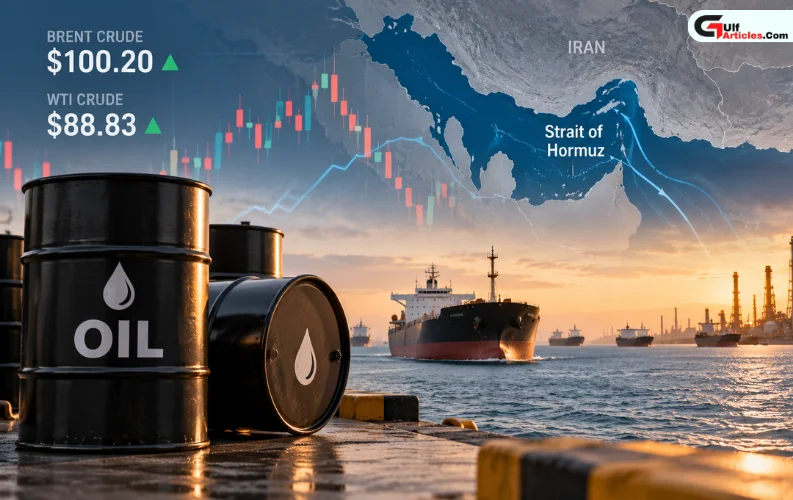
Brent crude futures for September delivery rose more than 3% to trade above $90 a barrel, while U.S. West Texas Intermediate (WTI) crude advanced to around $84.70. The sharp gains came as investors reacted to growing geopolitical uncertainty surrounding the Strait of Hormuz, one of the world's most critical oil shipping routes.
The latest market move follows another round of U.S. military strikes targeting Iranian positions. American officials confirmed that operations have continued for a ninth consecutive night after recent attacks that resulted in additional U.S. military casualties. Washington said the campaign is aimed at reducing Iran's ability to threaten commercial shipping and international maritime traffic in the Gulf region.
The Strait of Hormuz remains a focal point for global energy markets, with nearly one-fifth of the world's oil trade passing through the narrow waterway. Any disruption to shipping activity has the potential to tighten global crude supplies and increase fuel costs worldwide. Recent data indicates that vessel movements through the strait have slowed considerably as security risks continue to rise.
Market analysts believe traders are increasingly pricing geopolitical risk into crude oil markets. Concerns have also grown over declining inventories and reduced exports from the Gulf region, factors that could further tighten supply if the conflict persists.
David Roche, strategist at Quantum Strategy, noted that global crude inventories are approaching tighter levels heading into the second half of the year. He suggested Brent crude could move into the $95 to $105 per barrel range if current supply disruptions continue and geopolitical tensions remain unresolved.
While energy markets remain highly sensitive to developments in the Middle East, investors are closely monitoring diplomatic efforts and military actions that could determine whether oil prices continue their upward trajectory or stabilize in the coming weeks.
You may also like that news:-











Comments 0
No comments yet. Be the first to share your thoughts.
Leave a comment
Your email is never published. All fields are required.