

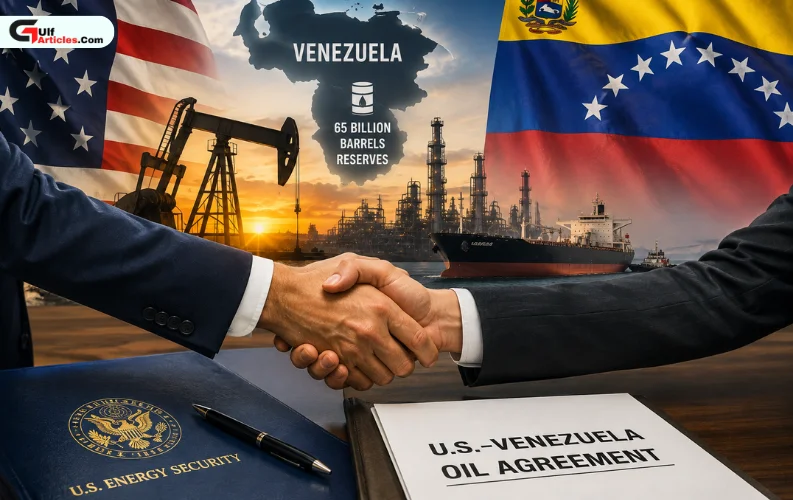
The Trump administration is defending its controversial new oil agreement with Venezuela as U.S. Energy Secretary Chris Wright arrives in Caracas to advance the deal, which Washington says could lower fuel prices for Americans and reduce Russian and Chinese influence in the region.
Venezuela’s ruling-party-dominated National Assembly backed the agreement on Tuesday, clearing the way for Wright to work toward finalizing the arrangement. The deal would give a U.S.-backed private company long-term control over 17 Venezuelan oil fields holding about 65 billion barrels of proven reserves.
Washington Says Deal Will Strengthen U.S. Energy Security
U.S. officials argue that the agreement is about more than gaining access to Venezuelan oil. They say it will provide the United States with a reliable source of crude while helping rebuild Venezuela’s struggling energy industry.
The administration also sees the deal as a way to push back against the influence that China and Russia have built in Venezuela’s oil sector. A U.S. official described the arrangement as an important geopolitical opportunity while insisting that it serves Washington’s national interest.
The White House says the agreement gives the United States significant governance and economic rights in a new Venezuelan oil company. The Pentagon would hold a 35% stake, while the U.S. government would have rights to purchase part of the oil produced at cost.
Venezuela Sees Opportunity to Rebuild Its Oil Industry
For Caracas, the agreement could bring much-needed investment into an oil industry that has suffered from years of underinvestment, mismanagement and sanctions.
Venezuela still holds some of the world's largest proven oil reserves, but production remains far below its historical levels. U.S. officials believe new investment and improved infrastructure could significantly increase output over the coming years.
Chevron, the only major U.S. oil company currently operating in Venezuela, is also expected to announce an expansion of its operations, adding another major element to Washington’s push to revive the country's energy sector.
Deal Faces Political and Legal Questions
Despite the administration's optimism, the agreement has attracted criticism in both Venezuela and the United States. Some Venezuelan opposition lawmakers questioned the deal's transparency and argued that they should have been allowed to examine the full terms before voting.
There are also concerns about the long-term political and legal implications of giving foreign companies such extensive control over Venezuela's oil resources. Critics argue that the agreement could deepen U.S. influence over Venezuela's economy while bypassing broader political reforms.
For now, Washington is betting that greater U.S. involvement can revive Venezuela's oil industry, strengthen American energy security and eventually bring down fuel prices. With Wright in Caracas and Chevron preparing to expand, the agreement is moving quickly from political announcement to a major test of U.S. influence in Venezuela's energy future.
You may also like that news:-











Comments 0
No comments yet. Be the first to share your thoughts.
Leave a comment
Your email is never published. All fields are required.