
whatsapp

Oil Shock Is Turning Filipinos Electric as EV Sales Surge

/media/Philippines_EV_sales.webp

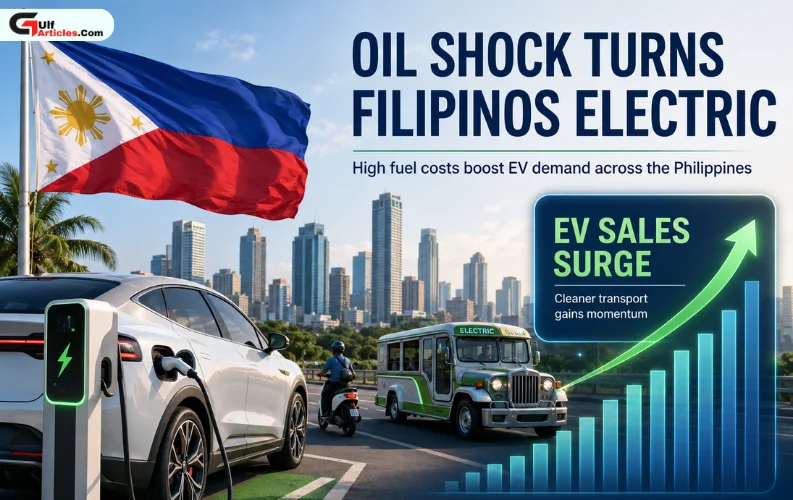
Rising fuel prices are changing the way Filipinos think about buying cars. While the country's overall automobile market is slowing, electric and electrified vehicles are moving in the opposite direction, with sales rising sharply in the first seven months of the year.

Overall vehicle sales in the Philippines fell 10.2% year-on-year to 241,725 units between January and July 2026. In contrast, sales of electrified vehicles, including hybrids, plug-in hybrids and battery-electric vehicles, jumped 136.4% to 38,286 units.

The biggest change has been seen in fully electric vehicles. Battery-EV sales increased 300.3% to 10,476 units, while plug-in hybrid sales surged more than 2,300% to 7,094 units. Conventional hybrids remained the largest category, with 20,716 units sold, up 55.9%.

The shift is closely linked to the sharp rise in fuel prices. For many Filipino motorists, the decision to consider an EV is no longer simply about reducing emissions. It is increasingly about managing the cost of getting to work, running a business and keeping a household budget under control.

Industry representatives say the recent oil shock has made consumers take a closer look at how much they spend on gasoline and diesel. For drivers who travel frequently, the possibility of significantly lower fuel costs can make an electric vehicle more attractive despite its higher upfront price.

The change was particularly noticeable in July, when electrified vehicles accounted for 29.5% of CAMPI-TMA sales, compared with just 11.5% a year earlier.

But the transition is not without challenges. The Philippines still needs more charging stations, particularly outside Metro Manila and other major cities. According to the Department of Energy, the country had 1,569 recognised charging points as of March 31, along with 258 accredited charging-station providers.

For people living in cities, charging an EV at home can make ownership relatively convenient. For those travelling long distances or living in areas with limited charging facilities, however, the lack of infrastructure remains a major concern.

Industry groups are now calling for charging networks to expand along major roads and into provincial areas. Their view is that the country's EV infrastructure needs to grow alongside consumer demand rather than waiting for the market to become fully established.

The numbers suggest that the Philippine car market is not simply shrinking; it is changing. With fuel prices becoming a bigger part of household spending, more Filipinos are beginning to see electric vehicles not just as an environmental choice, but as a practical way to reduce their dependence on expensive fuel.

If oil prices remain elevated, that shift could become even stronger in the months ahead.


You may also like that news:-

Commnets 0
Leave A Comment

Related Posts
© Oil Surges Back Above $90 as U.S.-Iran Tensions Reignite

Oil Surges Back Above $90 as U.S.-Iran Tensions Reignite

Oil prices have climbed sharply again as renewed fighting between the United States and Iran raises fresh concerns about the safety of shipments through the Strait of Hormuz....

© Hyundai Accelerates U.S. Expansion After Years of Strong Market Growth

Hyundai Accelerates U.S. Expansion After Years of Strong Market Growth

Hyundai Motor Group is strengthening its position in the United States after years of rapid growth, with the South Korean automotive giant planning greater local production, a broader vehicle portfoli...

© Dubai International Passenger Traffic Falls 31% in H1 as Recovery Gains Momentum

Dubai International Passenger Traffic Falls 31% in H1 as Recovery Gains Momentum

Dubai International Airport recorded 31.5 million passengers in the first half of 2026, down 31.3% from a year earlier, as regional airspace disruption weighed heavily on flight schedules before traff...

© Türkiye’s Exports to OIC Countries Reach $41.5 Billion in First Seven Months of 2026

Türkiye’s Exports to OIC Countries Reach $41.5 Billion in First Seven Months of 2026

Türkiye’s exports to members of the Organisation of Islamic Cooperation (OIC) reached $41.5 billion in the first seven months of 2026, as the country continued efforts to strengthen commercial ties wi...

© Egypt, UAE Explore Wider Oil and Gas Drilling Partnership

Egypt, UAE Explore Wider Oil and Gas Drilling Partnership

Egypt and the United Arab Emirates are exploring deeper cooperation in oil and gas drilling as Cairo moves ahead with plans to increase domestic production through a broader programme of onshore and o...

© Former JPMorgan Executive Matt Zames Joins Social Security Agency as Advisor

Former JPMorgan Executive Matt Zames Joins Social Security Agency as Advisor

Former JPMorgan Chase executive Matt Zames is set to join the U.S. Social Security Administration in an unpaid advisory role, according to people familiar with the appointment....

© U.S. Treasury Bond Buybacks Offer Short-Term Relief as Debt Concerns Grow

U.S. Treasury Bond Buybacks Offer Short-Term Relief as Debt Concerns Grow

The U.S. Treasury’s decision to expand purchases of longer-term government bonds may ease pressure in the bond market temporarily, but analysts warn it does little to solve America’s broader debt prob...

© Jaywan Payment Network Expands Across UAE Airlines, Retail and E-Commerce

Jaywan Payment Network Expands Across UAE Airlines, Retail and E-Commerce

The UAE’s domestic payment network, Jaywan, is gaining wider acceptance as airlines, shopping destinations and online retailers begin integrating the card into their payment systems....

© UniCredit Moves Closer to Commerzbank Control as German Resistance Softens

UniCredit Moves Closer to Commerzbank Control as German Resistance Softens

Italian banking group UniCredit is moving closer to gaining control of Germany’s Commerzbank, as signs emerge that Berlin may be becoming more open to discussing the future of its remaining stake in t...

© Trump Orders Tariffs of Up to 100% on Imported Drones

Trump Orders Tariffs of Up to 100% on Imported Drones

US President Donald Trump has ordered sweeping new tariffs on imported drones and key components, with duties reaching as high as 100% for certain advanced systems as his administration seeks to reduc...