

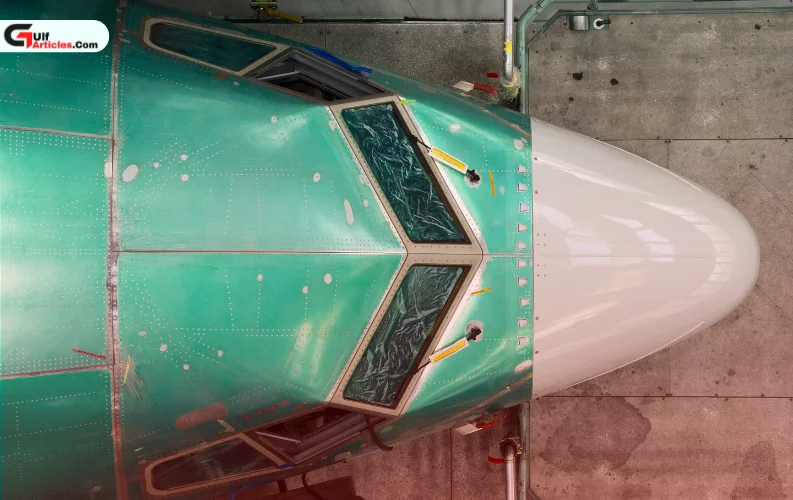
Seattle — Boeing is set to record its highest annual aircraft deliveries since 2018, a milestone that signals growing operational stability after years of safety crises, production disruptions and regulatory scrutiny.
Industry estimates indicate the U.S. plane maker delivered more than 500 commercial aircraft in 2025, marking a sharp improvement from recent years and reinforcing expectations that output will accelerate further in 2026. Boeing is scheduled to outline its updated production targets later this month alongside its quarterly earnings.
The recovery follows a prolonged period of upheaval triggered by the fatal 737 Max crashes in 2018 and 2019, the Covid-19 pandemic and, more recently, a mid-air door plug failure in early 2024 that forced renewed production limits and inspections.
“Boeing is in a far better and more stable place than it was,” said Richard Aboulafia, managing director at AeroDynamic Advisory. “There’s still a long road ahead, but the operational progress is now visible.”
Production stabilises after years of disruption
Under chief executive Kelly Ortberg, Boeing has focused on restoring discipline on the factory floor. The company has reduced out-of-sequence assembly work, expanded worker training and tightened quality controls, steps aimed at preventing the lapses that previously derailed output.
The Federal Aviation Administration has gradually eased restrictions as confidence in Boeing’s processes improved. In September, the FAA allowed the manufacturer to issue airworthiness certificates for certain 737 and 787 aircraft, a responsibility that had been restricted for years.
Boeing’s commercial airplane unit remains its largest business, accounting for nearly half of company revenue, though the group has not posted a full-year profit since 2018. Analysts expect a return to profitability in 2026 as deliveries increase and cash flow improves.
Deliveries drive cash flow
Aircraft handovers are critical for manufacturers, as airlines pay most of a jet’s purchase price only upon delivery. Boeing delivered 537 aircraft in the first eleven months of 2025, with December figures expected to push the total to its highest level in seven years, though still below the 806 aircraft delivered in 2018.
The FAA raised Boeing’s monthly production cap for the 737 Max to 42 aircraft last year, up from 38, with further incremental increases under consideration. Company executives have said new-build aircraft will dominate 2026 deliveries, rather than clearing older inventory.
Production of the long-range 787 Dreamliner is also stabilising, with output expected to average around eight aircraft per month this year.
Airlines regain confidence, cautiously
Airlines have welcomed the improved predictability, even as certification delays continue to weigh on some programmes. Key models such as the 737 Max 7, Max 10 and the wide-body 777X remain uncertified, limiting Boeing’s ability to meet certain customer needs.
Southwest Airlines, which operates an all-Boeing fleet, is still awaiting delivery of the Max 7. CEO Bob Jordan said last month that the aircraft is unlikely to enter service before the first half of 2027, though he acknowledged clear progress at Boeing.
Investor sentiment has improved alongside operational gains. Boeing shares have risen more than 30% over the past year, outperforming the broader market.
Demand remains strong despite delays
Global demand for new aircraft continues to exceed supply, driven by record passenger traffic and airlines’ efforts to replace ageing fleets. Boeing has logged around 1,000 gross orders through November, surpassing its main rival Airbus over the same period.
Wide-body aircraft are also seeing renewed interest as international travel rebounds. Analysts say airlines are booking delivery slots well into the 2030s, reflecting confidence that long-haul demand will remain strong.
“Until someone invents a transporter, air travel isn’t going away,” said Ron Epstein, aerospace analyst at Bank of America. “The demand backdrop remains extremely supportive.”
With deliveries rising and production set to accelerate, 2026 could mark a turning point for Boeing, shifting the narrative from crisis recovery to sustained execution.















Comments 0
No comments yet. Be the first to share your thoughts.
Leave a comment
Your email is never published. All fields are required.