

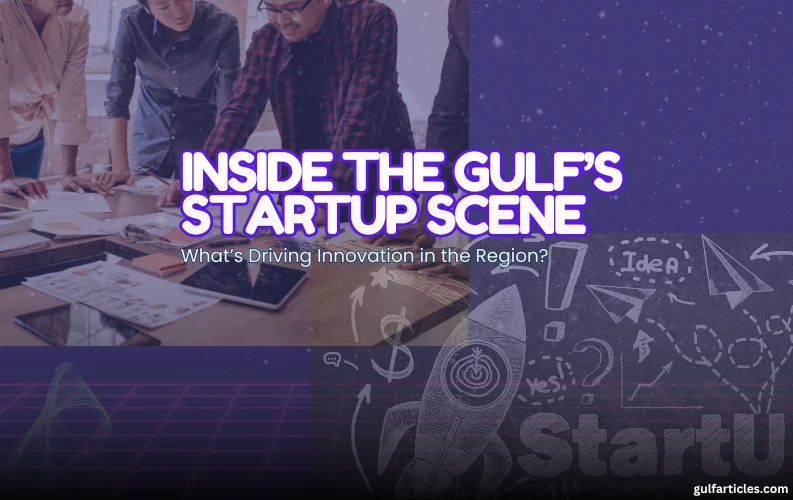
The Gulf region has rapidly transformed into a thriving hub for startups and innovation. With government-backed initiatives, a booming digital economy, venture capital investments, and a strong infrastructure, the Gulf is attracting entrepreneurs from across the world. Countries like United Arab Emirates (UAE), Saudi Arabia, Qatar, Bahrain, Oman, and Kuwait have launched ambitious programs to support the growth of startups, making the region a hotbed for innovation-driven enterprises.
This article explores what’s fueling the Gulf’s startup ecosystem, the key sectors driving innovation, and why entrepreneurs are choosing the Gulf to build and scale their businesses.
The Factors Fueling Innovation in the Gulf
Several factors have contributed to the Gulf's transformation into a startup and innovation powerhouse:
-
Government Initiatives & Funding Support – Programs like Saudi Vision 2030, UAE’s National Innovation Strategy, and Bahrain’s Startup Bahrain Initiative provide financial backing and policy support for startups.
-
Foreign Investment & Venture Capital Growth – Global venture capitalists and sovereign wealth funds are investing heavily in Gulf-based startups.
-
Tax-Free Business Zones & 100% Foreign Ownership – Entrepreneurs benefit from business-friendly regulations and special economic zones like DIFC (Dubai), ADGM (Abu Dhabi), and QFC (Qatar).
-
Smart Cities & Digital Transformation – The Gulf is investing in smart city projects such as NEOM (Saudi Arabia), The Line, and Masdar City (UAE), fostering cutting-edge innovation.
-
Booming E-commerce & Fintech Sectors – The digital economy is thriving, with an increasing number of startups disrupting the fintech, e-commerce, and logistics industries.
With these factors in place, the Gulf is witnessing unprecedented startup activity across multiple industries.
Key Startup Sectors Driving Innovation
1. Fintech & Digital Banking
The fintech industry in the Gulf is booming, fueled by high mobile penetration, cashless transactions, and government support. Entrepreneurs are capitalizing on:
-
Blockchain-Based Payments & Crypto Solutions
-
AI-Powered Financial Advisory Services
-
Buy Now, Pay Later (BNPL) Fintech Platforms
-
Digital Wallets & Cross-Border Payment Solutions
Countries like Bahrain, UAE, and Saudi Arabia have created fintech sandboxes to test and regulate new financial technologies, making it easier for startups to innovate in this space.
2. E-commerce & On-Demand Services
The Gulf's e-commerce sector has experienced exponential growth, driven by consumer demand, mobile adoption, and efficient logistics solutions. Startups are excelling in:
-
Direct-to-Consumer (DTC) E-commerce Models
-
Last-Mile Delivery & Logistics Tech
-
AI-Powered Personalized Shopping
-
Cloud Kitchens & On-Demand Food Services
With Amazon, Noon, and Talabat already dominating the space, new startups are emerging with niche and hyper-personalized shopping experiences.
3. Renewable Energy & Sustainability Startups
The Gulf is prioritizing sustainability, leading to massive investment in clean energy startups. Key opportunities exist in:
-
Solar & Wind Energy Tech
-
Green Hydrogen Production
-
Smart Waste Management Solutions
-
Carbon Capture & Climate Tech Innovations
With Saudi Arabia’s NEOM project and UAE’s Masdar City, the region is a leader in clean energy and environmental innovation.
4. HealthTech & Telemedicine
The healthcare industry in the Gulf is undergoing a digital transformation, creating opportunities for AI-driven health tech startups. Key areas of growth include:
-
Telemedicine & Virtual Health Consultations
-
AI-Based Diagnostics & Predictive Healthcare
-
Wearable Medical Tech & Health Monitoring Apps
-
PharmaTech & Digital Prescription Platforms
With government-backed investments in digital healthcare, startups in this sector are poised for rapid expansion.
5. Artificial Intelligence (AI) & Smart Cities
Gulf governments are heavily investing in AI and smart city technologies, making it an ideal region for AI startups. Emerging business ideas include:
-
AI-Powered Urban Traffic & Public Transport Management
-
Cybersecurity & AI-Based Data Protection
-
IoT-Based Smart Home & Real Estate Tech
-
AI-Driven Predictive Analytics for Retail & Finance
Startups integrating AI with real-world applications are finding enormous opportunities in the region’s growing smart city projects.
Startup Ecosystem and Entrepreneurial Support in the Gulf
The Gulf region has a strong startup ecosystem, supported by a mix of government initiatives, incubators, and funding programs.
Government & Private Startup Programs
-
Dubai Future Accelerators – A program connecting startups with government entities to test and scale innovative solutions.
-
Saudi Arabia’s Monsha’at – Aims to empower entrepreneurs and provide funding and networking opportunities.
-
Qatar Science & Technology Park (QSTP) – Offers mentorship, funding, and R&D facilities for tech startups.
-
Bahrain’s Tamkeen Initiative – Provides funding grants, subsidies, and incubation programs for new businesses.
Venture Capital & Startup Funding
The Gulf region is seeing an influx of venture capital as global investors recognize the region’s startup potential. Some of the biggest players include:
-
Mubadala Ventures (UAE) – Investing in AI, fintech, and healthcare startups.
-
Saudi Venture Capital Company (SVC) – A government-backed VC supporting high-growth startups.
-
500 Startups MENA Fund – Focused on early-stage startup investments in the Middle East.
-
Wamda Capital – One of the region’s largest venture capital firms investing in high-potential startups.
With billions of dollars in VC funding, startups in the Gulf have the capital they need to scale and compete globally.
The Future of Startups in the Gulf
The Gulf region’s startup ecosystem is expected to grow exponentially in the coming years. Key trends shaping the future include:
-
Expansion of AI & Robotics in Daily Life
-
Greater Integration of Blockchain in Business Operations
-
More Cross-Border Collaboration Between Gulf & Global Startups
-
Rise of Women-Led Startups & Female Entrepreneurship Programs
-
Stronger Government-Startup Partnerships for Innovation-Driven Growth
As governments continue to support innovation through policy and funding, the Gulf will remain one of the world’s top startup destinations.
Conclusion
With its pro-business environment, government-backed startup programs, and a booming venture capital market, the Gulf is cementing itself as a leading startup and innovation hub. Entrepreneurs and investors looking for high-growth opportunities will find the Gulf to be an ideal launchpad for innovation.
From fintech and AI to health tech and sustainability, startups in the Gulf are reshaping industries and driving the region’s economic transformation.
For those looking to be part of the next wave of global entrepreneurship, now is the perfect time to tap into the Gulf’s startup ecosystem and take advantage of the unparalleled opportunities it offers.
You may also like:-










Comments 0
No comments yet. Be the first to share your thoughts.
Leave a comment
Your email is never published. All fields are required.