

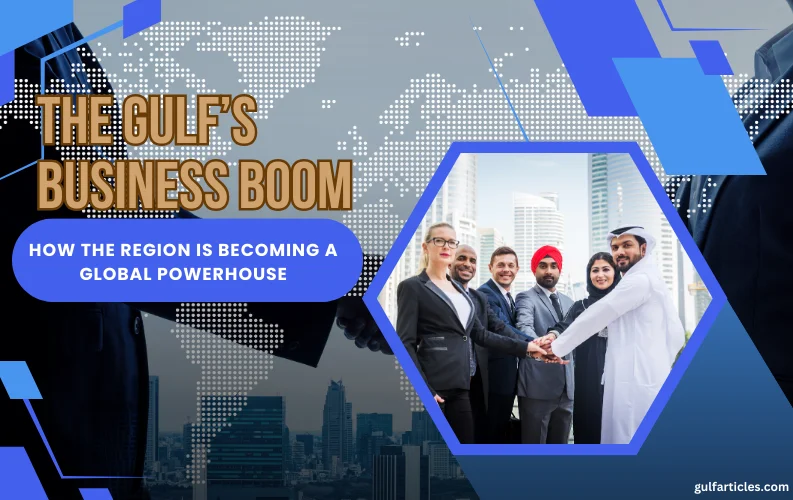
The Gulf region has long been known for its vast oil reserves, which have powered its economy for decades. However, in recent years, the Gulf Cooperation Council (GCC) countries—United Arab Emirates (UAE), Saudi Arabia, Qatar, Bahrain, Oman, and Kuwait—have been transforming their economies, making them more diverse, technology-driven, and business-friendly. This transformation is turning the Gulf into a global business powerhouse, attracting investors, entrepreneurs, and multinational corporations.
This article explores the Gulf's economic rise, key industries driving growth, investment opportunities, and how the region is positioning itself as a leading global business hub.
The Shift from Oil Dependency to Economic Diversification
For decades, the Gulf countries relied heavily on oil exports, which contributed to a major portion of their GDP. However, with fluctuating oil prices and the global push toward sustainable energy, Gulf nations have initiated bold economic diversification plans. These strategies focus on:
-
Technology and AI-driven industries
-
Tourism and hospitality
-
Finance and fintech
-
Real estate and mega infrastructure projects
-
Renewable energy and sustainability initiatives
-
Manufacturing and industrial development
-
Healthcare and medical research
-
Agriculture and food security
Saudi Arabia's Vision 2030 and the UAE's Economic Vision 2050 serve as roadmaps to reduce reliance on oil and create sustainable, knowledge-based economies.
Investor-Friendly Business Environment
To attract foreign investments and global businesses, the Gulf nations have introduced pro-business policies, including:
-
100% foreign ownership in various industries
-
Tax-free business zones in key cities
-
Simplified visa and residency regulations for entrepreneurs and skilled workers
-
State-backed investment funds supporting startups and innovations
-
Streamlined business registration and licensing processes
Dubai, Abu Dhabi, and Riyadh have become leading financial hubs, offering world-class infrastructure, connectivity, and ease of doing business. Free zones like Dubai International Financial Centre (DIFC) and Abu Dhabi Global Market (ADGM) continue to attract multinational corporations, banking institutions, and fintech startups.
Mega Infrastructure and Smart Cities
The Gulf is investing heavily in infrastructure to support its growing economy. Some of the most ambitious projects include:
-
NEOM (Saudi Arabia) – A $500 billion smart city powered by AI and renewable energy
-
The Line (Saudi Arabia) – A 170-km smart city with zero carbon emissions
-
Masdar City (UAE) – A sustainable smart city focusing on clean energy innovation
-
Lusail City (Qatar) – A futuristic urban hub blending technology with modern living
These projects integrate artificial intelligence, blockchain, and data analytics to improve urban planning, transportation, and security, making Gulf cities smart, sustainable, and business-friendly.
The Startup Revolution in the Gulf
The startup culture in the Gulf is booming, with cities like Dubai, Riyadh, and Doha emerging as regional tech hubs. The region has witnessed rapid growth in e-commerce, logistics, fintech, and artificial intelligence (AI) startups. Key initiatives supporting startups include:
-
Dubai Future Accelerators, which helps innovative startups scale
-
Saudi Arabia's Monsha’at, which provides funding and mentorship
-
Qatar’s Incubation Centers, supporting tech-driven businesses
-
Bahrain’s Startup Bahrain initiative, fostering entrepreneurial growth
With billion-dollar investments from venture capital firms and sovereign wealth funds, Gulf-based startups are gaining global recognition. Unicorns such as Careem (acquired by Uber) and Souq (acquired by Amazon) have paved the way for new-age entrepreneurs.
Tourism and Hospitality: A Key Economic Driver
Gulf nations are investing billions into tourism and hospitality, aiming to become the top global destinations for travelers, business professionals, and expatriates. Some key developments include:
-
Dubai Expo 2020 Legacy Projects, which continue to attract tourists and investors
-
Qatar’s FIFA World Cup 2022 Infrastructure, boosting hospitality and real estate
-
Saudi Arabia’s Red Sea and AlUla projects, redefining luxury and adventure tourism
-
Oman’s Vision 2040, expanding cultural and eco-tourism opportunities
With world-class airports, luxury hotels, entertainment hubs, and cultural attractions, the Gulf is set to compete with top tourism destinations like Europe and the U.S.
Renewable Energy and Sustainability: The Next Frontier
Gulf nations are heavily investing in renewable energy to meet global sustainability goals. Some of the most ambitious renewable energy projects include:
-
Mohammed bin Rashid Al Maktoum Solar Park (UAE) – One of the world’s largest solar projects
-
Saudi Arabia’s Green Riyadh Initiative, planting millions of trees for a greener future
-
Kuwait’s Shagaya Renewable Energy Park, focusing on solar and wind energy
-
Bahrain’s Net-Zero Strategy, aiming for carbon neutrality by 2060
These initiatives showcase the region’s commitment to a sustainable and energy-efficient future.
The Future: What Lies Ahead for the Gulf’s Economy?
The Gulf’s rapid economic growth and diversification strategies indicate that the region is well on its way to becoming a global business powerhouse. Some future trends include:
-
Artificial Intelligence and Automation – AI will drive business operations, logistics, and customer experience
-
Expansion of Space Technology – UAE and Saudi Arabia are investing in satellite and space exploration projects
-
Blockchain and Digital Currencies – Gulf countries are leading initiatives in blockchain-based financial transactions
-
Smart Logistics and Supply Chain Management – Innovation in port facilities and global trade networks
-
Green Hydrogen and Alternative Energy – Gulf nations are investing in hydrogen fuel technology
With strong leadership, investor-friendly policies, and a commitment to innovation, the Gulf is evolving into an economic giant that will shape global business trends in the coming decades.
Challenges and Considerations
Despite the rapid growth and positive outlook, Gulf nations face several challenges, such as:
-
Talent Shortage – The need for highly skilled professionals in AI, fintech, and emerging industries
-
Geopolitical Tensions – Economic and political stability can impact investor confidence
-
Competition Among Gulf Nations – Each country is striving to be the leading hub, creating both opportunities and challenges
-
Sustainability and Climate Challenges – The transition to renewable energy requires significant adaptation
-
Regulatory Frameworks – New policies must balance innovation and consumer protection
Conclusion
The Gulf’s transformation from an oil-dependent region to a global business hub is nothing short of remarkable. The region’s focus on technology, smart cities, renewable energy, and entrepreneurship is attracting global attention. Whether through economic diversification, startup support, sustainable projects, or large-scale foreign investments, the Gulf is poised to lead the future of business and innovation.
As new industries emerge, and foreign investors continue to pour in capital, the Gulf’s business boom is only just beginning. This is the golden era for entrepreneurs, businesses, and investors looking to tap into the region’s incredible opportunities.
You may also like:-





Comments 0
No comments yet. Be the first to share your thoughts.
Leave a comment
Your email is never published. All fields are required.