
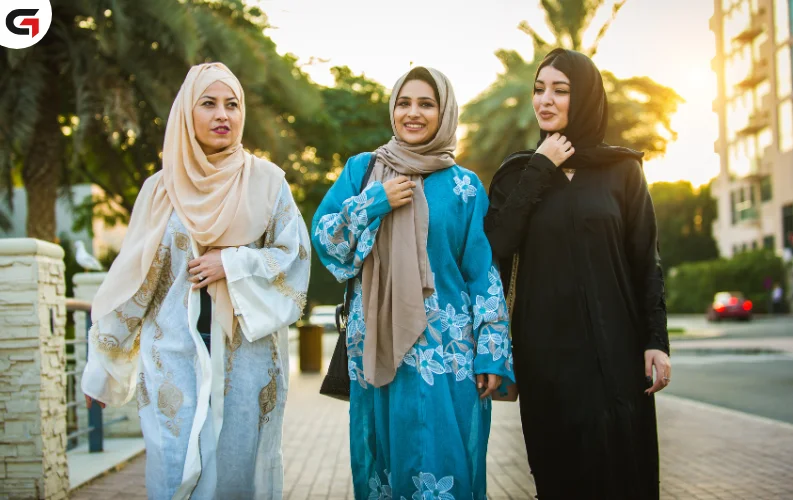
In the heart of one of the world's fastest-changing regions, a quiet revolution is taking place. Across the Gulf Cooperation Council (GCC) countries—including the United Arab Emirates, Saudi Arabia, Qatar, Bahrain, Kuwait, and Oman—women are not only entering the workforce in unprecedented numbers, but they are also ascending to influential leadership roles that are redefining the region’s socio-economic and political trajectory. These trailblazers are reshaping traditional structures and positioning the Gulf for a more inclusive and innovative future.
The Context: A Region in Transformation
Historically, women in the Gulf have faced significant limitations in terms of legal rights, employment opportunities, and societal expectations. Yet, in the past two decades, policy reforms, education investment, and cultural shifts have created fertile ground for women to thrive.
In Saudi Arabia alone, female labor force participation has nearly doubled from 17% in 2017 to over 35% in 2023. In the UAE, women now represent 66% of public sector workers and 50% of the Federal National Council. These changes are not accidental—they are part of broader national visions like Saudi Arabia’s Vision 2030 and the UAE’s Centennial 2071, both of which emphasize gender equality and the economic empowerment of women.
Education: The Foundation of Change
Education is a key driver in the rise of Gulf women leaders. Across the region, more women than men graduate from universities, and many pursue degrees in fields like engineering, law, medicine, and information technology.
Key Statistics:
-
In Qatar, women constitute more than 70% of university graduates.
-
The UAE ranks among the top countries for female enrollment in STEM fields.
-
Saudi Arabia’s Princess Nourah bint Abdulrahman University is the largest women's university in the world.
With this academic foundation, Gulf women are stepping into leadership roles with the confidence, knowledge, and global perspectives needed to excel.
Political and Diplomatic Leadership
Across the Gulf, women are increasingly visible in government and diplomacy, often serving in roles that were historically off-limits.
Notable Figures:
-
Princess Reema bint Bandar Al Saud, Saudi Arabia’s ambassador to the U.S., is the first woman to hold such a diplomatic position in the Kingdom.
-
Sheikha Lubna Al Qasimi served as the UAE’s Minister of Foreign Trade, and later as Minister of State for Tolerance.
-
Dr. Hanan Al Kuwari, Qatar’s Minister of Public Health, is credited with leading Qatar’s healthcare response during the COVID-19 pandemic.
These leaders are not symbolic appointments—they play central roles in policy, diplomacy, and governance.
Breaking Barriers in Business
Gulf women are also making waves in the private sector, from family-run businesses to multinational corporations. Entrepreneurship among women has surged, with support from both public initiatives and private investors.
Leading Entrepreneurs:
-
Dr. Raja Easa Al Gurg, Chairperson of the Easa Saleh Al Gurg Group, is a veteran businesswoman and advocate for gender diversity in corporate governance.
-
Lulwa Al-Suwaidi, founder of the UAE’s first all-women investment firm, is helping other women access capital and scale businesses.
-
Noor Sweid, founder of Global Ventures, is one of the region’s most prominent female venture capitalists.
Governments have introduced business incubators, seed funds, and angel networks specifically targeting female entrepreneurs. These efforts are helping close the gender financing gap and encourage women to build scalable ventures.
Innovation and STEM Leadership
Women in the Gulf are also pioneering breakthroughs in science, technology, engineering, and mathematics (STEM)—a field traditionally dominated by men.
Pioneering Minds:
-
Sarah Al Amiri, UAE Minister of State for Advanced Technology, led the Emirates Mars Mission and heads the UAE Space Agency.
-
Dr. Lamya Al Haj, an Omani biotechnologist, is advancing renewable energy through genetic engineering.
-
Dr. Huda Al Matroushi, one of the first female Emirati auto mechanics, is challenging stereotypes and inspiring young women.
National strategies now include scholarships for women in AI, robotics, and clean tech, reflecting a commitment to inclusion in future industries.
Social Impact and Cultural Change
Women leaders in the Gulf are not just driving economic growth—they are changing mindsets. Through media, education, and advocacy, they are creating new narratives around gender, leadership, and identity.
Agents of Change:
-
Sheikha Moza bint Nasser of Qatar uses platforms like the Qatar Foundation to promote education and social entrepreneurship.
-
Dr. Ebtesam Al-Ketbi, President of the Emirates Policy Center, is a leading voice in regional security and public policy.
-
Reem Al Hashimy, the Minister of State for International Cooperation, played a central role in organizing Expo 2020 Dubai.
Their visibility and influence are inspiring young girls across the Gulf to aim higher and believe in their ability to lead.
Institutional Support and Policy Reforms
Several regional initiatives and legal reforms have enabled women to thrive:
-
Legal changes in Saudi Arabia now allow women to drive, travel independently, and obtain legal guardianship of their children.
-
UAE’s Gender Balance Council aims to reduce the gender gap across sectors and has introduced policies to ensure female representation in leadership.
-
Oman’s Vision 2040 outlines inclusive economic participation and education access for women.
Moreover, organizations such as the Dubai Women Establishment and the Bahrain Supreme Council for Women are pushing systemic reforms that institutionalize gender equality.
Challenges That Remain
While progress is undeniable, challenges still exist:
-
Cultural resistance in conservative communities.
-
Limited access to funding for startups led by women.
-
Gender bias in certain sectors like construction, finance, and politics.
-
Workplace discrimination and the need for more inclusive corporate policies.
Nonetheless, younger generations are increasingly rejecting outdated gender norms, and the digital age has given women new platforms to advocate, organize, and innovate.
The Road Ahead: A Shared Vision
Women are not merely participating in Gulf society—they are shaping it. Whether through boardrooms, laboratories, parliaments, or digital platforms, Gulf women are leveraging education, resilience, and vision to drive change.
Their leadership is not defined by Western templates but rooted in regional identity, cultural nuance, and a commitment to shared prosperity. This model of leadership emphasizes collaboration, social cohesion, and purpose over hierarchy and control.
As Gulf nations continue to transition from resource-based economies to knowledge-based societies, women will be essential to unlocking full economic potential. Empowering them isn’t just a matter of fairness—it’s a strategy for sustainable growth and global competitiveness.
Conclusion
The women of the Gulf are not waiting to be handed leadership—they are claiming it. They are not just breaking glass ceilings; they are constructing entirely new frameworks for what leadership looks like in the 21st century.
In every sphere—political, economic, scientific, and social—Gulf women are demonstrating that inclusion is not just possible, but powerful. Their journey, while far from complete, is already transforming the region. The Gulf’s future is being written by the hands of women who lead not just with ambition, but with purpose.
Key Takeaways:
-
Gulf women are increasingly present in leadership roles across sectors.
-
Education is a core enabler of women’s advancement.
-
Women are shaping national visions through politics, business, and science.
-
Institutional support and reforms are accelerating progress.
-
Persistent challenges remain, but momentum is strong.
-
The leadership of Gulf women is defining a more inclusive and forward-looking future.
You may also like:-





Comments 0
No comments yet. Be the first to share your thoughts.
Leave a comment
Your email is never published. All fields are required.