

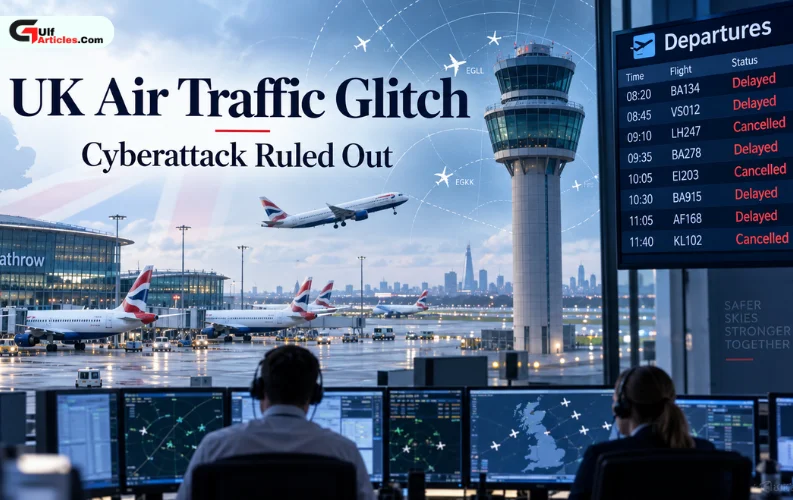
A major disruption to Britain's air traffic control system that affected thousands of flights this week was not caused by a cyberattack, according to the UK government, but the incident has raised fresh concerns about the reliability of the country's aviation infrastructure.
The disruption began on Tuesday after a technical failure at NATS, the UK's air traffic control provider, affected its flight data processing system. More than 1,000 flights were cancelled, while hundreds more were delayed at major airports including Heathrow, Gatwick and London City.
Government Rules Out Cyberattack
Transport Minister Heidi Alexander told Parliament that she did not believe the outage was the result of a cyberattack.
The statement offered some reassurance to passengers and airlines concerned about the possibility of a deliberate attack on critical aviation infrastructure. However, the government has yet to establish exactly what caused the technical failure.
Prime Minister Andy Burnham's government has given NATS one week to investigate the incident and provide an explanation of what went wrong. An independent review by the Civil Aviation Authority (CAA) will also examine the wider handling of the disruption.
Thousands of Passengers Caught in Disruption
Although the system problem was eventually fixed, its effects continued well after air traffic operations resumed.
Around 2,000 flights to and from UK airports were affected across Tuesday and Wednesday, according to aviation analytics company Cirium. On Tuesday alone, roughly 30% of scheduled departures were grounded.
Airlines had to cancel flights, rearrange aircraft and move crews into position, creating delays that continued into the following day. Heathrow and other major airports warned travelers to check directly with their airlines before travelling.
Airlines Demand Action From NATS
The incident has sparked strong criticism from airlines, which argue that repeated failures are becoming too costly for passengers and operators.
Ryanair said it had cancelled 260 flights affecting about 48,000 passengers and estimated its losses from the latest disruption at around £3 million. The airline again called for NATS CEO Martin Rolfe to resign.
Wizz Air also called for an overhaul of NATS, arguing that a provider responsible for critical national infrastructure should not repeatedly bring large parts of the aviation system to a standstill.
Not NATS' First Major Failure
The latest outage is particularly concerning because it follows several earlier problems involving Britain's air traffic control system.
A major flight-plan processing failure in August 2023 caused widespread disruption across the country. The CAA subsequently required NATS to review its contingency plans.
Another radar-related technical problem disrupted flights in July 2025, adding to questions about whether enough investment and backup capacity are in place to protect the UK's aviation network from system failures.
Financial Pressure Builds
The disruption is also putting the spotlight on the financial structure of NATS.
The company paid around £175 million in dividends to its owners in 2025, while airlines continue to bear significant costs when failures occur.
Airlines UK, which represents the industry, has argued that the latest incident exposes weaknesses in the country's regulatory framework and questioned whether more investment should be directed toward improving NATS' systems and resilience.
Investigation Will Determine What Went Wrong
NATS says the technical problem has been fixed and that safety was not compromised. However, CEO Martin Rolfe has acknowledged that the company had not yet completed its investigation into the precise cause of the failure.
The government-ordered review will now focus on whether the outage could have been prevented and whether NATS' backup systems were strong enough to limit the disruption.
For passengers, the immediate problem may be over, but the incident has exposed how quickly a failure inside a single air traffic control system can ripple across the UK's entire aviation network.
With no evidence of a cyberattack, attention is now firmly shifting toward technology, contingency planning and investment, and whether enough is being done to prevent another nationwide flight disruption.
You may also like that news:-
















Comments 0
No comments yet. Be the first to share your thoughts.
Leave a comment
Your email is never published. All fields are required.