

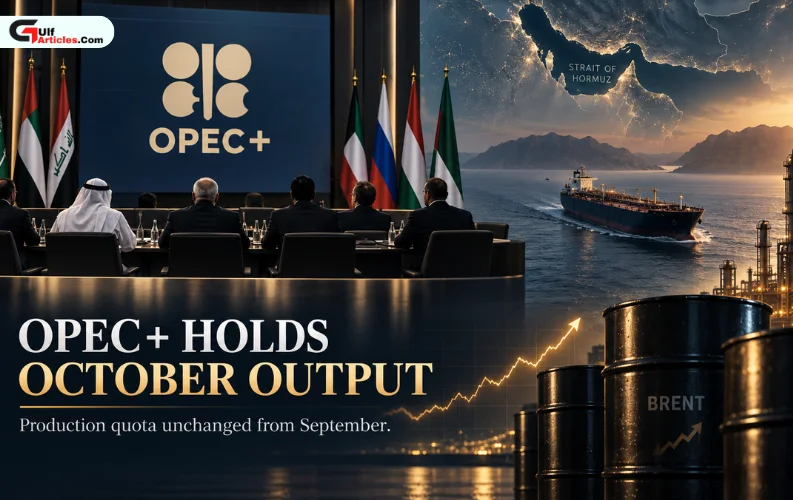
OPEC+ has decided to keep its October 2026 oil production levels unchanged from September, pausing further increases after six consecutive months of output hikes.
The decision was agreed during a virtual meeting on September 6 involving Saudi Arabia, Russia, Iraq, Kuwait, Kazakhstan, Algeria and Oman. The group said the move reflects its focus on maintaining market stability while it continues to assess global oil market conditions.
OPEC+ Pauses Output Increases
The decision marks the first pause after OPEC+ gradually increased production quotas over the previous six months.
The seven countries had raised September output by around 188,000 barrels per day, completing the rollback of a voluntary supply reduction of roughly 1.65 million barrels per day that was introduced in 2023. For October, however, the group has chosen to hold those production levels steady.
The decision does not mean that all previously agreed OPEC+ production cuts have disappeared. A separate layer of cuts introduced in 2022 remains in place through the end of 2026.
Geopolitical Risks Complicate the Oil Market
The decision comes as the global oil market faces significant disruption from the ongoing conflict involving the United States and Iran.
Oil shipments through the Strait of Hormuz, one of the world's most important energy corridors, have been heavily affected. Reduced tanker traffic and attacks involving oil vessels have created additional uncertainty around global crude supplies.
With physical oil flows already under pressure, OPEC+ faces a different challenge than simply deciding whether to add more barrels. Higher official production quotas do not necessarily translate into higher actual exports when geopolitical disruptions limit the ability of producers to move crude to international markets.
Oil Prices Remain Elevated
The supply concerns have helped keep oil prices high.
Brent crude recently moved above $96 a barrel, while U.S. West Texas Intermediate crude climbed above $92. Oil prices have also recorded substantial weekly gains as the conflict raises concerns about prolonged disruptions to Middle Eastern supplies.
The unchanged OPEC+ decision could provide some additional support to prices because the group is not adding new barrels to the market in October. At the same time, weak global demand and uncertainty over economic growth remain important factors for traders.
Attention Turns to 2027 Production Quotas
OPEC+ is also preparing for a broader discussion about its 2027 production baselines.
A review of individual members' production capacities is expected to help determine how future quotas are allocated. Some members have pushed for production levels that better reflect their current capacity, making the negotiations potentially more complicated.
The group has therefore opted to maintain the current policy while it gathers more information before making longer-term decisions.
Next OPEC+ Meeting Set for October
OPEC+ said the seven countries will continue holding monthly meetings to monitor market conditions.
The next meeting is scheduled for October 4, 2026, when members are expected to review November production levels and assess whether market conditions have changed enough to justify another adjustment.
For now, OPEC+ is choosing stability over another production increase. With geopolitical tensions still disrupting oil flows and prices remaining elevated, the group's next decisions could have a significant impact on the global energy market heading into the final months of 2026.
You may also like that news:-















Comments 0
No comments yet. Be the first to share your thoughts.
Leave a comment
Your email is never published. All fields are required.