

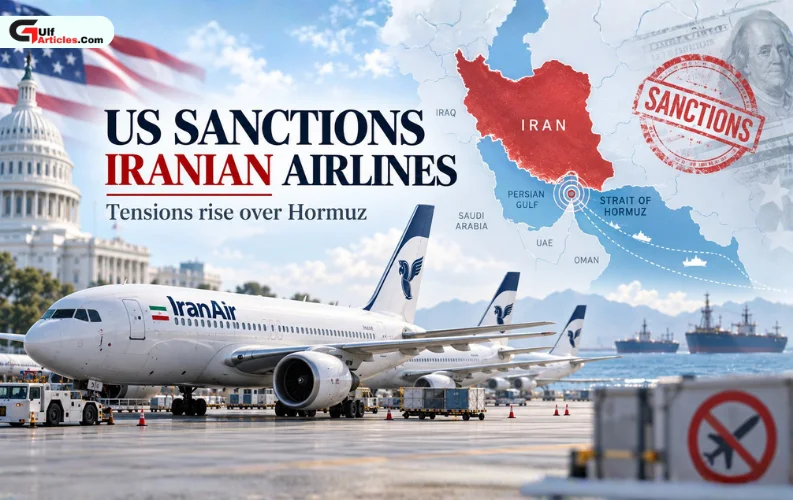
The United States has imposed sanctions on all of Iran’s remaining active airlines, sharply expanding Washington’s campaign to isolate Tehran as tensions continue to rise around the Strait of Hormuz.
The U.S. Treasury Department announced sanctions on 36 targets linked to Iran’s aviation sector, including 27 Iranian airlines and related companies, as well as foreign intermediaries and front companies accused of helping Tehran obtain aircraft, spare parts and other sensitive technology.
Washington Targets Iran’s Aviation Network
The latest measures are part of the Trump administration’s broader “Operation Economic Outcast,” which aims to restrict Iran’s access to international finance and disrupt networks Washington says are supporting the country’s military and economic activities.
U.S. officials said the targeted aviation networks have been used to transport weapons, personnel and illicit cargo. The Treasury also accused intermediaries in several countries of helping Iranian airlines acquire U.S.-origin aircraft and sensitive aviation equipment.
The sanctions effectively put Iran’s remaining airline sector under comprehensive U.S. restrictions, making international business, financing and access to aviation supplies increasingly difficult.
Mahan Air and Other Carriers Face More Pressure
One of the most prominent targets in the wider campaign is Mahan Air, which has already been under U.S. sanctions for years over alleged support for Iran’s Islamic Revolutionary Guard Corps.
The new action also targets companies and individuals accused of helping Mahan Air and other Iranian carriers operate through international procurement and transshipment networks. Treasury officials warned that foreign businesses assisting sanctioned entities could also face consequences.
The United States has also suspended some previously authorized transactions involving Iranian civil aviation, including provisions related to the temporary re-export of civil aircraft to Iran.
Hormuz Tensions Add to the Pressure
The sanctions come as the confrontation between Washington and Tehran is becoming increasingly intertwined with the global energy market.
Iran has warned that it could retaliate against further U.S. military action by targeting American interests and energy infrastructure in the Gulf. The country has also threatened tighter restrictions around the Strait of Hormuz, a critical route for global oil shipments.
Shipping activity through the strait has already fallen below recent averages. Preliminary tracking data showed only six commodity vessels passed through on Tuesday, compared with a 10-day average of 12.
Oil Markets Watch the Escalation
The worsening standoff is adding pressure to oil markets.
Brent crude has moved close to $100 a barrel as investors worry that military escalation could disrupt energy infrastructure and shipping routes. Continued problems around Hormuz could have consequences far beyond Iran, affecting fuel prices, inflation and global supply chains.
For Washington, increasing economic pressure on Tehran is intended to weaken the resources available to the Iranian government while maintaining pressure over its regional and military activities.
Impact on Iran’s Civil Aviation
The broader impact on Iran’s aviation sector could be significant.
Iran has struggled for years to obtain new aircraft and replacement parts because of sanctions. Restrictions on access to international suppliers can make fleet maintenance more difficult and increase operating costs for airlines already working with older aircraft.
Analysts have also warned that prolonged isolation of Iran’s aviation system could create additional challenges for passengers and the country’s wider economy, particularly as airlines depend on international connections for trade and travel.
Pressure Campaign Enters a New Phase
The latest sanctions show that Washington is targeting not only Iran’s airlines but also the financial and supply networks that allow them to operate.
With all remaining Iranian airlines now under U.S. sanctions, Tehran’s access to international aviation markets is becoming even more restricted. At the same time, growing tensions around Hormuz are raising the stakes for the global economy.
Whether the intensified pressure pushes Iran toward negotiations or leads to further escalation remains uncertain. For now, Washington is tightening the economic squeeze at the same time that the risk of disruption to one of the world's most important energy corridors continues to grow.
You may also like that news:-














Comments 0
No comments yet. Be the first to share your thoughts.
Leave a comment
Your email is never published. All fields are required.