

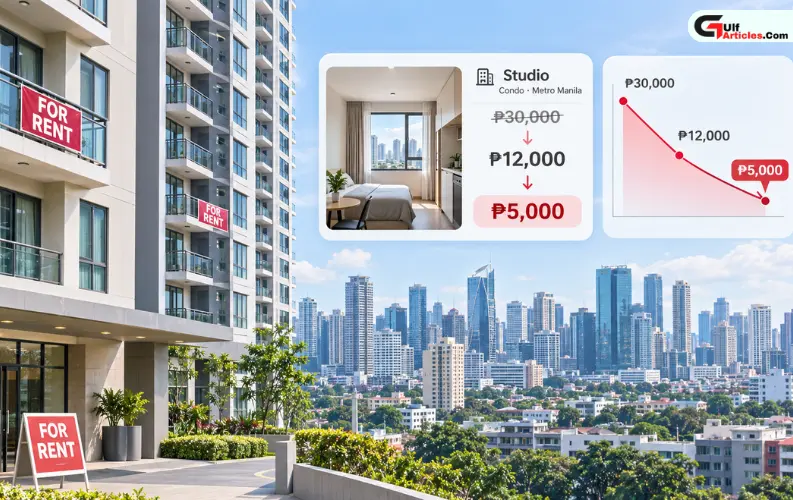
Condominium rental prices in Metro Manila could decline to as low as ₱5,000 ($78) per month for some studio units over the next 12 months, according to David Leechiu, chief executive and co-founder of Leechiu Property Consultants. The forecast highlights growing pressure in the Philippines' residential property market as excess housing supply increases competition among landlords.
Leechiu said studio apartments that previously rented for approximately ₱30,000 a month are already being offered for around ₱12,000 in some locations. He expects rental prices to face further downward pressure as property owners compete to attract tenants.
Oversupply Drives Rental Price Declines
The main factor behind the projected decline is an imbalance between available condominium units and buyer demand, particularly in Metro Manila's middle-market residential segment.
Leechiu cited approximately 800,000 condominium units across Metro Manila, including around 80,000 unsold properties. He also pointed to weak sales activity, with only about 3,000 units sold during the previous quarter.
According to the property consultant, the rental market could continue weakening over the next 18 months, although he believes the oversupply problem may ease within three years or less.
He stressed that the situation does not represent a nationwide property crisis but is concentrated in particular condominium segments and locations.
Property Industry Executive Disputes the Forecast
Anthony Leuterio, founder of Filipino Homes and Rent.ph, disagreed with the prediction that studio rents could fall to ₱5,000. He argued that rental performance depends on several factors, including location, tenant demand, economic conditions, marketing and professional property management.
Leuterio warned landlords against making unnecessary rent reductions based on broad market predictions. He also called for more reliable rental-rate studies to help property owners establish competitive prices.
He said effective marketing, tenant screening and property maintenance remain important in protecting rental income, even in a market experiencing oversupply.
Tenants Could Benefit from Lower Rental Costs
If rents continue declining, tenants could gain access to more affordable condominium housing, including properties located closer to business districts and workplaces.
Leechiu described the current market as an opportunity for renters, suggesting that living closer to work could save commuters several hours each day.
The potential price reductions could also encourage more people to rent rather than purchase property, particularly as homeownership remains financially challenging for many households.
Outlook for Metro Manila's Property Market
The wider residential market continues to face elevated vacancy levels and unsold inventory. Colliers Philippines projected that Metro Manila's condominium vacancy rate could reach 25.6% in 2026 before improving as new supply moderates from 2027.
However, rental conditions vary considerably across locations and property categories. Prime business districts may experience different demand patterns from oversupplied middle-market developments.
The coming year will be important in determining whether the ₱5,000 rental forecast becomes realistic in certain locations or remains an extreme scenario. Actual lease transactions, vacancy rates and tenant demand will ultimately determine how far prices fall.
You may also like that news:-















Comments 0
No comments yet. Be the first to share your thoughts.
Leave a comment
Your email is never published. All fields are required.