

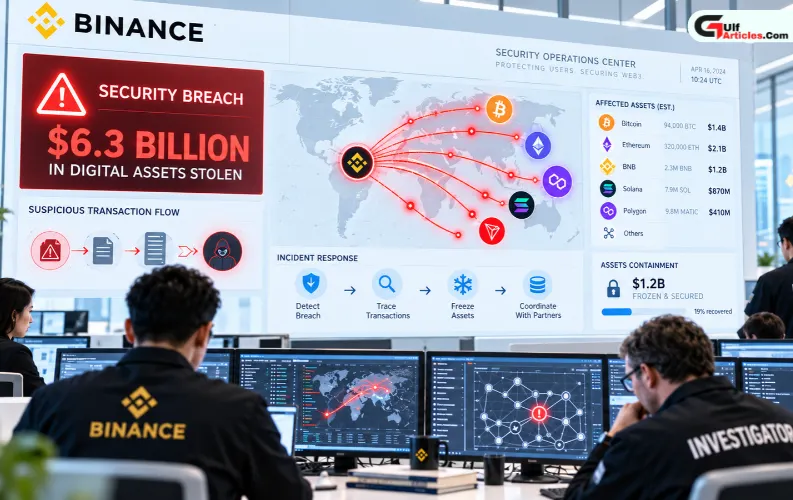
The cryptocurrency industry is facing renewed security concerns after Binance, the world's largest cryptocurrency exchange, suffered a cyberattack involving approximately $6.3 billion in digital assets. The incident, reported on October 29–30, 2026, is being described as the largest known cryptocurrency theft to date.
The attack exposed potential weaknesses in exchange infrastructure, particularly the systems used to authorise transactions and manage digital assets. Binance has pledged to cover all customer losses and is working with cybersecurity firms, blockchain investigators and other cryptocurrency companies to recover the affected funds.
How Did the Hackers Access Binance?
Binance's initial investigation identified a potentially compromised laptop belonging to a DevOps engineer as one possible entry point. The attacker reportedly used access to an internal service container to submit unauthorised withdrawal transactions.
However, subsequent findings suggested that the incident involved multiple security weaknesses rather than a single compromised device. Blockchain investigators believe the attackers gained access to transaction-signing infrastructure, which is responsible for authorising transfers from exchange wallets.
This is particularly significant because cryptocurrency exchanges rely on online wallets, commonly known as hot wallets, to process customer transactions. If attackers gain control over the systems that authorise withdrawals, they may be able to move large amounts of cryptocurrency without directly obtaining users' passwords or wallet private keys.
Binance has stated that it has found no evidence of a private-key leak, although its investigation remains ongoing.
North Korean Hackers Suspected
Blockchain intelligence firms TRM Labs and Elliptic have attributed the attack with high confidence to North Korean-linked hackers. Investigators have pointed towards the TraderTraitor group, which has previously been associated with major cryptocurrency thefts.
According to blockchain analysis reported by cybersecurity researchers, the attackers prepared their operation before executing coordinated transactions across multiple blockchain networks. Much of the theft reportedly took place within approximately 20 minutes.
The suspected involvement of North Korean cybercriminal networks has raised further concerns about organised attacks targeting cryptocurrency exchanges and digital financial infrastructure.
Billions Frozen as Binance Works to Recover Funds
Following the incident, Binance and its industry partners began tracing the stolen cryptocurrency and freezing assets where possible. Approximately $3 billion has been located or frozen, while the remaining funds are still being investigated.
Companies including Tether, Circle and Ripple have assisted with efforts to block affected assets. Binance also temporarily suspended deposits and withdrawals as a precaution while its technical teams reviewed the security incident.
The exchange has assured customers that their funds are safe and said it will cover all losses resulting from the attack using company resources.
What the Attack Reveals About Cryptocurrency Security
The Binance incident highlights that cryptocurrency security depends on more than protecting private keys and blockchain networks. Internal employee devices, software access permissions, transaction approval systems and wallet-management infrastructure can all become potential targets.
Security specialists have increasingly emphasised the importance of multi-layered authentication, restricted employee access, independent transaction verification and continuous monitoring of unusual wallet activity.
The breach could encourage cryptocurrency exchanges to strengthen internal security controls and conduct more frequent independent audits. As digital assets become more widely used, protecting the systems that manage and authorise transactions will remain essential to maintaining customer confidence and stability across the cryptocurrency market.
You may also like that news:-
















Comments 0
No comments yet. Be the first to share your thoughts.
Leave a comment
Your email is never published. All fields are required.