

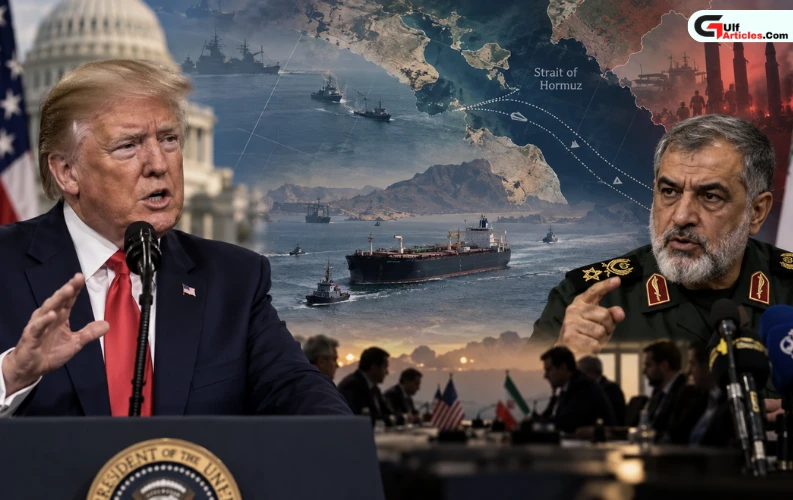
U.S. President Donald Trump has said the conflict with Iran could end “very soon,” while Iran’s Islamic Revolutionary Guard Corps (IRGC) has accused Washington of failing to achieve its objectives and called for the United States to leave the region.
Trump made the latest comments on September 29, saying Iran was performing poorly and reiterating that the United States would prevail. His remarks came as mediators continued efforts to find a way to end the conflict and address disputes over Iran’s nuclear program, sanctions and the Strait of Hormuz.
Trump Says Conflict Could End Soon
Trump has continued to express confidence that the United States can secure an outcome in its confrontation with Iran.
Speaking at an event in Washington, he said the conflict would be over “very soon” and again argued that Iran would not be allowed to obtain a nuclear weapon. The president has also said U.S. officials have been communicating through intermediaries as diplomatic efforts continue.
However, Trump has not provided a specific timeline for an end to military operations or outlined a finalized agreement with Tehran.
The comments followed earlier remarks in which Trump said the United States would win the conflict “one way or another,” while acknowledging uncertainty about whether Iran would agree to his terms.
IRGC Rejects Trump's Claims
Iran's IRGC has offered a sharply different assessment.
IRGC spokesman Gen. Hossein Mohebbi said in a televised news conference on September 29 that the United States should acknowledge what he described as a failure and withdraw from the Middle East. He delivered what he described as a letter to the American people, urging them to oppose Trump's policies and U.S. military involvement in the region.
The IRGC's position is that American military pressure has not forced Tehran to surrender. Iranian officials have continued to reject U.S. demands concerning the country's nuclear activities and broader regional policy.
These are competing claims from the two sides, and neither statement by itself establishes the overall military outcome of the conflict.
Diplomacy Remains in the Background
Despite the opposing public statements, diplomatic contacts have continued through regional intermediaries.
Qatar and other countries have been involved in efforts to bring Washington and Tehran closer to negotiations. The discussions have included the possibility of reopening the Strait of Hormuz, a crucial global energy route, as well as questions surrounding sanctions and Iran's nuclear program.
Iran's latest proposals have sought changes to U.S. restrictions and arrangements concerning the waterway, while the Trump administration has continued to demand limits on Iran's nuclear capabilities and other conditions.
Strait of Hormuz Remains a Major Issue
The Strait of Hormuz has become one of the most important factors in the conflict because disruptions there can affect global oil and gas supplies.
Shipping through the waterway has been heavily disrupted during the conflict, contributing to higher energy prices and increased pressure on international markets. The possibility of reopening the route has therefore become an important part of diplomatic discussions.
The uncertainty has also affected Iran's economy. The country's currency recently fell to a new record low of more than 2.5 million rials per U.S. dollar, according to the Associated Press, highlighting the economic strain created by the conflict and continuing sanctions.
No Clear End to the Conflict Yet
Trump's latest comments suggest that Washington expects the conflict to move toward an end, but there is still no publicly confirmed agreement setting out when or how the fighting will stop.
The IRGC's rejection of Trump's assessment shows how far apart the two sides remain in their public positions. With diplomatic contacts continuing and the Strait of Hormuz still under pressure, the next stage of the conflict will depend on whether intermediaries can turn those contacts into a broader agreement.
You may also like that news:-












Comments 0
No comments yet. Be the first to share your thoughts.
Leave a comment
Your email is never published. All fields are required.