

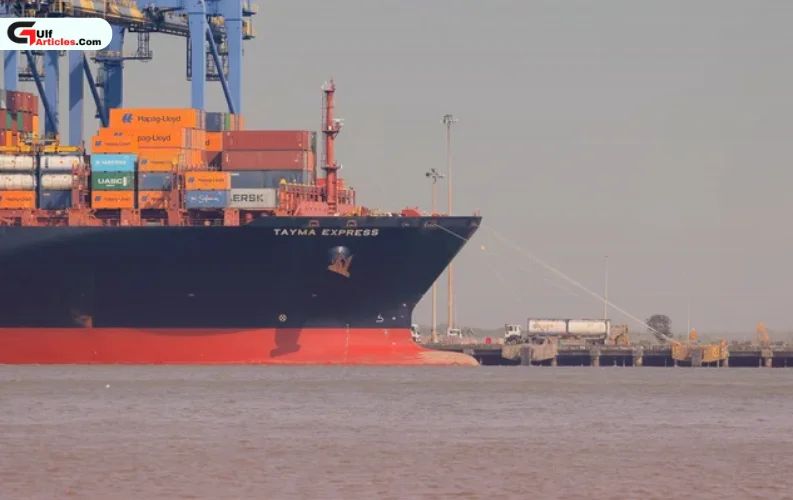
Global container shipping companies are increasingly rerouting cargo away from Gulf ports to alternative hubs in India and Sri Lanka as security risks escalate following intensified attacks on commercial vessels linked to the Iran conflict.
The disruptions, triggered by vessel attacks beyond the Strait of Hormuz, have forced carriers to adjust shipping networks and seek safer entry points for cargo destined for Gulf markets. Maritime analysts say the ongoing conflict is already affecting a significant portion of global container capacity.
According to shipping analytics firm Alphaliner, more than 10 percent of the world’s container shipping fleet has been directly impacted by the conflict. The situation has created major logistical challenges as shipping lines attempt to maintain supply chains while avoiding increasingly dangerous maritime corridors.
Ports along India’s western coastline have become key alternatives for cargo diversion. Facilities such as Mundra in Gujarat and Nhava Sheva near Mumbai are seeing increased activity as shipping companies redirect vessels away from the Gulf.
Shipping analyst Mael Pape-Léostic of Alphaliner said Indian ports are now playing an increasingly important role in diversion strategies for cargo that would normally be routed through Gulf hubs.
The shift accelerated after Oman’s Port of Salalah, which had been emerging as a major transshipment hub for Gulf cargo, was forced to suspend operations following drone strikes on March 11. The attack raised concerns that regional port infrastructure could become targets as the conflict expands.
Before the closure, Salalah and the UAE’s Khor Fakkan port had become major alternatives for cargo entering the region, particularly for time-sensitive shipments such as food products and other perishable goods.
With Salalah temporarily out of operation, shipping companies have been closely monitoring developments while redirecting vessels to other ports capable of handling large container volumes.
Industry data shows the diversion trend is already visible in vessel tracking systems. Ships communicate their intended destinations through Automatic Identification System (AIS) transponders, which provide insight into shifting maritime traffic patterns.
Between January 28 and March 10, the number of vessels declaring Dubai’s Jebel Ali port as their destination dropped sharply from 67 ships to just 23. During the same period, vessels declaring Nhava Sheva near Mumbai increased from 21 to 36.
Sri Lanka’s Port of Colombo has also seen a modest rise in vessel traffic. The number of ships declaring Colombo as their destination rose from seven to a peak of 14 on March 4, according to Alphaliner data.
Meanwhile, the number of vessels heading toward Khor Fakkan on the UAE’s east coast increased significantly, rising from just two vessels to 27 during the same timeframe. The port remains operational and is considered one of the safer alternatives within the region.
Security concerns intensified after Iran’s newly appointed supreme leader Mojtaba Khamenei vowed in a public statement to continue blocking access to the contested Strait of Hormuz, a crucial global shipping corridor through which a large portion of the world’s oil and cargo shipments pass.
Several commercial vessels have already been struck or damaged during attacks in and around the strait since tensions escalated. Images of burning ships circulating globally have heightened fears about the safety of maritime operations in the region.
Maritime analysts warn that the conflict could expand beyond shipping lanes if infrastructure in nearby countries continues to be targeted. Drone attacks on facilities in Oman have already raised concerns that the operational impact could spread across the broader Middle East maritime network.
According to Alphaliner, the war is now affecting approximately 10.7 percent of the global container fleet when measured by TEU capacity. TEU, or twenty-foot equivalent unit, is the standard measurement used in the shipping industry to calculate the capacity of container vessels.
Shipping companies are now redesigning service routes to avoid potential chokepoints while maintaining cargo flows to Gulf markets.
One of the most significant changes has come from the Gemini Cooperation alliance, formed by shipping giants Maersk and Hapag-Lloyd. The partnership has temporarily suspended several services linked to Gulf ports, including calls at Salalah.
Instead, the alliance has introduced alternative routes designed to bypass conflict zones while ensuring cargo delivery to the region.
A new service linking Far East ports to the Red Sea port of Jeddah has already been established. Under this routing, vessels travel via the Cape of Good Hope, the Mediterranean Sea, and the Suez Canal, effectively avoiding risky shipping lanes in the Gulf of Aden.
Industry experts expect other major shipping lines to consider similar routes if tensions continue to escalate.
In the longer term, analysts believe Gulf cargo may increasingly move through Saudi Arabia’s Red Sea ports, particularly Jeddah and King Abdullah Port. From there, goods could be transported inland to Gulf countries via rail or trucking networks.
This alternative logistics model would allow shipping companies to continue serving regional markets while minimizing exposure to maritime conflict zones.
For India and Sri Lanka, the shift in shipping routes presents an opportunity to strengthen their position as regional logistics hubs. Increased cargo traffic through ports such as Mundra, Nhava Sheva, and Colombo could boost port activity and expand their role in global supply chains.
However, industry observers caution that the long-term impact will depend on how quickly tensions in the Middle East stabilize. If attacks on commercial shipping continue, global trade routes may undergo more significant restructuring in the months ahead.
For now, shipping lines are focusing on maintaining cargo movement while navigating one of the most challenging maritime security environments in recent years.