
Skip to content

Discover a different perspective

News

Sharjah Positions Ports and Logistics Network as Supply Chain Shield for Global Investors

Sharjah Positions Ports and Logistics Network as Supply Chain Shield for Global Investors
Share this article
Text size 14px
Comment

Sharjah is reinforcing its position as a resilient investment destination by leveraging its strategic ports, industrial zones, and integrated logistics infrastructure to help businesses navigate growing supply chain challenges and economic uncertainty.

The initiative comes as companies across the region face increasing logistics costs, trade disruptions, and geopolitical pressures, prompting investors to place greater emphasis on operational continuity and risk management when selecting business locations.

Speaking on Sharjah's investment strategy, Mohamed Juma Al Musharrkh, Chief Executive Officer of Invest in Sharjah, said the emirate's approach is centered on flexibility, connectivity, and long-term business stability.

"Sharjah's approach to protecting investor confidence is anchored in flexibility, connectivity, and operational continuity," Al Musharrkh said.

He highlighted the emirate's access to both the Arabian Gulf and the Gulf of Oman through Port Khalid, Hamriyah Port, and Khorfakkan Port, providing businesses with multiple routes to regional and international markets.

According to Al Musharrkh, the diversified port network reduces reliance on a single trade corridor and enables companies to respond more effectively to changing market conditions and potential disruptions.

The growing importance of resilient logistics infrastructure is reshaping investor priorities. While growth opportunities remain attractive, businesses are increasingly evaluating locations based on their ability to maintain uninterrupted operations during periods of uncertainty.

"Investor conversations today are less about identifying opportunity and more about validating continuity at scale," Al Musharrkh said.

He noted that companies are paying closer attention to the diversity of trade routes, the strength of logistics networks, and the capacity of business ecosystems to absorb cost fluctuations without disrupting operations.

Sharjah's logistics capabilities are further supported by the Sajaa Dry Port, which connects maritime gateways with manufacturing, storage, and distribution facilities throughout the emirate. The integrated network enables businesses to streamline cargo movement and improve supply chain efficiency.

"The objective is not to eliminate cost pressures, but to manage them through efficiency and predictability," Al Musharrkh explained. "In periods of volatility, predictability becomes a defining factor in protecting margins, ensuring delivery timelines, and reinforcing long-term investor confidence."

Manufacturing continues to play a central role in Sharjah's economic strategy. The sector contributes approximately 18 percent of the emirate's economy and is supported by more than 2,800 factories operating across 21 industrial zones. Sharjah's exports currently reach over 120 countries worldwide.

Recent investment trends indicate growing interest in sectors linked to essential demand and production capacity, including manufacturing, logistics, healthcare, education, food security, and related services.

"Investment in Sharjah is increasingly directed toward sectors anchored in real demand, production capacity, and continuity of supply," Al Musharrkh said.

Data released by Invest in Sharjah shows that the emirate attracted 31 foreign direct investment projects in the manufacturing sector during 2025, generating approximately $434.6 million in capital investment. Over the past five years, Sharjah secured 99 manufacturing projects valued at nearly $957.3 million.

The emirate is also home to around 40 percent of the UAE's industrial establishments, reinforcing its position as one of the country's leading manufacturing hubs.

Beyond infrastructure, Sharjah continues to enhance its investor support framework through Invest in Sharjah and the Sharjah Investors Services Centre (SAEED), offering businesses a streamlined process for licensing, approvals, and government engagement.

"Sharjah's investor support is designed to remove friction from the entire investment journey, from first enquiry to full operation," Al Musharrkh said.

As global businesses increasingly seek stable and adaptable operating environments, Sharjah is positioning itself as a destination where companies can establish, expand, and sustain operations with confidence.

Industry observers note that the emirate's combination of strategic connectivity, industrial depth, logistics infrastructure, and regulatory support is becoming an increasingly attractive proposition for investors looking to build resilient regional operations in a rapidly evolving global market.
Comments 0

No comments yet. Be the first to share your thoughts.

Leave a comment

Your email is never published. All fields are required.

Related Stories

Continue reading from Gulf Articles

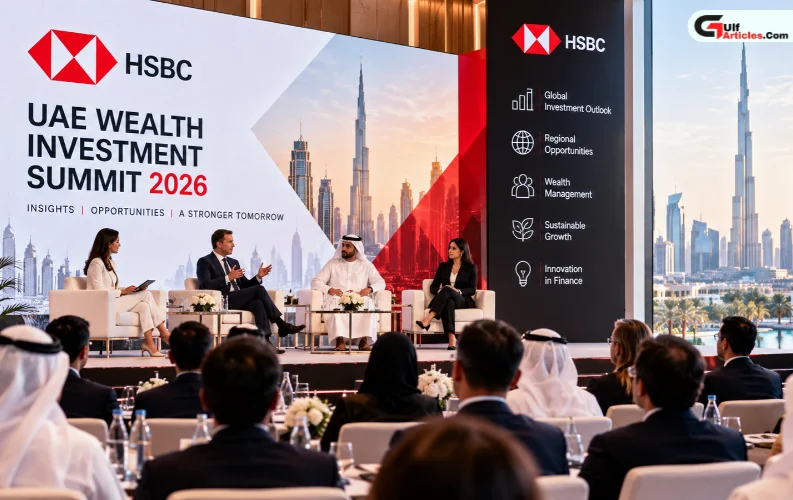
HSBC UAE Wealth Investment Summit 2026 Concludes, Highlighting Regional Investment Opportunities

HSBC UAE Wealth Investment Summit 2026 Concludes, Highlighting Regional Investment Opportunities

HSBC’s UAE Wealth Investment Summit 2026 concluded in Dubai on October 22, bringing together selected clients, senior business leaders and members of the investment community to discuss wealth management, financial markets and long-term investment opportunities. The summit formed part of HSBC’s wider programme of financial-sector engagement in the UAE, as the bank marks 80 years of operations in the country. Discussions took place amid changing global market conditions and the Middle East’s growing role as an international investment hub.

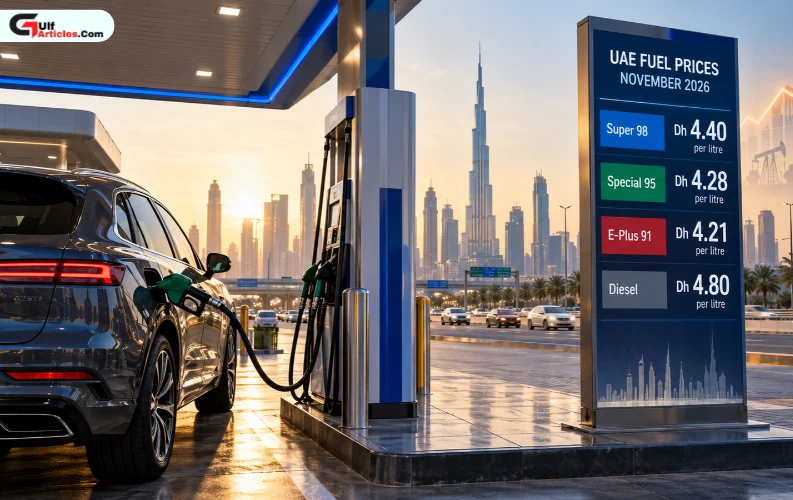
UAE Fuel Prices for November: Will Petrol Stay Above Dh4 per Litre?

UAE Fuel Prices for November: Will Petrol Stay Above Dh4 per Litre?

Petrol prices in the United Arab Emirates could rise further in November as international oil prices climb above $110 per barrel amid renewed concerns over Middle East supply disruptions. With October fuel rates already above Dh4 per litre for all three petrol grades, motorists are waiting for the UAE Fuel Price Committee’s next announcement, expected at the end of October. The final rates will depend on global oil-market conditions and pricing trends during the remainder of the month.

Trust Institute and OKX Partner to Expand Free Financial Trading Education in the UAE

Trust Institute and OKX Partner to Expand Free Financial Trading Education in the UAE

Trust Training and Development Institute (Trust Institute), a Dubai-based financial education provider, has partnered with global fintech company and cryptocurrency trading platform OKX to expand access to free financial-market education across the United Arab Emirates. Announced on October 21, 2026, the initiative aims to help beginners and aspiring traders understand financial markets, trading concepts and risk management without requiring them to invest money or carry out trades.

DIP Holding IPO: How UAE Residents Can Apply for Shares From Dh5,000

DIP Holding IPO: How UAE Residents Can Apply for Shares From Dh5,000

Dubai Investments is preparing to offer a 20% stake in DIP Holding through an initial public offering (IPO), giving UAE residents an opportunity to invest in the company behind Dubai Investments Park. Retail investors can apply with a minimum investment of Dh5,000, while subscriptions are scheduled to open on October 27, 2026. The shares are expected to begin trading on the Dubai Financial Market (DFM) on November 11.

UAE Faced Sleeper-Cell Threats During Iranian Missile and Drone Attacks, Says Official

UAE Faced Sleeper-Cell Threats During Iranian Missile and Drone Attacks, Says Official

The United Arab Emirates faced security threats from alleged sleeper cells during Iranian missile and drone attacks earlier in 2026, according to senior Emirati official Ali Rashid Al Nuaimi. He said hundreds of suspected members were arrested over allegations that they helped guide attacks against the country, highlighting the security challenges the UAE faced alongside aerial threats.

Tristar Group Signs Agreement for Aegis Logistics to Become Majority Shareholder

Tristar Group Signs Agreement for Aegis Logistics to Become Majority Shareholder

Tristar Group has signed an agreement that will allow Aegis Logistics to become its majority shareholder, marking a significant development in the companies' business relationship. The proposed transaction is expected to strengthen their position in the logistics and energy supply chain sectors, with potential implications for regional operations and future expansion.

Fitbit Edge Launched with Replaceable Battery, 7-Day Life and ECG for $180

Fitbit Edge Launched with Replaceable Battery, 7-Day Life and ECG for $180

Fitbit has introduced the Fitbit Edge, a wearable device featuring a replaceable battery, up to seven days of battery life, and electrocardiogram (ECG) functionality at a price of $180. The device focuses on practical health tracking and longer-term usability, offering an alternative for consumers who want smartwatch features without frequent charging or the need to replace the entire device when its battery wears out.

UAE Recalls 1,983 Toyota Highlander Vehicles Over Seat Safety Defect

UAE Recalls 1,983 Toyota Highlander Vehicles Over Seat Safety Defect

The United Arab Emirates has announced a recall of 1,983 Toyota Highlander vehicles after identifying a potential defect in the second-row seat mechanisms. The issue could prevent seatbacks from locking securely, increasing the risk of passenger injuries in the event of a collision. The recall was announced by Al-Futtaim Motors in coordination with the UAE's consumer protection authorities.

UAE Sets New Sugar, Salt and Fat Limits for Bread, Laban and Chips

UAE Sets New Sugar, Salt and Fat Limits for Bread, Laban and Chips

The United Arab Emirates has started implementing new rules that set limits on sodium, sugar and fat in selected packaged foods, including bread, laban, flavoured yoghurt, chips and processed cheese. The regulations aim to improve the nutritional quality of everyday products and support healthier food choices, while giving manufacturers time to adjust recipes and production processes.