

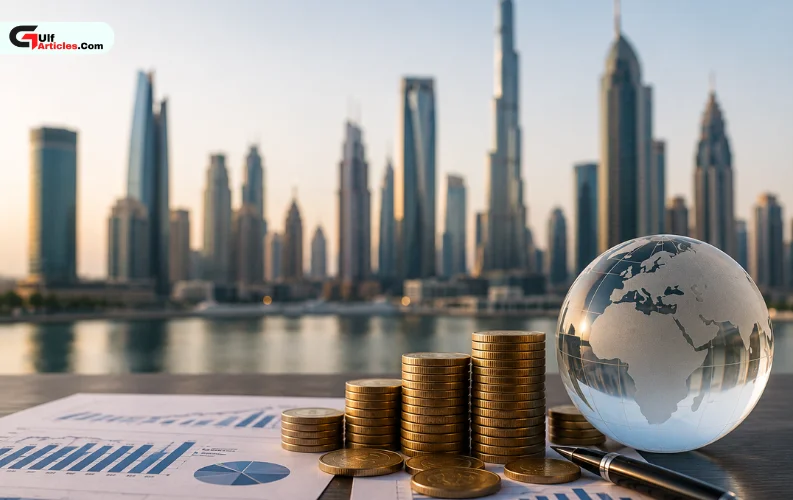
Middle East companies distributed $29.2 billion in dividends during the first quarter of 2026, underscoring the region's resilient corporate earnings and continued commitment to shareholder returns despite an uncertain global economic environment. Saudi Arabia remained the dominant contributor, accounting for nearly 84% of all regional dividend payments, according to the inaugural Janus Henderson Global Dividend and Buyback Index.
The report showed that underlying dividend payments across the Middle East increased 4% year-on-year, reflecting sustained profitability among listed companies. Although headline regional dividend payments were 5% lower than the same period last year, analysts attributed the decline primarily to changes in dividend payment schedules rather than weaker corporate performance.
Saudi Arabia Dominates Regional Dividend Payments
Saudi Arabian companies paid an estimated $24.5 billion in dividends during the January-March quarter, making the Kingdom the largest source of shareholder payouts in the Middle East.
Qatar ranked second with dividend distributions totaling $2 billion, while companies listed in the United Arab Emirates returned $1.7 billion to shareholders during the quarter.
According to the report, the UAE's headline dividend figures appeared lower mainly because of the timing of Dubai Islamic Bank's dividend payment. The change in payment timing affected year-on-year comparisons but did not indicate any deterioration in the underlying financial performance of UAE-listed companies.
Global Dividends Reach Record High
Worldwide dividend payments climbed to $424.5 billion during the first quarter of 2026, representing a 10.1% increase compared with the same period a year earlier.
Higher shareholder distributions across North America, Europe, Japan, and the United Kingdom supported the global increase, despite businesses continuing to face elevated interest rates, geopolitical tensions, and uncertainty surrounding international trade.
The report highlighted that resilient corporate earnings have enabled companies to maintain healthy dividend policies even as economic conditions remain challenging across several major markets.
Share Buybacks Show Mixed Trend
Global share buybacks totaled $425.7 billion during the quarter, marginally exceeding dividend payments. However, repurchases declined 3.1% from the first quarter of 2025, indicating companies adopted a more cautious approach toward buying back their own shares.
The difference reflects changing capital allocation strategies, with many businesses prioritizing consistent dividend payments while becoming more selective with discretionary buyback programs.
Jane Shoemake, Client Portfolio Manager on the Global Equity Income Team at Janus Henderson, said the strength of corporate earnings has continued to support shareholder returns despite macroeconomic uncertainty.
"Amidst what feels like an increasingly uncertain macro backdrop, the surprise has been the strength of earnings around the world. Those earnings almost always result in higher dividends, and that's exactly what we're now seeing across a range of industries and regions," Shoemake said.
United States Continues to Lead Global Returns
The United States remained the world's largest market for shareholder distributions during the quarter.
American companies distributed $183.5 billion in dividends while repurchasing $266.7 billion worth of shares. U.S. dividend payments represented 46.3% of the total dividends tracked by the index, with technology, financial, and energy companies contributing the largest share.
Across continental Europe, dividend payments reached $67.4 billion, marking a 35.5% increase compared with the first quarter of 2025. Switzerland led the region with $27.3 billion in dividends, followed by Denmark with $9.4 billion.
Financial Sector Leads Shareholder Distributions
Financial institutions remained the largest contributors to global shareholder returns during the quarter.
The sector distributed $90.8 billion in dividends while completing $110.7 billion in share buybacks, accounting for more than one-third of total global repurchase activity.
Basic materials companies recorded the strongest dividend growth among all industries, with payouts rising 47.1% year-on-year. The increase was driven by rising demand for critical minerals such as copper and lithium, which play an essential role in artificial intelligence infrastructure, semiconductor manufacturing, and data center development.
Technology companies also maintained strong capital returns, paying $43.7 billion in dividends and carrying out $66.6 billion in buybacks during the quarter.
Dividend Growth Expected to Continue
Looking ahead, Janus Henderson forecasts global dividend growth of 8.3% in 2026, an improvement over the 6.8% recorded in 2025. In contrast, global share buybacks are expected to decline by 1.1% this year after increasing 6.1% last year.
The report suggests that resilient earnings should continue supporting dividend payments, although higher borrowing costs, geopolitical risks, and pressure on consumer-focused businesses remain important challenges for companies worldwide.
Shoemake noted that while buybacks remain an important capital management tool, dividends continue to provide investors with a stronger indication of long-term corporate confidence.
"Dividends are generally long-term board decisions based on sustainability, while buybacks are more discretionary and cyclical in nature. In that sense, dividends remain the stronger signal of confidence, while buybacks act as a more flexible shock absorber," she said.
The latest findings indicate that companies across the Middle East and global markets continue to prioritize stable shareholder returns, reinforcing dividends as a key measure of financial strength amid an evolving economic landscape.
You may also like that news:-














Comments 0
No comments yet. Be the first to share your thoughts.
Leave a comment
Your email is never published. All fields are required.