

Dubai — Rising geopolitical tensions involving the United States, Israel, and Iran are beginning to ripple through the Middle East’s travel economy, with the tourism sector facing significant financial losses. According to new analysis by the World Travel and Tourism Council (WTTC), the conflict is already reducing international visitor spending across the region by approximately $600 million per day.
The global travel industry body warned that disruptions to aviation routes, traveller confidence, and regional connectivity are directly affecting tourism demand throughout the Middle East. The WTTC represents the private sector of the global travel and tourism industry and monitors economic trends impacting tourism markets worldwide.
Despite the emerging challenges, industry experts maintain that the sector has historically demonstrated strong resilience during crises and may recover relatively quickly if coordinated measures are implemented.
Aviation Disruptions Ripple Across Travel Economy
The Middle East plays a crucial role in global travel networks. The region accounts for around 5 percent of worldwide international tourist arrivals and nearly 14 percent of global transit passenger traffic. As a result, any disruption within regional airspace quickly affects global aviation and tourism flows.
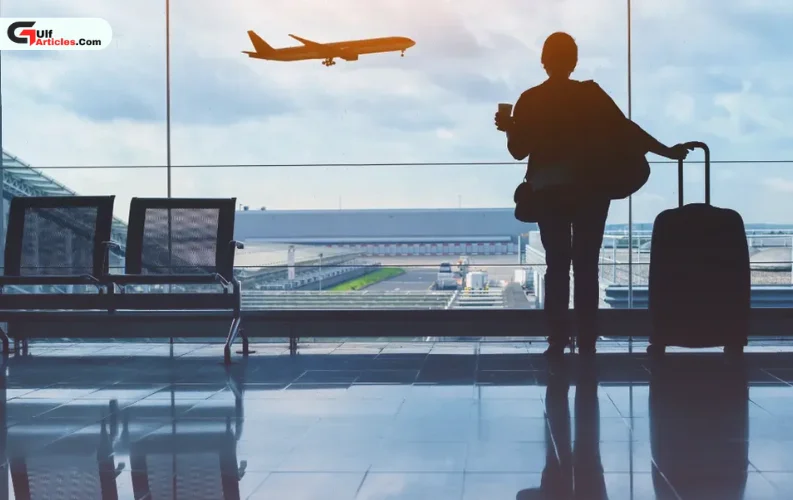
Major aviation hubs such as Dubai, Abu Dhabi, Doha, and Bahrain typically handle approximately 526,000 passengers per day. When flights are cancelled or airspace is restricted, the consequences extend beyond airlines to hotels, car rental services, cruise companies, and other travel-related businesses.
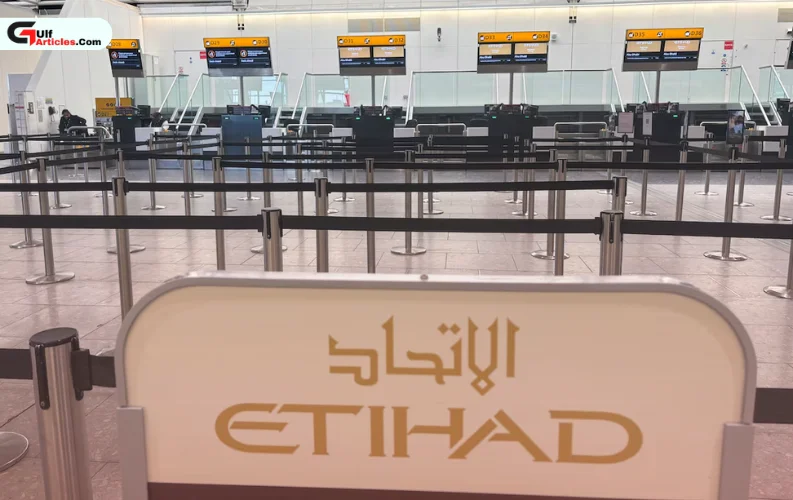
Data from aviation analytics firm Cirium indicates that flight cancellations across the region have already escalated. Between February 28 and March 12, more than 92,000 flights were scheduled to depart from or arrive in the Middle East. Of these, over 49,000 flights were cancelled, reflecting the scale of operational disruption across the regional aviation network.
Some airports have experienced near-total shutdowns of departures. In Doha, for example, 288 of 308 scheduled departures were cancelled, while Bahrain recorded 92 cancellations out of 93 planned flights during the same period.
These cancellations significantly disrupt travel itineraries, forcing airlines to reroute aircraft, suspend services, and adjust schedules across international networks.
UAE Airports Continue Limited Operations
Despite the regional turbulence, the United Arab Emirates’ major aviation gateways continue to operate under reduced but functioning schedules.
At Dubai International Airport (DXB), one of the world’s busiest international travel hubs, 387 flights were listed during the reporting period, with 87 cancellations. Data shows that 153 flights had already departed or landed, indicating that the airport remains operational despite the challenging environment.
Similarly, Zayed International Airport in Abu Dhabi reported relatively fewer disruptions. Out of 101 scheduled departures, 23 flights were cancelled, while the majority continued operating or remained scheduled.
These partial operations are helping maintain critical international connectivity for travellers and airlines, although capacity remains below normal levels.
Tourism Industry Faces Major Financial Impact
The WTTC’s estimates are based on its 2026 tourism outlook, which projected $207 billion in international visitor spending across the Middle East this year before the conflict escalated.
When travel demand slows, the economic impact spreads across the entire tourism ecosystem. Airlines face reduced ticket sales, hotels experience declining occupancy, and tourism operators see fewer bookings for tours and excursions.
Such disruptions also affect employment across hospitality, aviation, and service sectors, industries that collectively support millions of jobs across the region.
The Middle East’s tourism industry has grown rapidly in recent years, with major destinations investing heavily in infrastructure, events, and hospitality expansion to attract international visitors.
Tourism Resilience Offers Hope for Recovery
Despite the immediate economic impact, industry leaders believe the tourism sector can recover quickly once stability returns.
Historical data examined by the WTTC shows that tourism demand following security-related crises often rebounds faster than expected. In some cases, travel demand has recovered within two months when governments and industry stakeholders coordinate effective recovery strategies.
Gloria Guevara, President and CEO of the World Travel & Tourism Council, emphasised that cooperation between governments and travel businesses is critical for restoring traveller confidence.
She noted that previous crises demonstrate how the tourism sector can rebound rapidly when authorities implement supportive measures such as assistance for travellers, clear communication, and coordinated safety protocols.
“History shows that the sector can recover quickly, especially when governments support travellers through hotel support or repatriation,” Guevara said. “Security-related incidents often see some of the fastest tourism recovery periods when governments and industry work together to restore confidence.”
According to Guevara, rebuilding trust among international travellers requires strong coordination between public and private sectors, transparent communication, and visible measures that reinforce safety and stability.
Dubai Tourism Continues to Show Strong Fundamentals
The disruption comes at a time when the region’s tourism industry, particularly in the UAE, has been experiencing record growth.
Dubai set a new tourism milestone in 2025, welcoming 19.59 million international overnight visitors, representing a 5 percent increase compared to the previous year.
The city also recorded more than two million visitors in December alone, highlighting its continued global appeal as a travel destination.
Hotel occupancy rates across Dubai remained above 80 percent throughout the year, supported by strong demand from key markets including Western Europe, South Asia, and Gulf Cooperation Council (GCC) countries.
These strong fundamentals could help the region’s tourism sector recover more quickly once geopolitical tensions ease and normal travel patterns resume.