

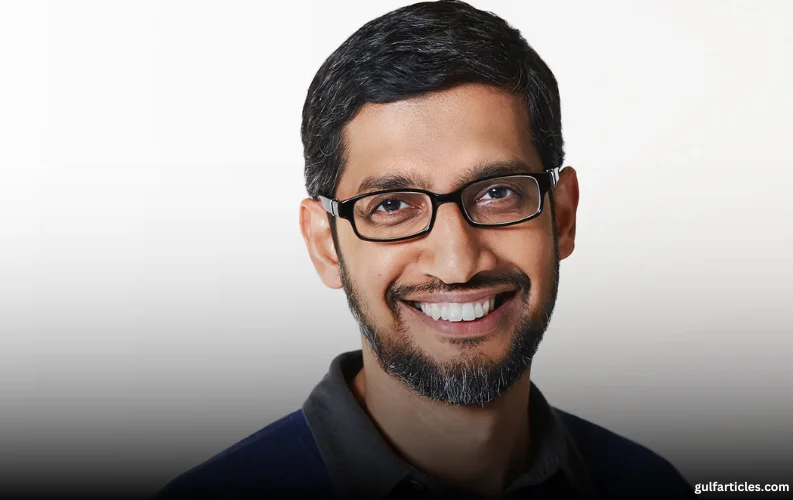
Google CEO Sundar Pichai has dismissed concerns that artificial intelligence (AI) will replace human jobs, emphasizing that technological advancements will lead to new opportunities and career paths.
Speaking at the World Government Summit in Dubai on Wednesday, Pichai referenced a study by an MIT professor, which found that 60% of the jobs created since 1940 did not previously exist.
AI’s Role in Job Creation
“There’s a constant evolution we go through,” said Pichai. “In the year 2000, no one imagined a career as a YouTube creator. Today, millions of creators generate value, run businesses, and employ others.”
Highlighting AI’s impact across various sectors, he pointed out its influence even in sports.
“AI has been the best chess player for a long time, but chess is more popular today than ever before. More people are playing, showing that technology can enhance industries rather than replace them.”
Pichai added that despite AI’s growing capabilities, human experiences and interactions will always hold value.
UAE’s Leadership in AI Development
During a conversation with Omar bin Sultan Al Olama, UAE Minister of State for Artificial Intelligence, Digital Economy, and Remote Work Applications, Pichai commended the UAE’s early adoption of AI strategies.
“I want to give credit to the UAE, which has always been forward-thinking. You appointed a national AI minister in 2017, a move ahead of its time. There is no technology that will impact the global economy as much as AI,” he said.
He urged governments worldwide to invest in infrastructure and workforce upskilling, using the UAE as an example of proactive AI integration.
Balancing AI Opportunities and Risks
Pichai acknowledged AI’s potential risks and stressed the importance of responsible development.
“We all need to be responsible with AI. It’s a powerful and self-improving technology, so we must evaluate risks and take appropriate steps. Establishing global standards for AI development is crucial.”
He also pointed out that many underestimate the importance of AI infrastructure, praising the UAE for its investments in computing, data centers, and workforce training.
Encouraging Risk-Taking and Innovation
The Google chief highlighted the importance of cultivating a risk-taking mindset in both businesses and governments.
“We believe in having a healthy disregard for the impossible. Encouraging people to work on ambitious projects—even if they fail—will always lead to valuable outcomes,” he said.
Pichai emphasized the need for optimism, curiosity, and a culture that encourages risk-taking rather than punishing failure.
Google’s Fight Against Deepfake Content
Pichai also revealed that Google is developing advanced technology to detect deepfake content, including watermarking AI-generated images and open-sourcing detection tools.
“We need to collaborate with other companies to establish industry-wide standards for AI-generated content. While we encourage AI innovation, there are areas where regulation is necessary,” he said.
As AI continues to evolve, Pichai’s insights highlight the need for a balanced approach—embracing its potential while ensuring ethical and responsible development.














Comments 0
No comments yet. Be the first to share your thoughts.
Leave a comment
Your email is never published. All fields are required.