

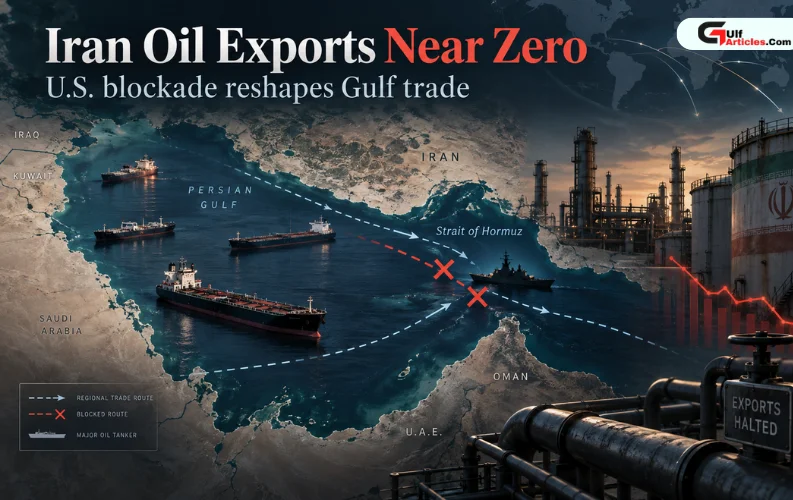
Iran’s oil exports have fallen to near-zero levels as a U.S. naval blockade and continuing disruption around the Strait of Hormuz prevent much of Tehran’s crude from reaching international buyers.
The collapse in shipments is putting severe pressure on Iran’s oil revenues and forcing traders across the Gulf to adapt to a rapidly changing shipping and energy environment. Iran had relied heavily on oil exports for foreign-currency earnings, with China its main remaining major customer before the latest disruption.
Iranian Crude Shipments Nearly Grind to a Halt
According to shipping and commodity-tracking data cited by Reuters, Iran has gone for weeks without successfully moving meaningful volumes of crude through the Strait of Hormuz.
Iran loaded only around 220,000 to 255,000 barrels per day of crude and condensate in August, sharply below approximately 740,000 barrels per day in July and around 2 million barrels per day in March.
The figures show how dramatically the blockade has changed Iran’s ability to sell oil abroad. Earlier sanctions had reduced exports, but Iranian crude continued reaching customers through alternative routes and methods. The current disruption has made those workarounds considerably more difficult.
China Loses Access to Fresh Iranian Supplies
China has historically been the most important buyer of Iranian oil, particularly shipments transported through networks designed to circumvent U.S. sanctions.
However, the latest blockade means fresh Iranian crude cargoes have been unable to reach China through Hormuz for an extended period, according to vessel-tracking companies Kpler, Vortexa and TankerTrackers.com.
Iran can still draw on oil stored on tankers outside the immediate blockade area, but those reserves cannot be replenished normally while outbound shipments remain blocked.
That is creating a growing logistical problem for Tehran: oil production can continue, but finding a safe route to overseas customers has become increasingly difficult.
Floating Storage Becomes More Important
With exports restricted, tankers are increasingly being used as temporary storage facilities for Iranian crude.
Large volumes of oil have accumulated aboard vessels in and around the Gulf, effectively turning ships into floating stockpiles while Iranian authorities look for ways to move the cargo.
The strategy can provide some short-term flexibility, but prolonged storage creates additional costs and eventually limits Iran’s ability to keep producing at normal rates. Reuters reported that Iran had accumulated significant volumes of crude in floating storage as exports stalled.
Hormuz Disruption Affects the Wider Gulf
The effects of the blockade extend well beyond Iran.
The Strait of Hormuz normally carries a substantial share of the world's oil and liquefied natural gas, making even partial disruption a major concern for global energy markets. Recent data showed only four vessels crossing the strait on Tuesday, compared with a 10-day average of 18. None of the vessels detected were very large crude carriers or LNG tankers.
The sharp decline in shipping traffic has forced Gulf producers, traders and shipping companies to reconsider routes, cargo schedules and alternative export options.
Gulf Producers Look for Alternatives
Other oil producers are also trying to reduce their exposure to the disruption.
Saudi Arabia’s East-West pipeline, which can move crude toward the Red Sea while bypassing Hormuz, has become particularly important. However, the pipeline was recently taken offline after an attack, limiting one of the region's key alternative routes.
Meanwhile, ADNOC Trading has increased purchases of discounted Iraqi crude and used its tanker fleet and the Fujairah pipeline to manage supplies during the disruption.
These shifts show how Gulf oil traders are attempting to keep supplies moving despite increasingly difficult maritime conditions.
Oil Prices Remain Above $100
The disruption has also kept oil prices elevated.
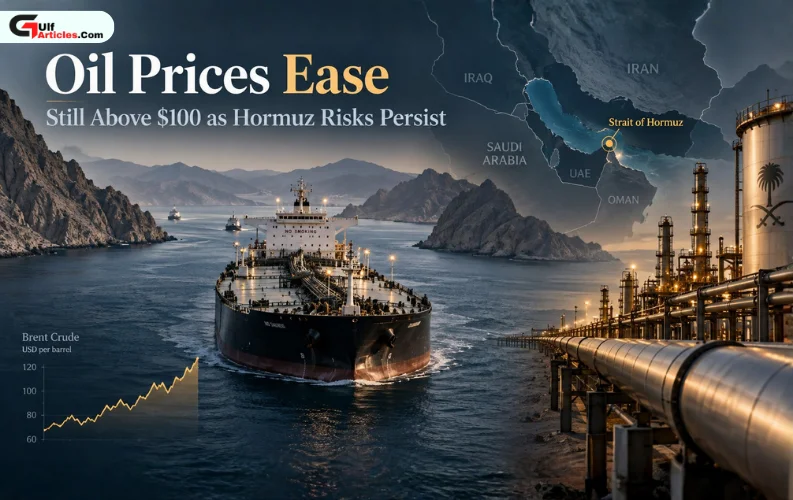
Brent crude remained above $107 a barrel on September 16, despite falling modestly after U.S. inventories increased more than expected. The broader supply outlook remains tight because disruptions are affecting multiple routes and energy facilities across the region.
Higher crude prices could feed into fuel costs, transportation expenses and inflation in oil-importing economies if the disruption continues.
Iran Faces Growing Financial Pressure
For Tehran, the biggest consequence may be the loss of oil revenue.
Oil has traditionally been one of Iran’s most important sources of foreign currency, helping finance imports and government spending. A prolonged interruption therefore creates pressure not only on the energy sector but also on the wider economy.
Iran's ability to sell stored crude provides some temporary relief, but analysts say that cannot substitute indefinitely for regular export flows.
Gulf Trade Enters a New Phase
The blockade is also reshaping commercial trade across the Gulf.
Shipping companies are increasingly concerned about vessel security, insurance costs and delays, while importers and exporters are having to consider longer or more complicated routes. Fewer ships passing through Hormuz also increases uncertainty for businesses dependent on predictable regional supply chains.
At the same time, regional traders are relying more heavily on alternative pipelines, storage facilities and supplies from countries such as Iraq.
What Happens Next?
The direction of Iran’s oil exports will depend largely on whether shipping through Hormuz can return to something closer to normal.
If the blockade remains in place, Iran could face further accumulation of crude in storage, declining production and deeper pressure on government finances. If maritime traffic recovers, some of that pressure could ease, although rebuilding normal trade flows would take time.
For now, Iran’s oil industry is facing an unprecedented disruption, while the wider Gulf trading system is being forced to adapt.
The near-zero level of Iranian exports is therefore more than an energy story. It shows how military restrictions, shipping disruptions and oil infrastructure risks are reshaping one of the world's most important trading corridors.
You may also like that news:-