

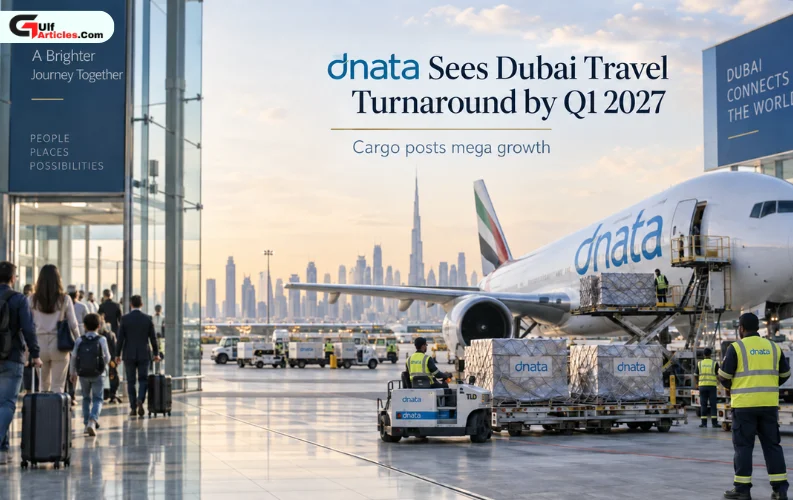
Dubai’s travel market could see a strong recovery in early 2027, with dnata CEO Nabil Sultan expecting a “complete turnaround” in passenger demand during the first quarter as international airlines restore capacity and travellers return to the UAE.
Speaking on the sidelines of the Arabian Travel Market in Dubai, Sultan said the upcoming winter schedule is expected to perform well, while leisure and business travel could see a “huge pickup” in the first quarter of next year.
Bookings Begin to Show Signs of Recovery
The outlook comes after regional conflict disrupted air travel earlier in the year, affecting inbound tourism to the UAE, particularly from some European and Asian markets.
However, dnata is already seeing signs that demand is improving. Sultan said fourth-quarter booking demand is around 5% higher than the same period last year, while spending per passenger has increased by nearly 10%.
Travel from the Indian subcontinent, the Middle East and Africa has rebounded relatively quickly, while visits involving friends and relatives have remained particularly resilient.
More Airlines Expected to Return
The recovery in Dubai will partly depend on airlines restoring flights and capacity.
According to Sultan, many European and Asian carriers that reduced operations during April and May have already filed for winter slots and begun selling flights for October and November. He expects most of them to gradually return to the Dubai market around November and December.
Additional airline capacity could give Dubai's tourism sector another boost as the winter travel season gets underway.
Recent figures from Emirates also point to stronger demand. The airline said it was operating at around 93% of its pre-disruption capacity and carried more than 8.6 million passengers during July and August, with several international markets tracking ahead of last year.
Cargo Business Sees ‘Mega Growth’
While passenger travel was disrupted, dnata's cargo operation experienced a very different trend.
Sultan described the cargo business as “phenomenal”, pointing to what he called “mega growth” in cargo tonnage and handling across Dubai and the UAE. He linked part of the increase to disruption around the Strait of Hormuz, which has pushed more customers toward air freight.
Dnata expects cargo demand to remain strong through the remainder of the year, adding an important source of growth while passenger operations recover.
Investment Strengthens Cargo Operations
The cargo expansion is taking place alongside continued investment in dnata's freight infrastructure.
The company recently invested nearly Dh800 million in a cargo facility in the Netherlands, which Sultan said is now operational and performing strongly. Dnata has also launched a Cargo Integrated Command Centre in Dubai, providing a centralized view of cargo operations across Dubai International Airport and Al Maktoum International Airport.
Dnata's broader operations handled 3.1 million tonnes of cargo in its 2024-25 financial year, demonstrating the scale of its international freight business.
Dnata Keeps Its Workforce in Place
Despite lower aircraft movements during the disruption, dnata chose to retain its airport operations workforce rather than make broad reductions.
Sultan said the company focused on keeping employees in place and using the period to train staff and prepare them for the expected return of demand. Dnata's airport operations division employs around 41,000 people across 86 airports in 16 countries.
The approach is intended to ensure the company can respond quickly as flight volumes increase.
Catering and New Markets Add to Growth
Dnata's catering business has also continued expanding, with operations now spanning about 50 countries and the company continuing to add airline customers.
The company is also looking at opportunities in emerging markets across the Middle East, Africa, Central Asia and the Indian subcontinent. Sultan identified markets including Iraq, Libya and Azerbaijan as areas with potential, provided sufficient stability supports further investment.
The company has indicated that it remains open to acquisitions and other investments that complement its existing businesses.
Dubai Travel Outlook Improves for 2027
Sultan's forecast comes as Dubai's wider aviation and tourism industry continues to rebuild after a difficult period.
Dubai Airports expects passenger traffic to reach around 70 million passengers in 2026, with the airport's previously targeted level now expected to be reached by the end of 2027.
For dnata, the combination of stronger bookings, returning airlines and resilient cargo demand provides a more positive outlook for the months ahead.
The company expects the winter schedule to bring further improvement, but Q1 2027 is now being viewed as a potentially important turning point for Dubai's passenger travel market. At the same time, continued growth in air freight is giving dnata another major business opportunity as global trade routes adjust to ongoing disruption.
Speaking on the sidelines of the Arabian Travel Market in Dubai, Sultan said the upcoming winter schedule is expected to perform well, while leisure and business travel could see a “huge pickup” in the first quarter of next year.
Bookings Begin to Show Signs of Recovery
The outlook comes after regional conflict disrupted air travel earlier in the year, affecting inbound tourism to the UAE, particularly from some European and Asian markets.
However, dnata is already seeing signs that demand is improving. Sultan said fourth-quarter booking demand is around 5% higher than the same period last year, while spending per passenger has increased by nearly 10%.
Travel from the Indian subcontinent, the Middle East and Africa has rebounded relatively quickly, while visits involving friends and relatives have remained particularly resilient.
More Airlines Expected to Return
The recovery in Dubai will partly depend on airlines restoring flights and capacity.
According to Sultan, many European and Asian carriers that reduced operations during April and May have already filed for winter slots and begun selling flights for October and November. He expects most of them to gradually return to the Dubai market around November and December.
Additional airline capacity could give Dubai's tourism sector another boost as the winter travel season gets underway.
Recent figures from Emirates also point to stronger demand. The airline said it was operating at around 93% of its pre-disruption capacity and carried more than 8.6 million passengers during July and August, with several international markets tracking ahead of last year.
Cargo Business Sees ‘Mega Growth’
While passenger travel was disrupted, dnata's cargo operation experienced a very different trend.
Sultan described the cargo business as “phenomenal”, pointing to what he called “mega growth” in cargo tonnage and handling across Dubai and the UAE. He linked part of the increase to disruption around the Strait of Hormuz, which has pushed more customers toward air freight.
Dnata expects cargo demand to remain strong through the remainder of the year, adding an important source of growth while passenger operations recover.
Investment Strengthens Cargo Operations
The cargo expansion is taking place alongside continued investment in dnata's freight infrastructure.
The company recently invested nearly Dh800 million in a cargo facility in the Netherlands, which Sultan said is now operational and performing strongly. Dnata has also launched a Cargo Integrated Command Centre in Dubai, providing a centralized view of cargo operations across Dubai International Airport and Al Maktoum International Airport.
Dnata's broader operations handled 3.1 million tonnes of cargo in its 2024-25 financial year, demonstrating the scale of its international freight business.
Dnata Keeps Its Workforce in Place
Despite lower aircraft movements during the disruption, dnata chose to retain its airport operations workforce rather than make broad reductions.
Sultan said the company focused on keeping employees in place and using the period to train staff and prepare them for the expected return of demand. Dnata's airport operations division employs around 41,000 people across 86 airports in 16 countries.
The approach is intended to ensure the company can respond quickly as flight volumes increase.
Catering and New Markets Add to Growth
Dnata's catering business has also continued expanding, with operations now spanning about 50 countries and the company continuing to add airline customers.
The company is also looking at opportunities in emerging markets across the Middle East, Africa, Central Asia and the Indian subcontinent. Sultan identified markets including Iraq, Libya and Azerbaijan as areas with potential, provided sufficient stability supports further investment.
The company has indicated that it remains open to acquisitions and other investments that complement its existing businesses.
Dubai Travel Outlook Improves for 2027
Sultan's forecast comes as Dubai's wider aviation and tourism industry continues to rebuild after a difficult period.
Dubai Airports expects passenger traffic to reach around 70 million passengers in 2026, with the airport's previously targeted level now expected to be reached by the end of 2027.
For dnata, the combination of stronger bookings, returning airlines and resilient cargo demand provides a more positive outlook for the months ahead.
The company expects the winter schedule to bring further improvement, but Q1 2027 is now being viewed as a potentially important turning point for Dubai's passenger travel market. At the same time, continued growth in air freight is giving dnata another major business opportunity as global trade routes adjust to ongoing disruption.
You may also like that news:-