

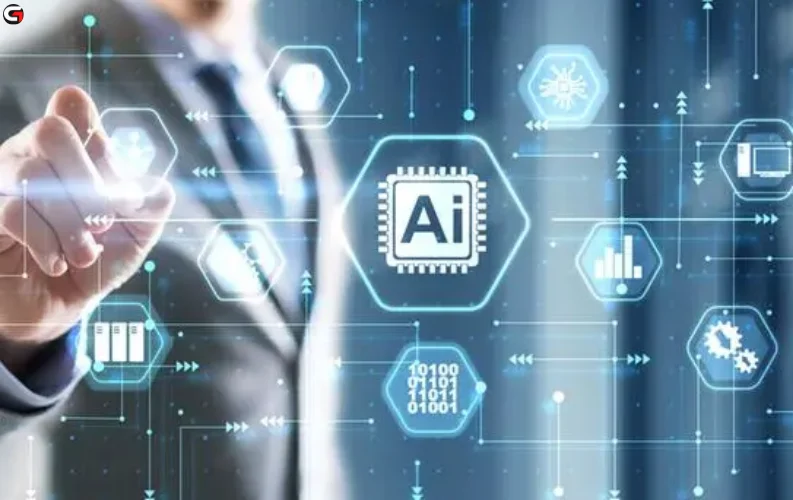
As thousands of fresh graduates enter the workforce each year in the UAE, the discussion around the responsible use of artificial intelligence (AI) is becoming increasingly relevant across both academia and industry. Graduates and students are leveraging AI to stay competitive in a technology-driven world, recognizing that ignoring its potential could leave them at a disadvantage. Many are advocating for universities to integrate AI into their curriculums rather than resisting its adoption. However, while AI is generally welcomed, perspectives on its implementation vary.
AI’s Role in Engineering and Automation
Coastal engineer Khaled Elkersh reflects on how AI has reshaped his profession. During his university years, AI was not widely incorporated into coursework, leaving him unprepared for its widespread presence in the field. Upon entering the workforce, he was astonished by the rapid advancements in AI.
"I was surprised at how capable these tools are. Tasks that once took hours can now be completed in minutes," he noted. AI is now a staple in design automation, data analysis, and report generation, proving invaluable for optimizing workflows.
Elkersh actively integrates AI, particularly ChatGPT, to eliminate repetitive tasks. He uses AI to convert images to text, summarize lengthy documents, and enhance productivity. While AI cannot yet handle complex engineering problems, it significantly reduces manual labor, allowing engineers to focus on high-level problem-solving.
For students, Elkersh advises developing AI literacy as a means of enhancing efficiency rather than replacing hands-on learning. "It’s a game-changer for saving time and boosting productivity," he emphasized.
The Academic Dilemma: Resistance vs. Integration
Despite AI’s growing role in workplaces, educational institutions remain hesitant in fully embracing it. Machine learning researcher Dara Varam observes that while professors and students use AI informally, its official integration into academic programs is still limited.
Varam believes AI’s greatest strength lies in pattern recognition, helping students draw insightful connections. "It allows you to view things from different perspectives and recognize parallels you might not have otherwise noticed," he said. However, he warns against over-reliance, cautioning that AI-generated content could become self-referential, limiting innovation.
Educators Call for a Balanced Approach
While students and professionals have embraced AI, educators continue to debate its role in learning environments.
Professor Payyazhi Jayashree, dean of a leading business school in the UAE, acknowledges that AI is inescapable. "The future of business depends on leveraging AI strategically to drive growth and competitiveness," she stated. Accordingly, AI-based courses now cover areas such as predictive analytics, data science, and generative AI.
Similarly, Professor Fehmida Hussain, head of Computer Engineering and Informatics at a UAE-based university, stresses the importance of teaching AI’s technical, ethical, and societal dimensions. By integrating AI-focused courses, universities can equip students with essential knowledge while ensuring ethical usage.
Professor Giacomo Chiozza, a political science educator, emphasizes the need for transparency. He allows students to use AI but requires them to document its application in an AI declaration. "AI should not be used in secrecy—it should be an open tool that enhances, rather than replaces, human intuition and skills," he remarked.
The Future of AI in Education and Employment
While all three professors agree on the necessity of AI integration, their outlooks on its impact vary. Jayashree warns that AI-driven automation may phase out entry-level jobs, making reskilling essential for career sustainability. Conversely, Hussain argues that AI is an "enabler rather than a barrier" for fresh graduates, ensuring they remain competitive in the job market.
Chiozza highlights the enduring value of human expertise, stating that originality and personal touch will always be in demand. "No one wants to be known as someone who wears a fake Rolex, and the same applies to the use of AI," he said.
As the debate continues, one thing remains clear—AI is a game-changer in both education and industry. The challenge lies in ensuring its responsible and transparent use while maximizing its benefits for the next generation of professionals.














Comments 0
No comments yet. Be the first to share your thoughts.
Leave a comment
Your email is never published. All fields are required.