

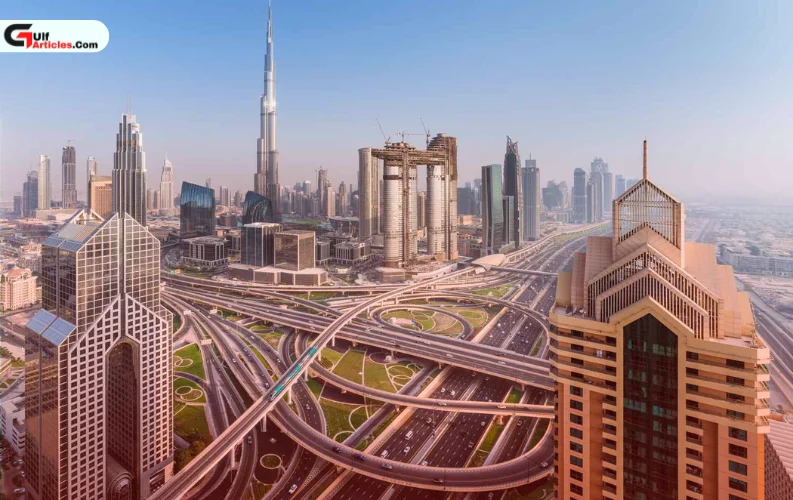
Dubai: If air travel felt consistently busy throughout 2025, the data suggests that perception is accurate.
New regional figures indicate that the Gulf has entered a prolonged high-demand travel cycle, where traditional off-peak periods are rapidly disappearing. Airports across the UAE and wider GCC are now operating under near-constant pressure, with passenger volumes staying elevated for much of the year.
According to fresh data released by Dragonpass, which operates digital airport services across the region, 56 per cent of all GCC travel now takes place between June and November. What was once considered a short summer rush has effectively expanded into a six-month peak period.
For UAE travellers, the shift is already evident at check-in counters, immigration halls and departure gates.
“Travel demand in the GCC is no longer seasonal in the traditional sense,” said Andrew Harrison-Chinn, Chief Marketing Officer at Dragonpass. “It is continuous, high-volume and increasingly complex to manage.”
Six-month peak becomes the new norm
Travel data collected across six GCC markets shows July, August and October emerging as the busiest months of the year. March now stands out as the only period when all GCC countries experience a noticeable slowdown.
For residents in the UAE, this change helps explain why flights remain full beyond school holidays, fares fluctuate more frequently and airport queues extend well outside traditional travel seasons.
Saudi Arabia and the UAE continue to dominate regional travel, together accounting for nearly 80 per cent of all GCC passenger movement. However, analysts note that the pattern of sustained demand is now visible across all six GCC countries, pointing to a region-wide structural shift in travel behaviour.
Travel spreads beyond mega-hubs
How people travel is also changing.
While Dubai, Riyadh and Jeddah remain the region’s largest aviation hubs, their dominance is gradually easing. Dragonpass data shows that secondary airports handled 32.4 per cent of total GCC travel in 2025, an increase from the previous year.
This indicates that more travellers are starting their journeys from a broader range of airports, driven by new direct routes, competitive fares and convenience.
“This is not about the decline of major hubs,” Harrison-Chinn said. “It reflects expanding choice. Connectivity improvements are allowing travellers to spread across more airports.”
For UAE passengers, this trend is visible in the growth of international services from airports beyond Dubai International, alongside stronger regional connections feeding into Saudi Arabia’s expanding aviation network.
Speed overtakes space for premium travellers
The shift is particularly pronounced among frequent flyers and premium passengers.
The data shows that 47 per cent of premium travel activity now occurs outside the region’s top three airports, suggesting that high-value travellers are no longer concentrated exclusively in mega-terminals.
At the same time, Dragonpass recorded a 1,010 per cent year-on-year increase in Fast Track usage, which allows passengers to bypass queues at security and immigration.
Industry observers say the trend reflects a growing willingness among travellers to pay for time certainty rather than additional comfort.
“In a high-demand environment, efficiency has become the ultimate upgrade,” Harrison-Chinn said.
For UAE travellers, this is translating into increased use of fast-track access, pre-booked airport services and tools designed to reduce uncertainty in crowded terminals.
What this means for travellers
With elevated travel volumes lasting longer and spreading across more airports, the region’s aviation ecosystem is being forced to adapt.
Airports are increasingly designing infrastructure for sustained high traffic rather than short seasonal surges. Airlines are adjusting route networks, while service providers are prioritising passenger-flow solutions over temporary capacity expansions.
For travellers, the impact is already tangible. Booking windows, departure airport choices and demand for time-saving services are now shaped by the expectation that airports will remain busy for most of the year.
As the data suggests, peak season in the UAE is no longer confined to a few weeks. It has quietly become the new normal.










Comments 0
No comments yet. Be the first to share your thoughts.
Leave a comment
Your email is never published. All fields are required.